
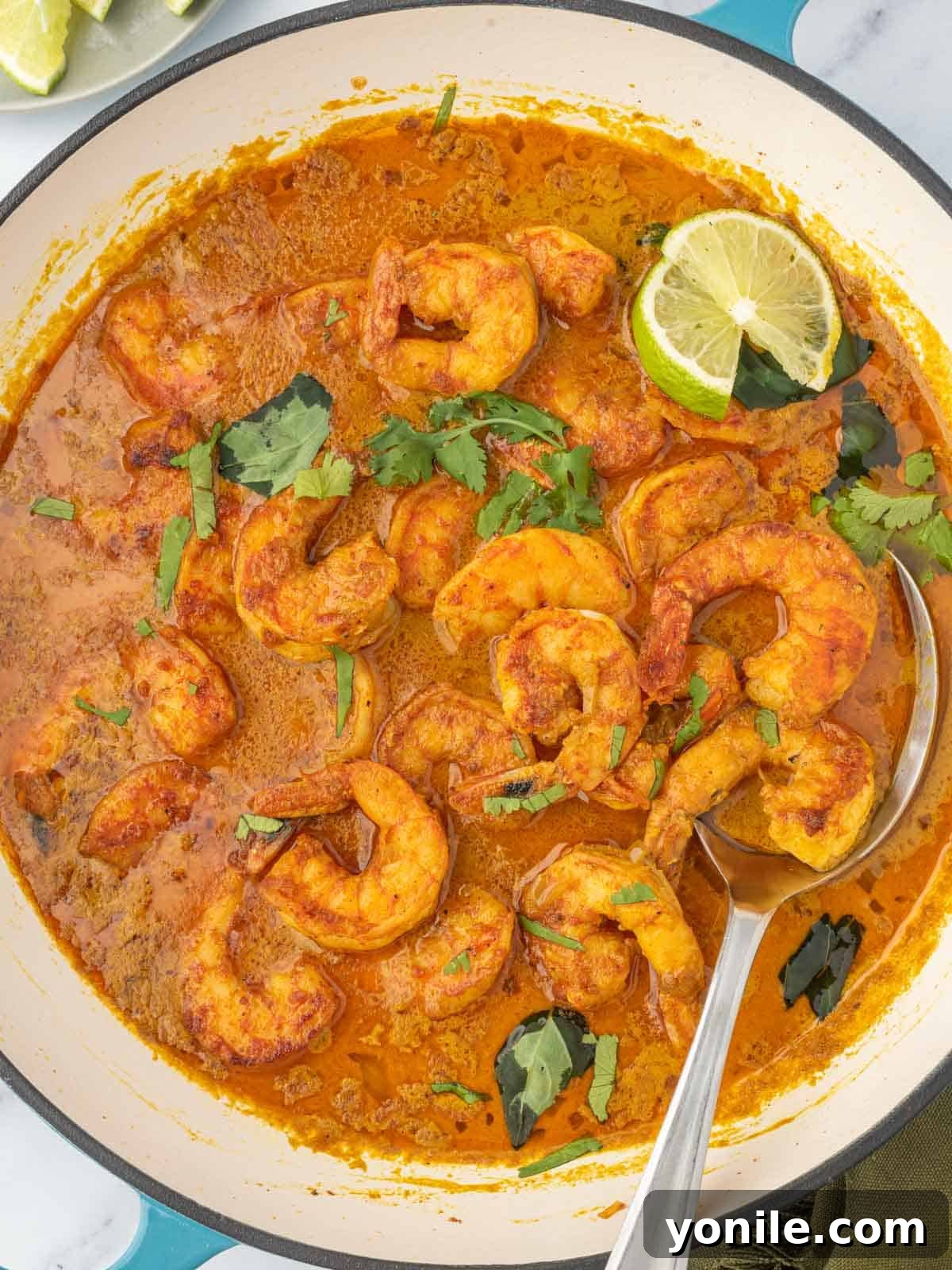
Exquisite Thai Coconut Shrimp Curry: A Quick and Flavorful Weeknight Delight
Embark on a culinary journey to the vibrant flavors of Thailand right in your own kitchen with this incredible Thai Coconut Shrimp Curry recipe. This dish masterfully combines succulent, plump shrimp with a rich, aromatic red curry sauce, delivering an explosion of taste that’s both comforting and exotic. Best of all, this impressive meal can be on your table in under 30 minutes, making it a perfect solution for busy weeknights when you crave something truly special.
Our authentic Thai-inspired red curry shrimp sauce is the star of the show, crafted with creamy coconut milk, fragrant red curry paste, a touch of savory soy sauce, and a generous amount of fresh Thai basil. These ingredients work in harmony to create a sauce that’s beautifully balanced, offering a symphony of sweet, salty, spicy, and tangy notes, along with a stunning vibrant color. Serve this irresistible curry shrimp over a bed of fluffy rice for a wholesome and satisfying meal the entire family will adore. Prepare to be amazed by how easily you can bring gourmet Thai dining into your home!

This creamy Thai coconut shrimp curry is an absolute delight. It’s mildly spicy, incredibly rich, and bursting with flavor that will have you licking the plate clean. While elegant enough to impress guests at a dinner party, its simplicity makes it perfectly suitable for a cozy family meal. The combination of tender shrimp and the luxurious coconut curry sauce creates a dish that’s universally appealing. Everyone, from curry connoisseurs to first-time tasters, will fall in love with this unforgettable coconut shrimp curry.
If you’re a fan of the bold and beautiful flavors of curry, you absolutely must explore some of our other cherished recipes. Dive into the vibrant world of our Red Thai Vegan Curry for a plant-based sensation, or savor the robust taste of our Thai Red Curry Chicken. Each dish offers a unique twist on beloved Thai classics, promising delicious adventures for your palate.
Why This Thai Coconut Shrimp Curry Will Be Your New Favorite
There are countless reasons to adore this Thai Coconut Shrimp Curry, but here are the top three that make it an absolute must-try:
- Authentic and Unforgettable Flavor Profile: Thai curries are renowned for their complex and harmonious blend of flavors. This dish captures that essence beautifully, starting with a rich, aromatic curry paste and creamy coconut milk. The result is a deeply satisfying, savory, subtly sweet, and mildly spicy sauce that genuinely tastes like it came from your favorite Thai restaurant. Every spoonful is a testament to the balance of traditional Thai spices and fresh ingredients.
- Incredibly Fast and Convenient: In today’s fast-paced world, quick and delicious meals are a lifesaver. This red curry shrimp comes together in less than 30 minutes, including all your prep time! From chopping to simmering, you’ll be enjoying a piping hot, homemade Thai feast faster than you could order and pick up takeout. It’s the ultimate solution for a gourmet meal without the fuss.
- A Complete and Wholesome Meal: Pairing this flavorful curry shrimp with a side of steamed rice creates a perfectly balanced and filling meal. It’s satisfying without feeling heavy, providing a good source of protein, healthy fats, and carbohydrates. This dish not only tastes amazing but also offers a complete nutritional profile that will keep your whole family happy and energized.
Essential Ingredients for Your Thai Shrimp Curry
Crafting the perfect Thai Coconut Shrimp Curry begins with selecting high-quality ingredients. Each component plays a crucial role in building the layered flavors that make this dish so special.
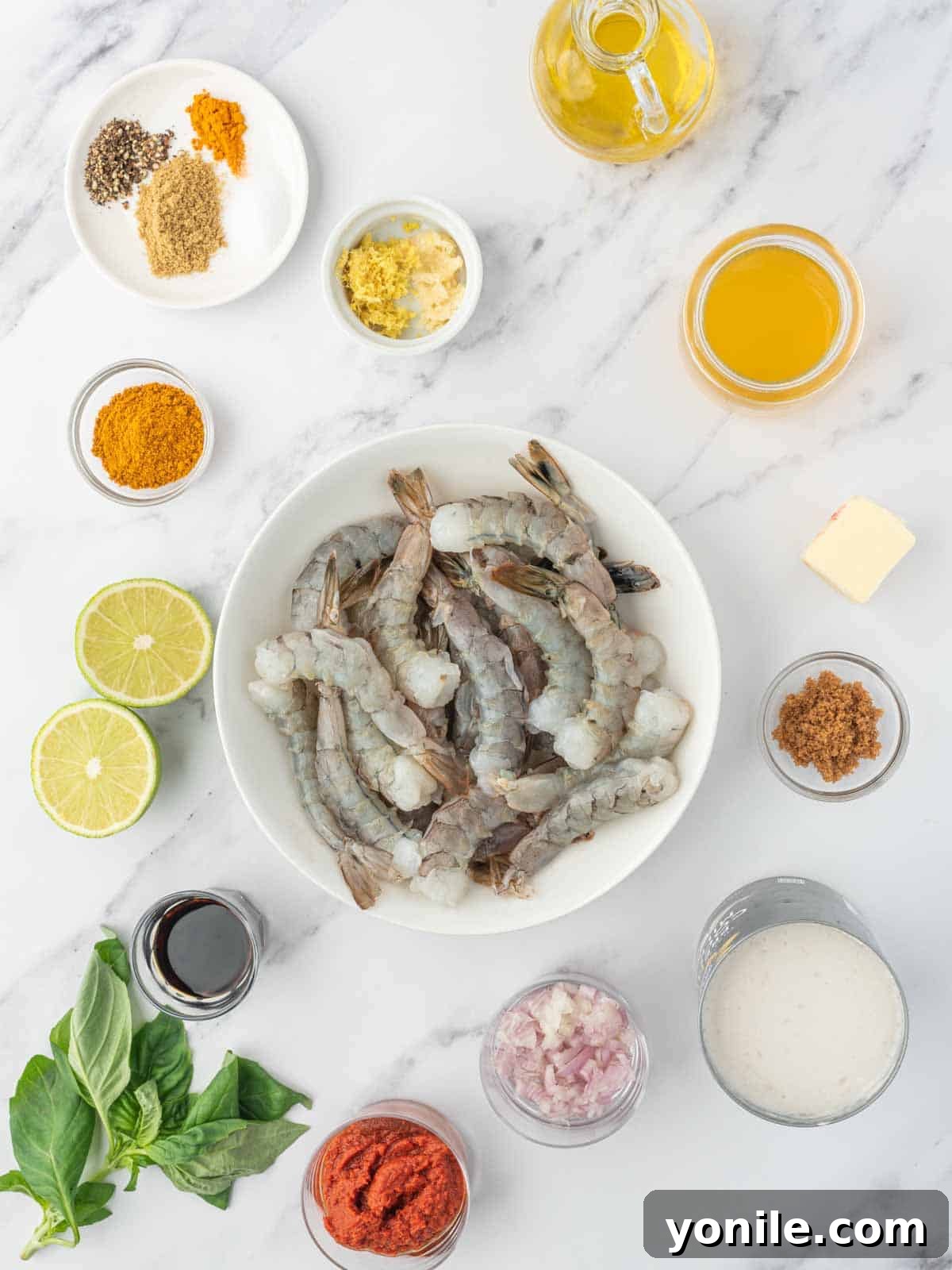
For the Perfectly Seasoned Shrimp
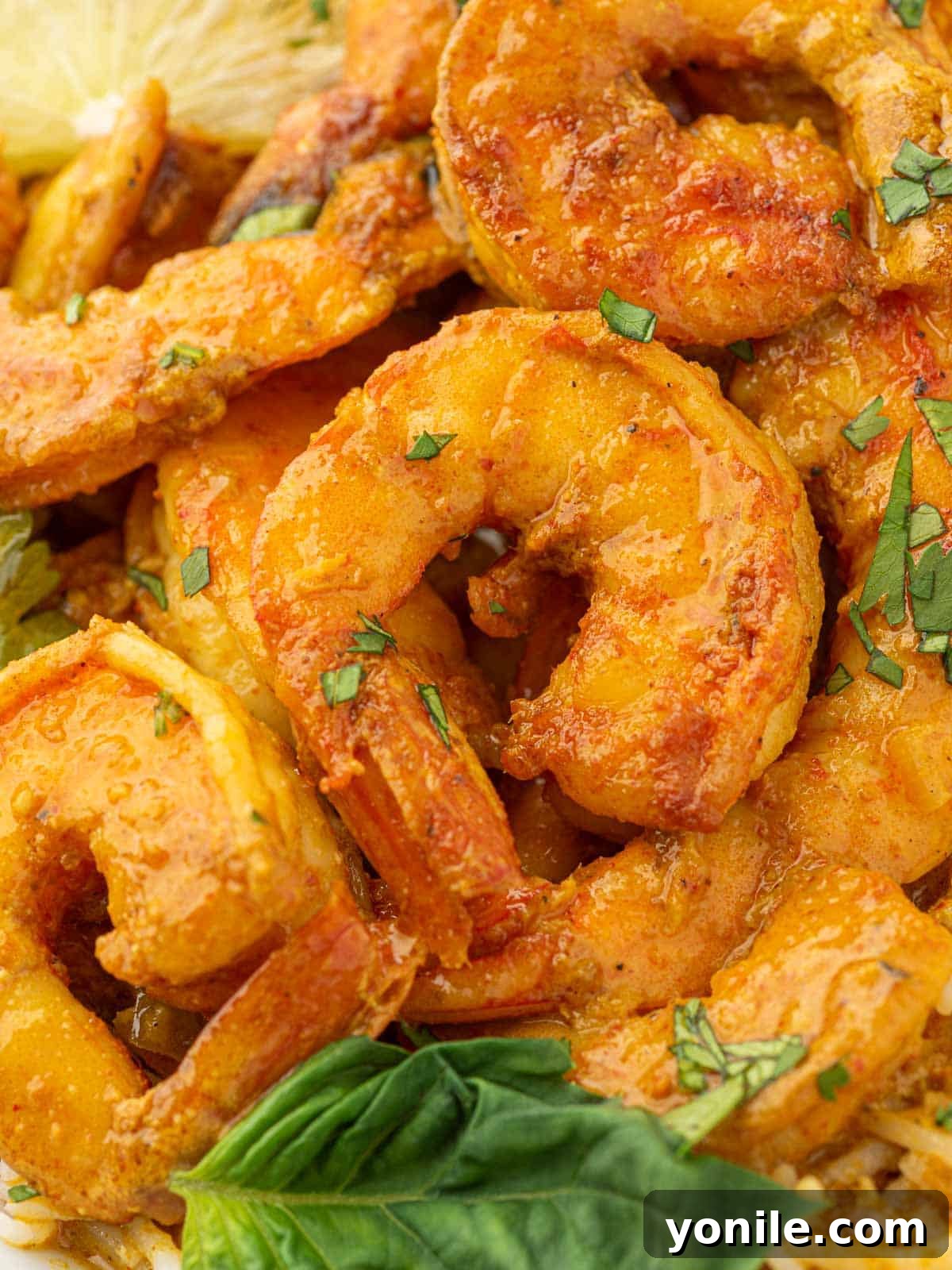
- Jumbo Shrimp: Opt for large, peeled, and deveined shrimp. The jumbo size provides a substantial bite and prevents overcooking. Keeping the tails on is often preferred for presentation, but feel free to remove them if that’s your preference. Fresh or good quality frozen shrimp (thawed properly) will work wonderfully.
- Red Curry Paste (for seasoning): A concentrated chili paste that is the backbone of many Thai dishes. It infuses the shrimp with deep, complex flavors and a hint of heat right from the start. Look for a good quality brand for the best results.
- Soy Sauce: Adds an essential umami depth and savory balance. Using a low-sodium variety allows you to control the overall saltiness of the dish. For a gluten-free alternative, tamari or coconut aminos are excellent substitutes.
- Curry Powder: Beyond flavor, curry powder contributes a beautiful golden hue to the shrimp, thanks to the turmeric within its blend. It complements the red curry paste, adding another layer of aromatic spice.
- Salt and Black Pepper: Basic seasonings to enhance the natural taste of the shrimp and balance the other spices. Adjust to your personal preference.
- Olive Oil: Or any other light, neutral oil like avocado or vegetable oil. Used for sautéing the shrimp to a perfect, tender crispness.
For the Luxurious Coconut Curry Sauce
- Unsalted Butter: The base for sautéing the aromatics. Unsalted butter gives you complete control over the salt content of your sauce, ensuring it’s seasoned exactly to your liking.
- Aromatics (Freshly Minced Garlic, Grated Ginger, Finely Chopped Shallot): This trio is non-negotiable for an authentic and fragrant curry. They build the foundational aromatic layer of the sauce, releasing incredible smells and deep flavors as they cook. Always use fresh for the best results.
- Chicken Broth: Used to deglaze the pan and add liquid to the sauce base. Low-sodium chicken broth is recommended, but vegetable broth or even water can be substituted if needed.
- Red Curry Paste (for sauce): The primary flavor component for the sauce, providing its signature taste and color. Its depth is crucial for a truly authentic Thai experience.
- Soy Sauce: Again, crucial for umami and balancing the rich flavors. Stick to low-sodium or gluten-free alternatives if preferred.
- Brown Sugar: A touch of sweetness is vital in Thai cuisine to balance the heat and sour notes. Brown sugar adds a lovely caramel-like sweetness; honey can also be used.
- Dry Seasonings (Curry Powder, Coriander Powder, Turmeric Powder, Salt, Black Pepper): These spices collectively build a complex flavor profile and contribute to the rich color of the sauce. Turmeric provides its signature golden yellow, while coriander adds a warm, citrusy note.
- Full-Fat Canned Coconut Milk: This is the secret to a rich, creamy, and velvety curry sauce. Always use full-fat canned coconut milk, not the thinner, refrigerated coconut milk intended for drinking, as it will give your curry a superior texture and taste.
- Fresh Lime Juice: A squeeze of fresh lime juice at the end brightens the entire dish, cutting through the richness of the coconut milk and enhancing all the other flavors with its refreshing acidity.
- Fresh Thai Basil Leaves: A must-have for its distinctive aromatic and slightly peppery flavor. Thai basil is usually preferred, but regular sweet basil can be a suitable substitute if Thai basil is unavailable. It adds a beautiful color and incredible fragrance.
- Fresh Cilantro: Used as a vibrant garnish, offering a fresh, herbaceous counterpoint to the rich curry.
- Lime Wedges: Essential for serving, allowing diners to add an extra burst of fresh, zesty flavor to their individual portions.
Crafting Your Thai Coconut Shrimp Curry: Step-by-Step Guide
Making this flavorful Thai coconut shrimp curry is a straightforward process. Follow these simple steps for a delicious and quick meal.
- Prepare and Season the Shrimp: Begin by thoroughly patting the shrimp dry with a kitchen towel. This step is crucial for achieving a good sear. In a mixing bowl, combine the dried shrimp with red curry paste, soy sauce, curry powder, salt, and black pepper. Toss gently until each shrimp is evenly coated with the vibrant seasoning. This initial seasoning is key to infusing flavor into the shrimp itself.

- Quickly Sauté the Shrimp: Heat a large skillet or wok over medium-high heat. Add the olive oil and allow it to shimmer. Once hot, add the seasoned shrimp in a single layer (cook in batches if necessary to avoid overcrowding). Cook for just 2-3 minutes per side, or until the shrimp turns opaque and pink. Be careful not to overcook, as shrimp cooks very quickly and can become rubbery. Once cooked, transfer the shrimp to a clean plate and set it aside. It will finish cooking in the curry sauce.
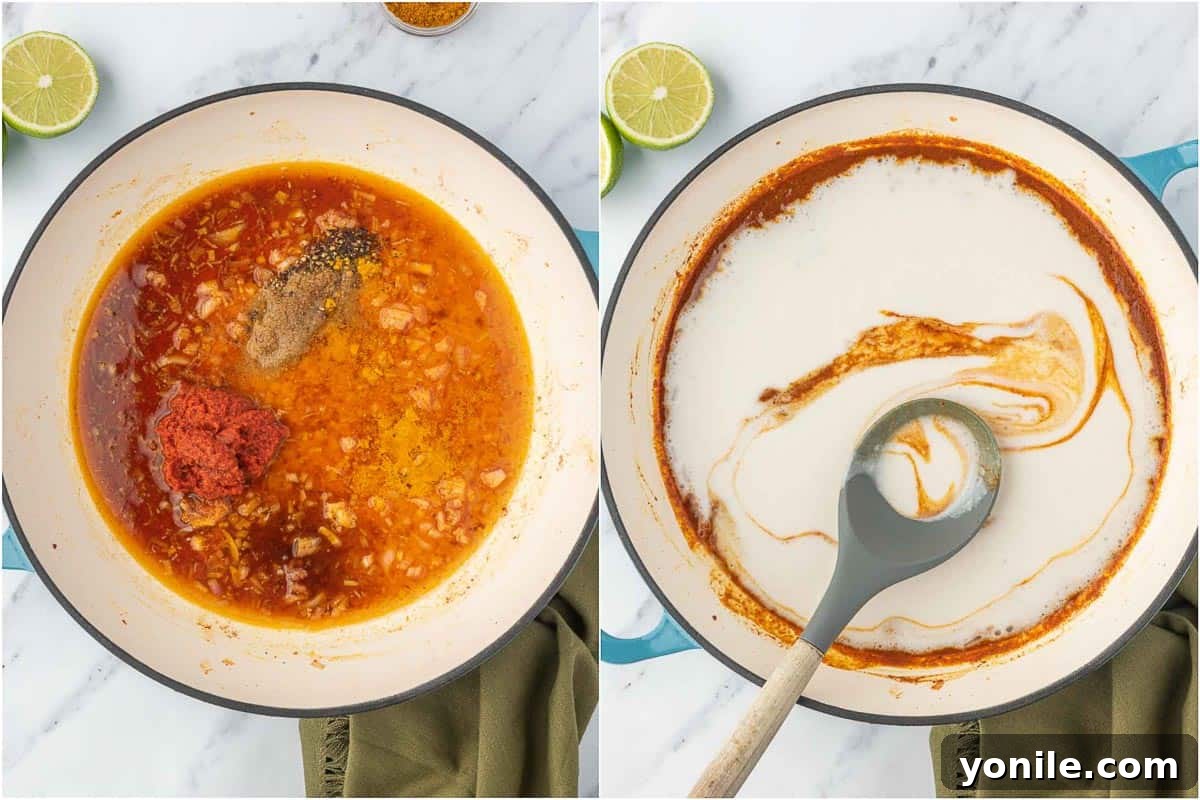
- Build the Aromatic Base: Using the same skillet (no need to clean it, the residual flavors add to the sauce!), reduce the heat to medium. Add the unsalted butter. Once melted, add the minced garlic, grated ginger, and finely chopped shallots. Sauté for about 2 minutes, stirring frequently, until the aromatics are fragrant and the shallots have softened. This step creates a crucial flavor foundation for your curry.
- Deglaze and Add Curry Paste: Pour in the chicken broth to deglaze the pan, scraping up any delicious browned bits from the bottom of the skillet. Stir in the remaining red curry paste and soy sauce. Mix well until the curry paste is fully dissolved and incorporated into the broth.
- Season the Sauce: Add the brown sugar, curry powder, coriander powder, turmeric powder, salt, and black pepper to the skillet. Stir thoroughly to combine all the spices. Bring the mixture to a gentle simmer and let it cook for 2-3 minutes, allowing the flavors to meld and deepen.
- Introduce Coconut Milk: Pour in the full-fat canned coconut milk. Stir gently to combine everything. Bring the sauce to a boil, then immediately reduce the heat to low and let it simmer for about 5 minutes. During this time, the sauce will gently thicken to a luscious consistency, absorbing all the wonderful flavors.
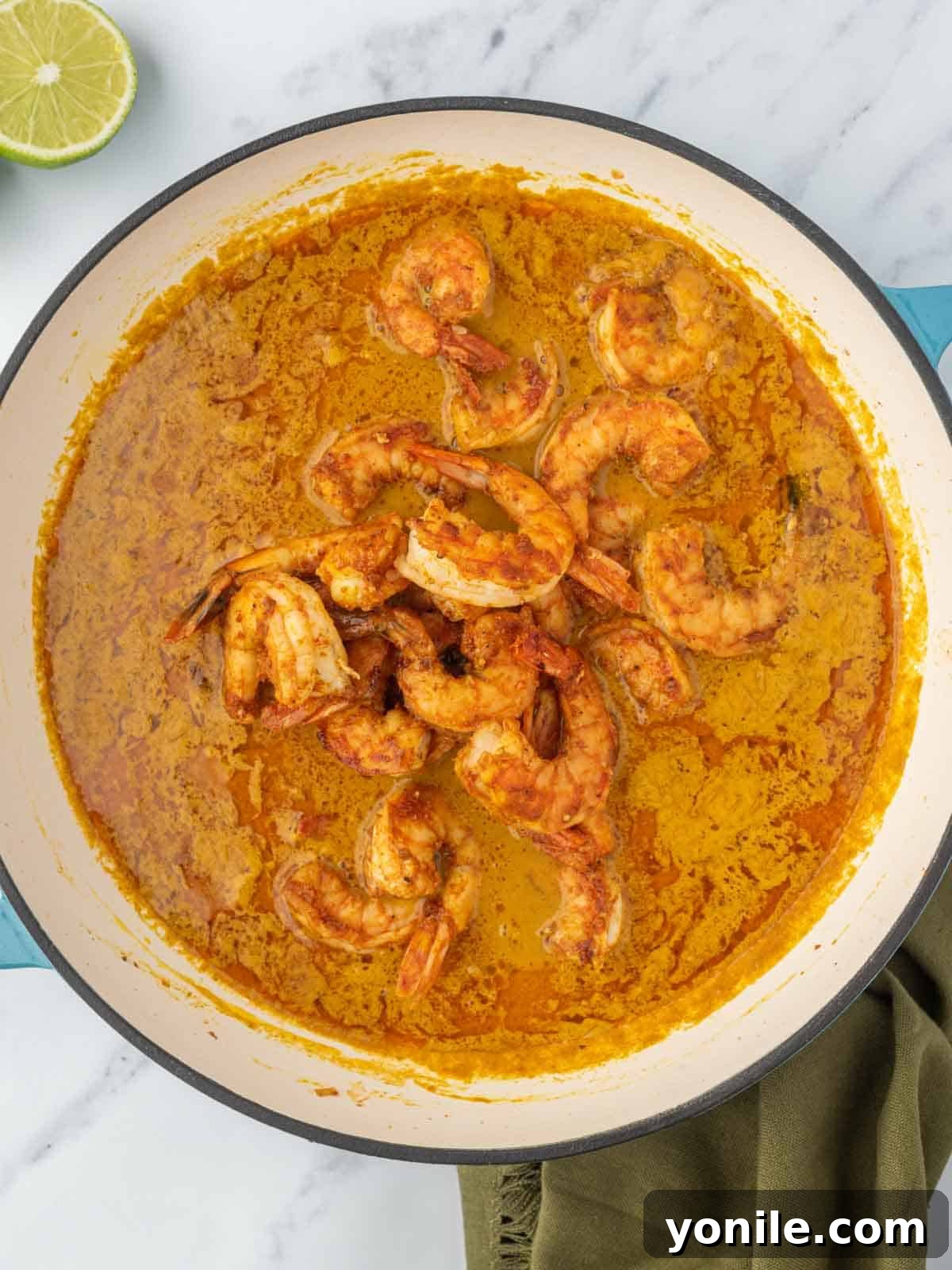
- Finish with Shrimp and Freshness: Gently transfer the sautéed shrimp back into the skillet with the simmering curry sauce. Allow the shrimp to cook for just another 2 minutes in the sauce to absorb its flavors and ensure it’s perfectly heated through without overcooking.
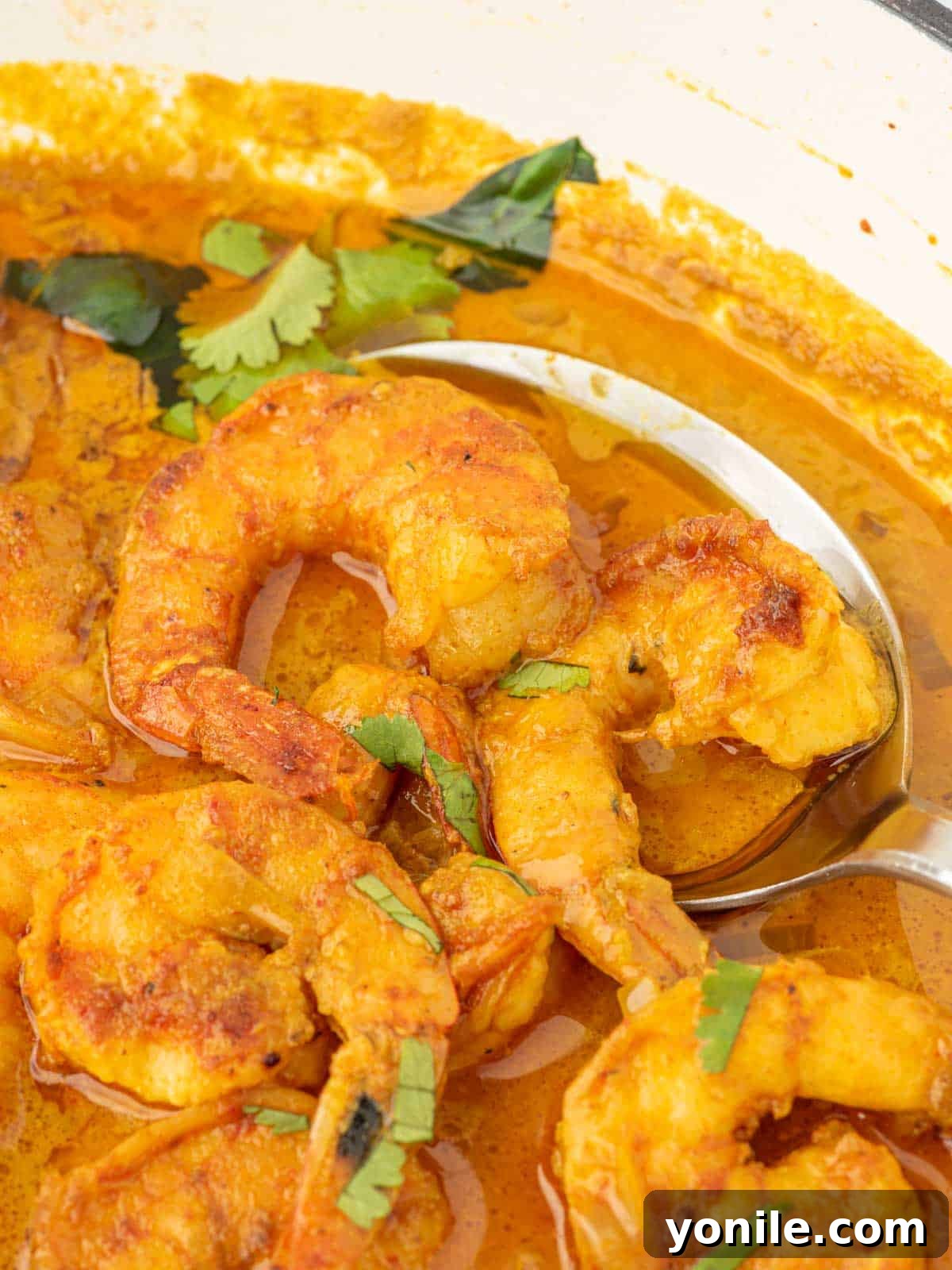
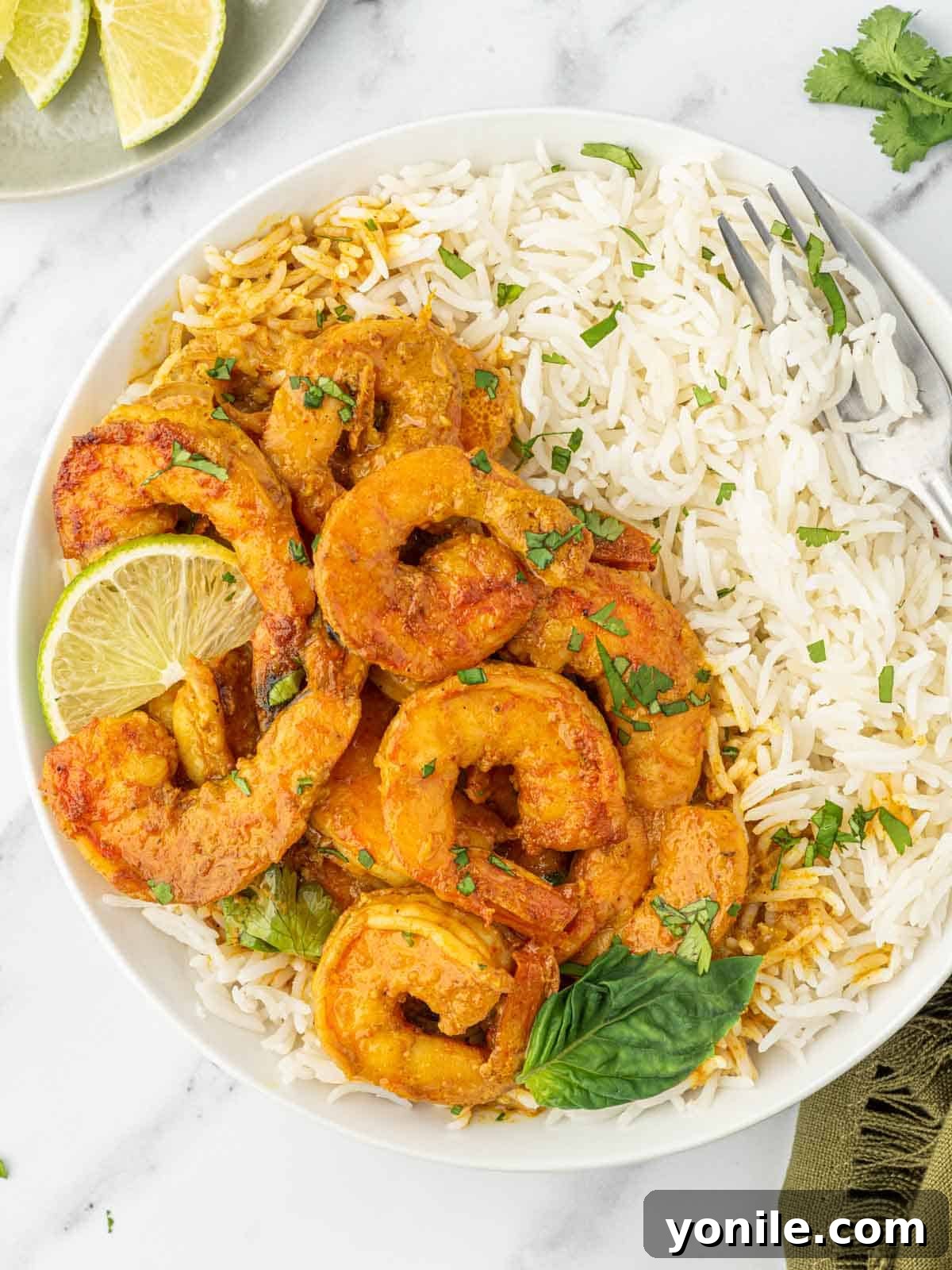
- Add Final Touches and Garnish: Remove the skillet from the heat. Stir in the fresh lime juice and the fragrant Thai basil leaves. The fresh acidity and herbaceous notes will brighten the entire dish. Garnish your exquisite Thai coconut shrimp curry generously with chopped cilantro and serve immediately over warm basmati rice for an authentic and unforgettable meal. Enjoy every delightful bite!
Expert Tips for the Best Shrimp Curry with Coconut Milk
Achieving a restaurant-quality Thai Coconut Shrimp Curry at home is easier than you think with these expert tips:
- Pat Shrimp Dry Thoroughly: Before adding any seasonings, always pat your shrimp completely dry with paper towels. This step is crucial because excess moisture can lead to steaming instead of searing, preventing the shrimp from developing a beautiful golden crust and tender texture.
- Control Saltiness with Low-Sodium Soy Sauce: Thai red curry paste and soy sauce both contribute significant saltiness. By using a low-sodium soy sauce, you gain better control over the overall seasoning of your dish, allowing you to adjust salt levels to taste without overdoing it.
- Opt for Full-Fat Coconut Milk: For a truly rich, creamy, and luxurious curry sauce, full-fat canned coconut milk is indispensable. Lower-fat versions or those found in the dairy aisle are often too thin and can result in a less satisfying texture, sometimes even curdling under heat.
- Avoid Overcooking the Shrimp: Shrimp cooks incredibly fast. Overcooking will result in a tough, rubbery texture. Cook the shrimp for just a few minutes until they turn pink and opaque, then remove them from the heat. They will finish cooking when they’re added back to the simmering curry sauce.
- Tail On or Off? Your Choice! Leaving the tails on the shrimp can enhance the presentation of your dish, making it look more appealing, especially when serving guests. However, if you prefer easier eating, feel free to remove them before cooking.
- Adjust the Heat Level: If you love a spicier kick, there are several ways to elevate the heat. You can add a pinch of red pepper flakes, a dash of Sambal Oelek (a spicy chili paste), or a few drops of sriracha to the curry sauce to your desired level of spice.
- Fresh Aromatics are Key: Garlic and ginger are fundamental to the authentic flavor profile of this Thai curry. Whenever possible, use freshly minced garlic and grated ginger. Their vibrant, pungent flavors are far superior to pre-chopped or powdered versions.
- Boost with Veggies: To make this dish even more robust and nutritious, consider sautéing some vegetables along with your aromatics. Bell peppers, zucchini, broccoli florets, snow peas, or sliced carrots are excellent additions that add texture, color, and vitamins.
- Make it Vegetarian/Vegan: This recipe is incredibly versatile! You can easily transform it into a vegetarian or vegan delight by replacing the shrimp with firm tofu (pressed and cubed), chickpeas, or a medley of your favorite vegetables. Simply follow the same steps, adjusting cooking times as needed for the substitute.
Frequently Asked Questions About Thai Coconut Shrimp Curry
Here are answers to some common questions you might have about making this delicious Thai Coconut Shrimp Curry:
What type of coconut milk should I use for this curry?
We strongly recommend using full-fat canned coconut milk for this recipe. This type of coconut milk is thicker and richer, providing the creamy texture and authentic flavor that is essential for a delicious Thai curry. Low-fat coconut milk or the carton-style coconut milk typically found in the dairy section (often used for drinking) will be too thin and may cause the sauce to separate or curdle, resulting in a less satisfying dish.
Can I add vegetables to this shrimp curry?
Absolutely! Adding vegetables is a fantastic way to boost the nutritional value and volume of this dish. You can sauté hearty vegetables like sliced onions, bell peppers (any color), or mushrooms along with the garlic, ginger, and shallots at the beginning. Alternatively, you can stir in quicker-cooking vegetables such as zucchini, broccoli florets, snow peas, spinach, or even chickpeas during the last few minutes of simmering the sauce, allowing them to cook until tender-crisp. Serving with a side of steamed or sautéed vegetables is also a great option.
Is it possible to use green curry paste instead of red?
Yes, you can certainly experiment with different curry pastes! Thai curry pastes are available in various colors, including red, yellow, and green. Each color typically has a slightly different flavor profile and varying levels of spice. Red curry paste is often rich and moderately spicy, green curry paste tends to be brighter and hotter, while yellow curry paste is usually milder and earthier. Feel free to choose the curry paste you like best and use it as a direct substitute for the red curry paste in this recipe. The cooking method remains the same.
How should I store and reheat leftover Coconut Shrimp Curry?
Leftover Thai Coconut Shrimp Curry can be stored in an airtight container in the refrigerator for up to 3 days. To reheat, you can warm it gently in the microwave or in a skillet over medium-low heat on the stovetop until it is heated through. If the sauce has thickened too much in the fridge, you can add a splash of chicken broth or water to reach your desired consistency.
Can I freeze Coconut Shrimp Curry?
Yes, this curry freezes quite well! Allow the curry to cool completely before transferring it to an airtight, freezer-safe container. It can be stored in the freezer for up to 3 months. When you’re ready to enjoy it, thaw the curry overnight in the refrigerator. Reheat gently in the microwave or on the stovetop, adding a bit of liquid if needed, until warmed through. Note that shrimp might become slightly firmer after freezing and reheating.
What are the best accompaniments to serve with Curry Shrimp?
Thai Coconut Shrimp Curry is incredibly versatile and pairs beautifully with a variety of sides. The most common accompaniment is fluffy white rice, such as basmati or jasmine rice, which perfectly soaks up the rich sauce. For a lower-carb option, consider Cauliflower Rice. Other delicious pairings include warm flatbreads like naan (try our Keto Naan Bread for a twist!), a refreshing green salad, or a vibrant side dish like our Spinach Chickpea Salad Recipe. The fresh flavors complement the curry wonderfully.
Discover More Delectable Shrimp Recipes
If you’ve enjoyed the flavors of this Thai Coconut Shrimp Curry, you’re in for a treat with our other fantastic shrimp creations. Shrimp is incredibly versatile and can be transformed into a myriad of delightful dishes. Explore these recipes for more inspiration:
- Grilled Garlic Shrimp Skewers: Perfect for a BBQ or a quick grilled meal.
- Kung Pao Shrimp Recipe: A spicy, sweet, and savory Chinese-American classic.
- Shrimp Sushi Stack: An innovative and visually stunning way to enjoy sushi flavors without rolling.
- Easy Buffalo Shrimp: A zesty and fiery appetizer or main dish with a kick.
- Chili Lime Shrimp: Bright, tangy, and bursting with fresh flavors.
- Shrimp Lettuce Salad: A light, refreshing, and healthy salad option.
- Firecracker Shrimp: Sweet, spicy, and addictively crispy shrimp.
We truly hope you enjoy every recipe we share with you, especially this incredible Thai Coconut Shrimp Curry. We encourage you to try it, savor every bite, and share your experience with friends and family. Your feedback helps us grow and create even more delicious content!
If you try this recipe and find it as delightful as we do, please take a moment to leave a star rating and a comment below. Your thoughts and ratings are invaluable to us and help other home cooks discover wonderful new dishes. For all our latest culinary adventures and mouth-watering recipes, be sure to follow us at Cookin’ With Mima on FACEBOOK | INSTAGRAM | PINTEREST.
Thai Coconut Shrimp Curry Recipe

By: Mariam Ezzeddine
This Thai coconut shrimp curry recipe brings succulent shrimp together with a fragrant red curry sauce in a dish that’s incredibly simple and ready in just 30 minutes. The authentic Thai-inspired red curry shrimp sauce is crafted with creamy coconut milk, vibrant red curry paste, savory soy sauce, and plenty of fresh Thai basil for both beautiful color and deep flavor. It’s perfect for a quick yet flavorful weeknight meal the whole family will enjoy.
Prep Time: 10 minutes
Cook Time: 20 minutes
Total Time: 30 minutes
Servings: 4 servings
Ingredients
For the Shrimp
- 1.5 lb jumbo shrimp, peeled and deveined, tails on (or off, your preference)
- 1 tablespoon red curry paste
- 1 teaspoon soy sauce (low sodium recommended)
- 1 teaspoon curry powder
- ½ teaspoon salt, or more to taste
- ¾ teaspoon black pepper
- 1 tablespoon olive oil
For the Curry Sauce
- 1 tablespoon unsalted butter
- 1 teaspoon garlic, minced
- 1 teaspoon ginger, grated
- 1 shallot, finely chopped
- ¾ cup chicken broth, low sodium
- 2½ tablespoons red curry paste
- 2 tablespoons soy sauce (low sodium recommended)
- 1 tablespoon brown sugar (or honey)
- 1 teaspoon curry powder
- 1 teaspoon coriander powder
- ½ teaspoon turmeric powder
- ½ teaspoon salt
- ½ teaspoon black pepper
- 1 can full fat coconut milk, 14 oz.
- 1 tablespoon fresh lime juice
- 5-6 fresh Thai basil leaves
- Chopped cilantro, to garnish
- Lime wedges, to serve
Instructions
- Season the Shrimp: Pat the jumbo shrimp thoroughly dry with a kitchen towel. In a bowl, toss the shrimp with 1 tablespoon red curry paste, 1 teaspoon soy sauce, 1 teaspoon curry powder, ½ teaspoon salt, and ¾ teaspoon black pepper until well combined.
- Cook the Shrimp: Heat 1 tablespoon olive oil in a large skillet over medium-high heat. Add the seasoned shrimp and cook for 2-3 minutes per side, until cooked through and opaque. Transfer the cooked shrimp to a plate and set aside.
- Sauté Aromatics: In the same skillet, melt 1 tablespoon unsalted butter over medium heat. Add the minced garlic, grated ginger, and finely chopped shallot. Sauté for about 2 minutes, until the shallots are soft and fragrant.
- Deglaze and Add Curry Paste: Deglaze the skillet with ¾ cup chicken broth, scraping any browned bits from the bottom. Stir in 2½ tablespoons red curry paste and 2 tablespoons soy sauce until well combined.
- Add Spices: Stir in the brown sugar, 1 teaspoon curry powder, coriander powder, turmeric powder, ½ teaspoon salt, and ½ teaspoon black pepper. Let the sauce simmer for 2-3 minutes to allow the flavors to deepen.
- Simmer with Coconut Milk: Pour in the 14 oz can of full-fat coconut milk. Bring the sauce to a gentle boil, then reduce the heat to low and simmer for 5 minutes, or until the sauce begins to thicken slightly.
- Combine with Shrimp: Return the cooked shrimp to the skillet with the curry sauce. Allow the shrimp to cook for another 2 minutes in the curry to warm through and absorb the flavors.
- Finish and Serve: Remove the skillet from the heat. Stir in the fresh lime juice and Thai basil leaves. Garnish generously with chopped cilantro and serve immediately over hot basmati rice, accompanied by lime wedges for an extra burst of freshness.
Notes
- For best results, always pat the shrimp dry before seasoning.
- Use low-sodium soy sauce to manage the overall saltiness of the dish.
- Full-fat canned coconut milk is essential for a rich, creamy sauce.
- Shrimp cooks very quickly; be careful not to overcook it to maintain tenderness.
- Leaving shrimp tails on enhances presentation, but you can remove them if preferred.
- To add more heat, incorporate red pepper flakes, Sambal Oelek, or sriracha into the sauce.
- Fresh garlic and ginger are crucial for the authentic flavor of this curry.
- Feel free to add your favorite sautéed vegetables, such as bell peppers or zucchini, to beef up the dish.
- For a vegetarian option, substitute the shrimp with firm tofu or chickpeas.
Nutrition Information (per serving)
- Calories: 419 kcal
- Carbohydrates: 13g
- Protein: 28g
- Fat: 30g
- Saturated Fat: 21g
- Polyunsaturated Fat: 1g
- Monounsaturated Fat: 5g
- Trans Fat: 0.1g
- Cholesterol: 222mg
- Sodium: 2160mg
- Potassium: 536mg
- Fiber: 2g
- Sugar: 5g
- Vitamin A: 2503 IU
- Vitamin C: 4mg
- Calcium: 152mg
- Iron: 5mg