
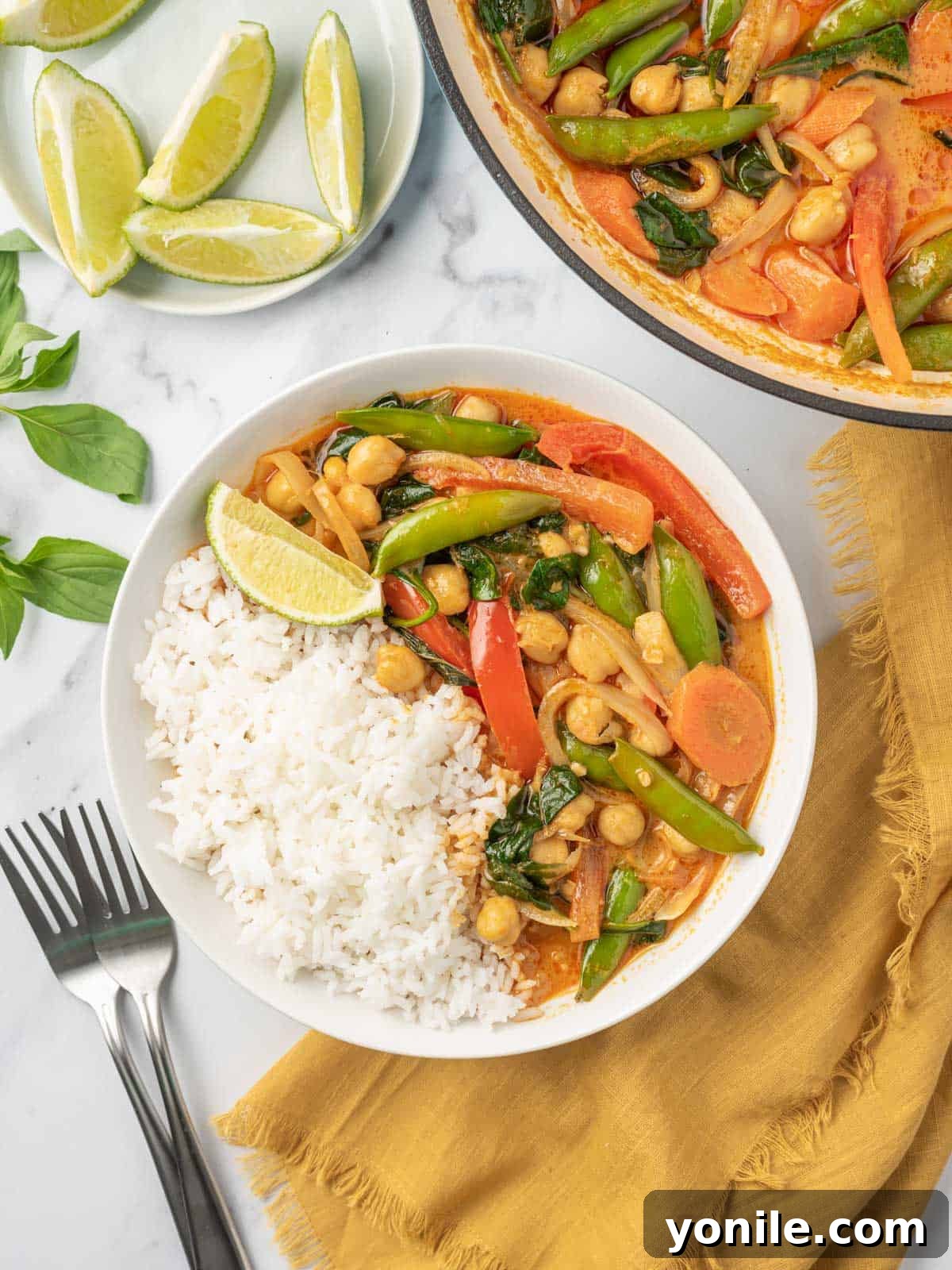
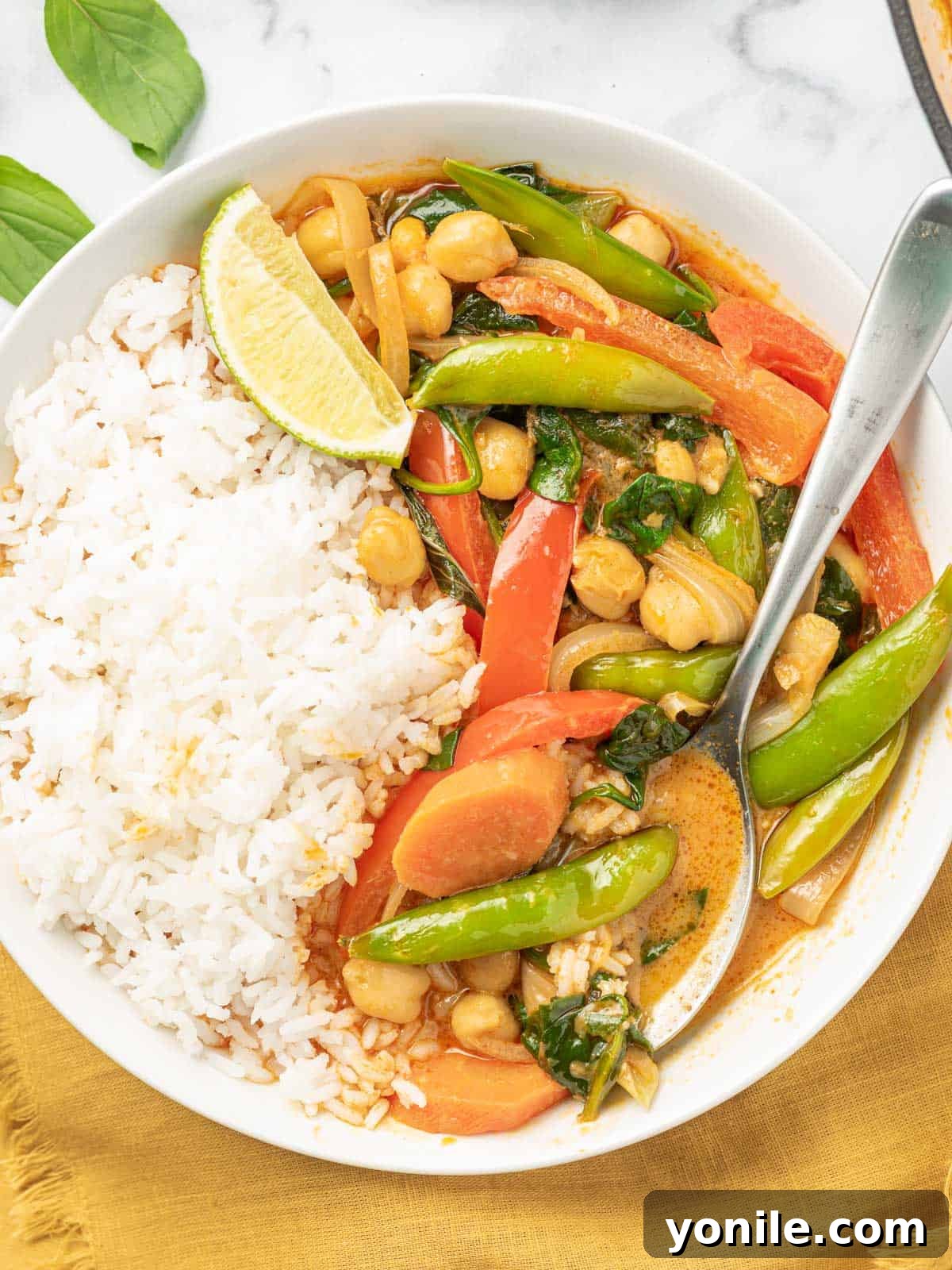
Embark on a culinary journey to Thailand from the comfort of your kitchen with this incredible Red Thai Vegan Curry. This dish is the epitome of comfort food – a harmonious blend of creamy, warm, and deeply aromatic flavors that draw inspiration from traditional Thai red curry. Packed with vibrant vegetables and a rich, coconut-infused sauce, this plant-based curry offers a delightful dining experience that caters to everyone, whether you’re a seasoned vegan or simply exploring delicious meat-free options. Best of all, this exquisite Thai curry with vegetables comes together in under 35 minutes, making it an ideal choice for busy weeknights or a quick, satisfying weekend meal. Serve it generously over fluffy rice or tender noodles for a complete, nourishing, and utterly delicious dish that’s guaranteed to become a family favorite.
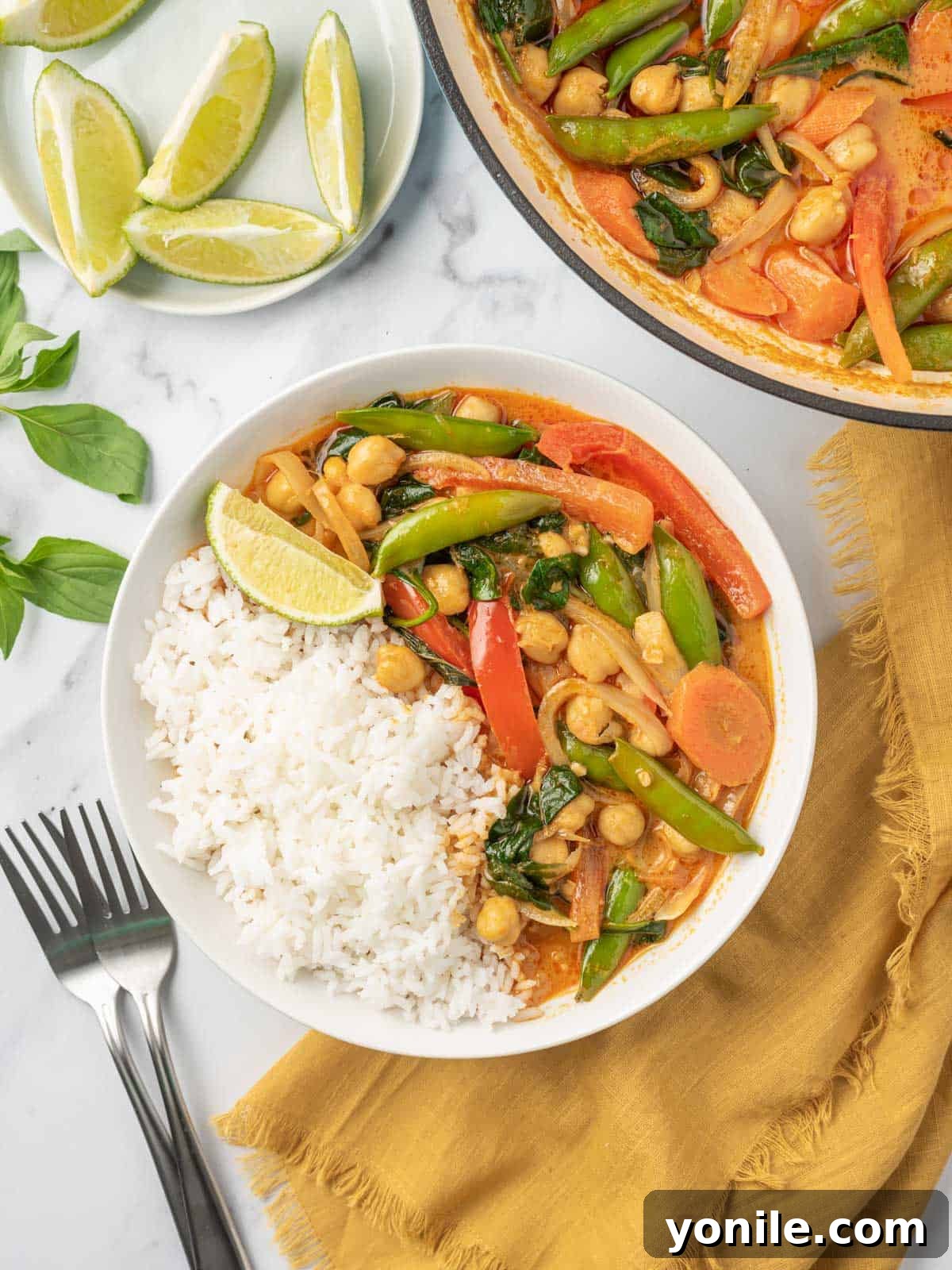
Our Vegan Red Curry boasts a sauce that is not just flavorful but truly captivating. It’s a symphony of bright, bold, and moderately spicy notes that dance on your palate. This versatile dish is perfect for both a quick lunch or a hearty dinner. Its straightforward preparation makes it incredibly easy to double, allowing for convenient meal prepping that stores beautifully in the fridge. Imagine having a wholesome, flavorful meal ready to go throughout the week! This Thai Red Curry with Vegetables is the kind of staple recipe you’ll want to keep the ingredients for on hand at all times, ensuring a delicious and healthy meal is always within reach. If you appreciate the complex flavors of curry, you might also enjoy exploring other Thai-inspired dishes like a classic Thai Red Curry Chicken recipe for those who enjoy poultry options.
Why You’ll Love This Authentic Thai Red Curry
Prepare to fall in love with this Authentic Thai Red Curry for a multitude of reasons:
- Explosion of Bold Flavors: This Vegan Red Curry is a masterclass in flavor. It’s wonderfully spicy, luxuriously coconut-y, and profoundly delicious. The rich red curry paste, combined with fresh aromatics and creamy coconut milk, creates a depth of flavor that is both exotic and comforting. Each spoonful offers a perfect balance of heat, sweetness, and savory notes, making it an incredibly satisfying meal.
- Remarkably Quick & Easy: Forget the long wait for takeout! Crafting this authentic Thai red curry is surprisingly simple and astonishingly fast, requiring only about 35 minutes from start to finish. This recipe prioritizes efficiency without compromising on taste, utilizing readily available ingredients and straightforward cooking steps. It’s the ultimate solution for a wholesome, homemade meal when time is of the essence.
- Ideal for Effortless Meal Prep: This Thai Curry with Vegetables is your new best friend for healthy meal planning. Prepare a generous batch early in the week, and you’ll have delicious, ready-to-eat lunches or dinners for days. The flavors actually deepen and meld beautifully overnight, often tasting even better the next day. For even greater convenience, consider making a double batch and freezing the extra portions. Thaw and reheat whenever you need a quick, nutritious, and flavorful meal.
- Nutrient-Rich & Wholesome: Loaded with a colorful array of fresh vegetables and protein-rich chickpeas, this curry is a powerhouse of essential vitamins, minerals, and fiber. It’s a fantastic way to incorporate more plant-based goodness into your diet while enjoying incredible taste.
- Customizable to Your Liking: The beauty of this recipe lies in its flexibility. Easily swap in your favorite seasonal vegetables or adjust the spice level to suit your preference. Whether you prefer milder flavors or crave an extra kick, this curry can be tailored to your taste buds.
Essential Vegan Red Curry Ingredients
Creating a truly exceptional Red Thai Vegan Curry starts with a selection of fresh, high-quality ingredients. Here’s a closer look at what you’ll need and why each component is vital to the dish’s success:
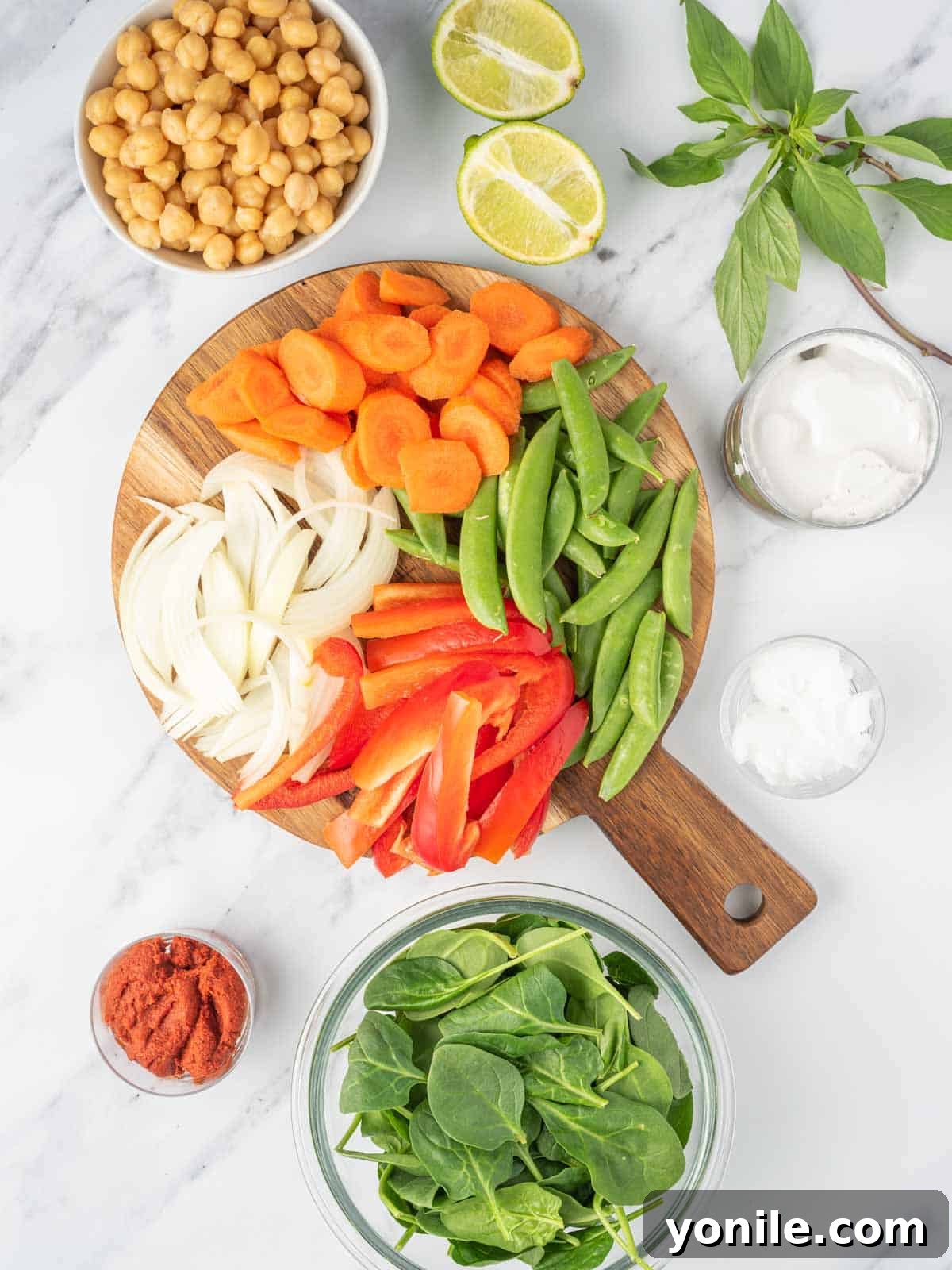
- Coconut Oil: This is our preferred oil for sautéing as it adds a subtle tropical note that complements Thai flavors. Alternatively, you can use another high-heat tolerant oil like avocado oil or grapeseed oil.
- Aromatics: Freshly minced garlic, grated ginger, and thinly sliced yellow onion form the foundational flavor base of this curry. These aromatics are essential for building layers of complex taste and a delightful aroma that fills your kitchen. Don’t skimp on these for the best results!
- Colorful Vegetables: A vibrant mix of red bell pepper, crisp carrots, hearty chickpeas, sweet snow peas, and nutrient-packed spinach not only adds incredible flavor and texture but also a wealth of nutrients. Chickpeas provide an excellent source of plant-based protein, making this curry extra satisfying.
- Red Curry Paste: This is the heart and soul of our Thai curry. Available in jars in the international or Asian section of most grocery stores, red curry paste is a concentrated blend of spices, chilies, and herbs. Be sure to select a brand that is explicitly labeled vegan, as some traditional pastes may contain shrimp paste. Remember, curry paste is distinctly different from curry powder in flavor and consistency.
- Coconut Milk: Full-fat canned coconut milk is highly recommended for achieving a rich, velvety, and authentically creamy curry sauce. While light coconut milk can be used to reduce calories, it will result in a thinner, less luxurious consistency. Shake the can well before opening to combine the cream and water.
- Salt: Essential for seasoning and balancing all the other flavors, bringing out the best in the curry. Always taste and adjust salt levels to your preference.
- Fresh Limes: A squeeze of fresh lime juice at the end brightens the entire dish, cutting through the richness of the coconut milk with its zesty acidity. Fresh lime juice offers a far superior flavor profile compared to bottled varieties, and lime wedges make for a beautiful and functional garnish.
- Thai Basil: This aromatic herb provides a distinct, slightly peppery, and anise-like flavor that is characteristic of authentic Thai cuisine. Thai basil leaves are generally sturdier than common sweet basil. If Thai basil is unavailable, regular fresh basil can be used as a substitute, or you can opt for fresh cilantro for a different but equally delightful herbaceous note.
How To Make Red Thai Vegan Curry: A Step-by-Step Guide
Crafting this flavorful Red Thai Vegan Curry is a straightforward process. Follow these simple steps to bring a taste of Thailand into your home:
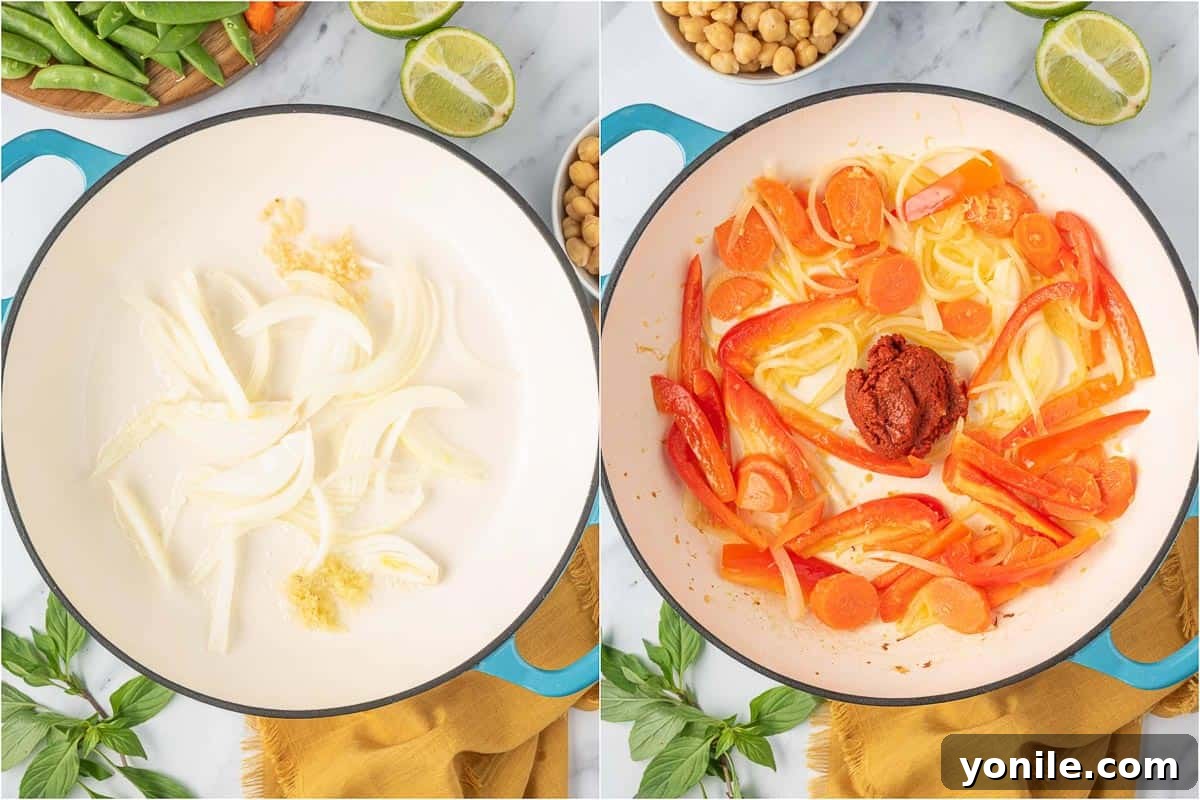
- Sauté the Aromatics and Initial Vegetables: Begin by heating the coconut oil in a large skillet or Dutch oven over medium heat. Once shimmering, add the minced garlic, grated ginger, and sliced yellow onion. Sauté these aromatics for about 2-3 minutes until they become fragrant and the onion softens, creating a foundational layer of flavor for your curry. Next, introduce the sliced red bell peppers and carrots to the skillet. Continue to sauté for another 3-4 minutes, allowing them to start tenderizing while retaining a slight crispness. Finally, stir in the red curry paste and cook for just 1 minute. This crucial step helps to toast the spices in the paste, intensifying their flavors and aromas.
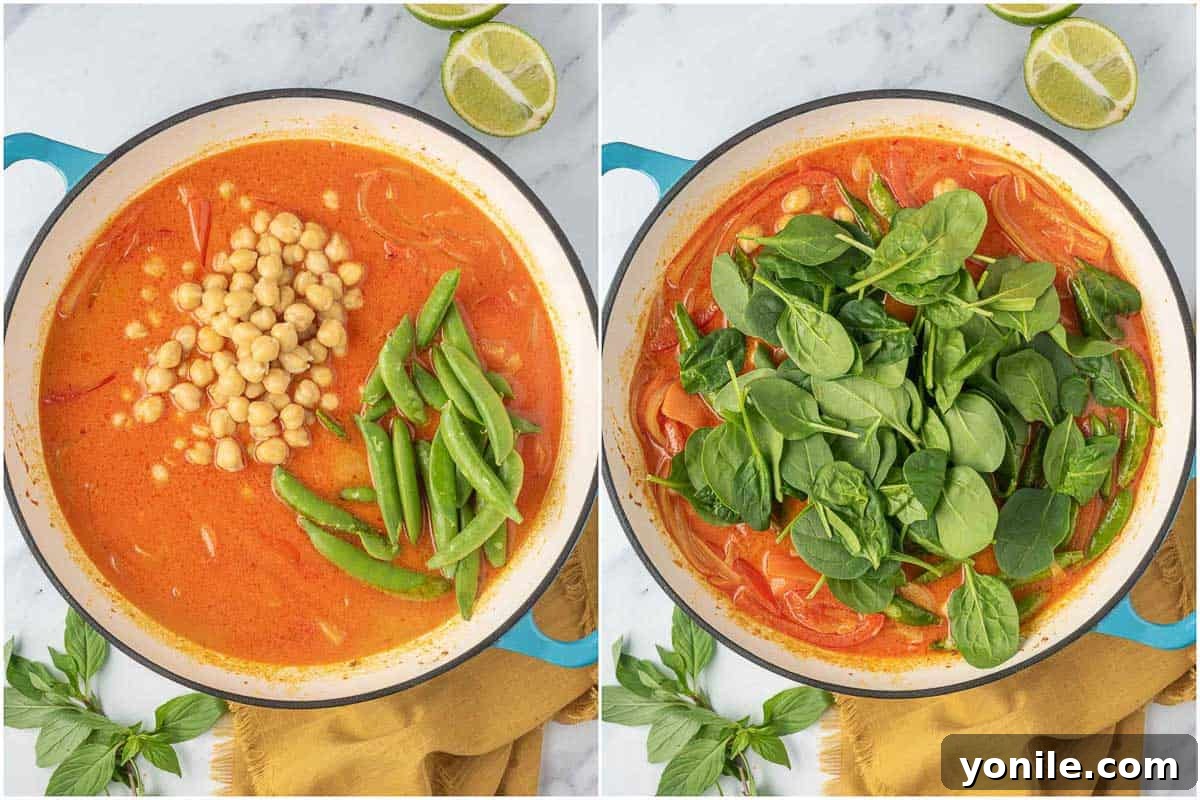
- Simmer the Sauce and Wilt the Spinach: Pour in the full-fat canned coconut milk and add the salt. Stir everything together thoroughly and bring the mixture to a gentle boil. Once boiling, reduce the heat to medium and add the drained chickpeas and fresh snow peas. Allow them to cook in the simmering sauce for 5-6 minutes, ensuring the chickpeas are heated through and the snow peas are tender-crisp. Lastly, add the fresh spinach, pushing it down into the sauce if needed. Simmer for just 2 more minutes, or until the spinach has fully wilted into the creamy curry, adding a vibrant green color and extra nutrients.
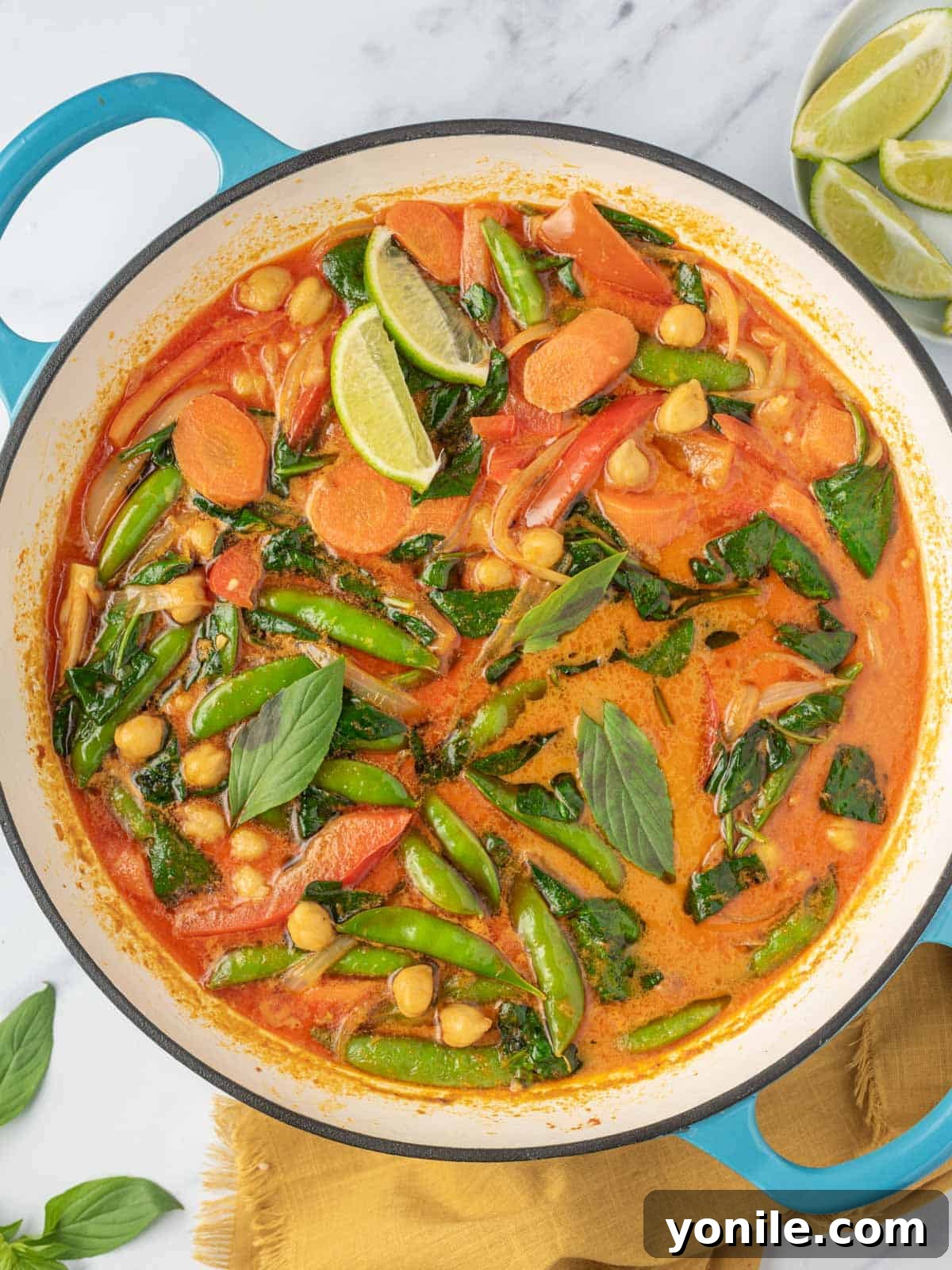
- Finish and Garnish: Remove the skillet from the heat. Stir in the fresh lime juice, which will add a crucial burst of acidity and freshness to balance the rich, creamy sauce. Ladle your vibrant Red Thai Vegan Curry into serving bowls and garnish generously with fresh Thai basil leaves. The fragrant basil not only adds visual appeal but also a final aromatic flourish that truly enhances the authentic Thai experience.
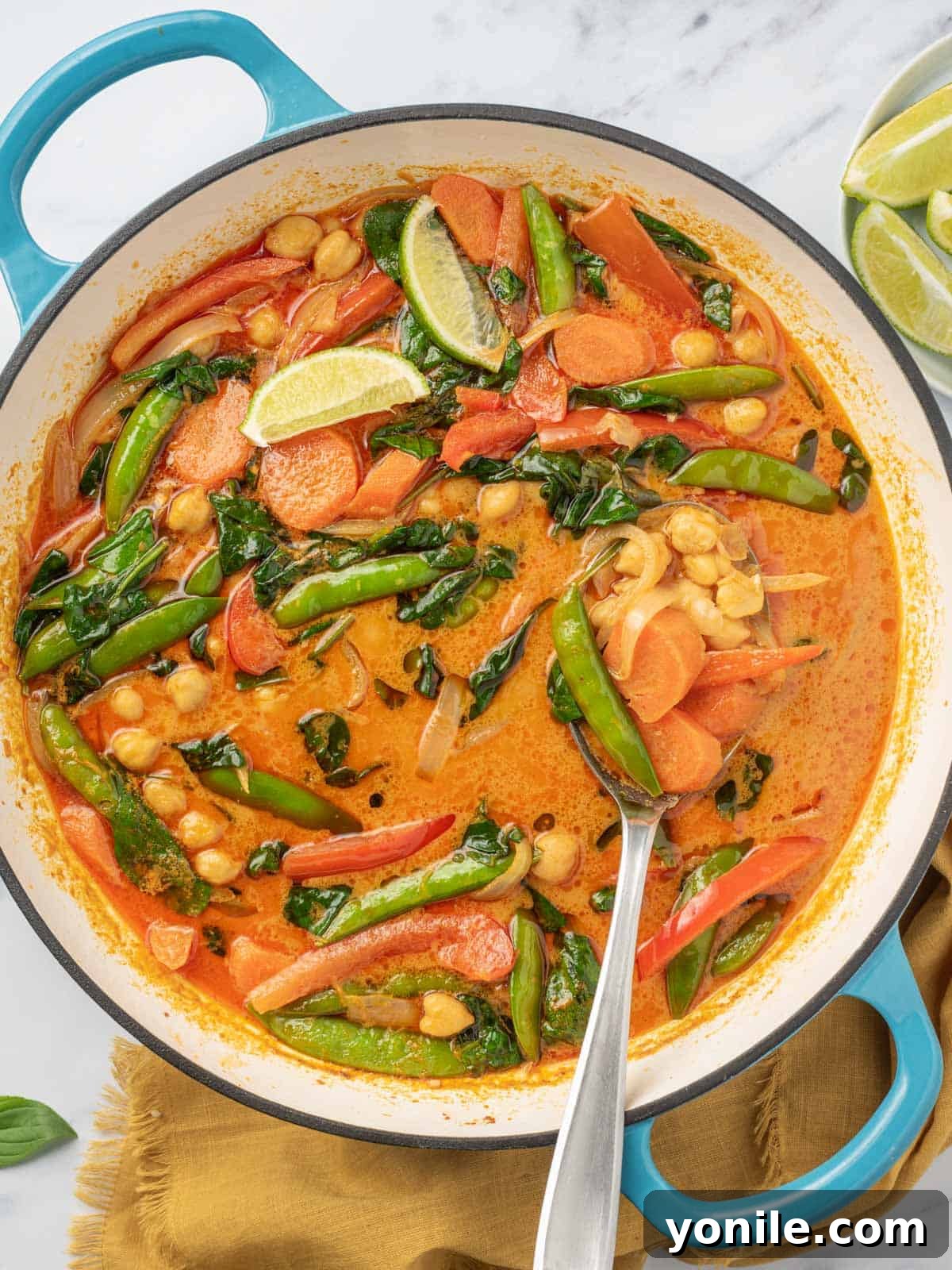
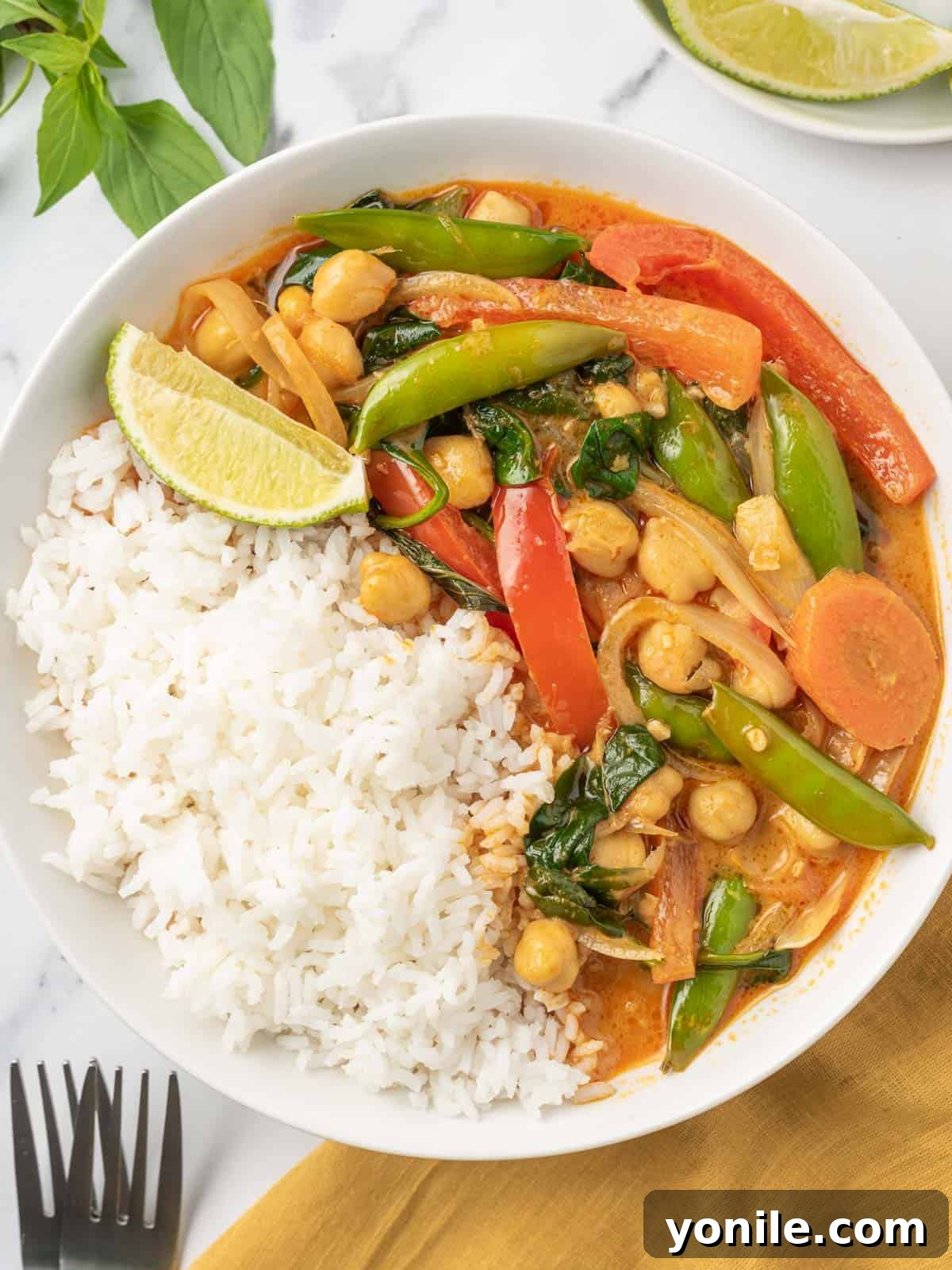
- Serve and Enjoy: Serve this delicious Red Thai Curry with Vegetables immediately. It pairs perfectly with a generous portion of steaming white rice, which soaks up every last drop of the exquisite sauce. For a lighter option, consider brown rice, cauliflower rice, or even rice noodles.
Expert Tips for Crafting the Perfect Thai Curry with Vegetables
Elevate your Thai Curry with Vegetables from great to absolutely extraordinary with these helpful tips:
- Embrace the Aromatics: Never skimp on fresh garlic, ginger, and onions. These are the unsung heroes that build the complex flavor foundation of any good Thai curry. Fresh is always best!
- Choose Full-Fat Coconut Milk: For an incredibly rich, creamy, and satisfying curry, full-fat canned coconut milk is key. While light versions are available, they will result in a less decadent texture and flavor.
- Uniform Vegetable Cuts: To ensure all your vegetables cook evenly and achieve the perfect tender-crisp texture, cut them into roughly the same size and shape. This attention to detail makes a difference in both presentation and consistency.
- Customize Your Veggies: This recipe is incredibly adaptable. Feel free to swap in your favorite vegetables or use whatever you have on hand. Great additions include broccoli florets, cauliflower, mushrooms, bamboo shoots, green beans, or even sweet potatoes (add earlier as they take longer to cook).
- Smart Vegetable Sourcing: If your grocery store has a salad bar, it can be a convenient option to quickly gather pre-chopped vegetables, saving you significant prep time. Just be mindful of cost, as it can sometimes be pricier than buying whole vegetables.
- Verify Vegan Curry Paste: Always double-check the ingredient list of your red curry paste. Some traditional brands contain shrimp paste, which makes them non-vegan. Look for brands specifically labeled “vegan” or those that list only plant-based ingredients.
- Boost the Protein: For an even more substantial meal, consider adding baked or pan-fried tofu. Pressing the tofu before cooking will ensure it absorbs the rich curry flavors beautifully. Tempeh or additional chickpeas are also excellent plant-based protein boosters.
- Adjust the Heat: If you love a spicier curry, easily kick up the heat! Add a pinch of red chili flakes, a few thinly sliced fresh red chilies (such as bird’s eye chilies), or a drizzle of chili oil while cooking or as a garnish.
- Taste and Adjust: Before serving, always taste your curry and adjust the seasoning as needed. You might want a little more salt, a touch more lime juice for brightness, or even a tiny pinch of sugar to balance the spice and acidity.
Frequently Asked Questions About Vegan Red Thai Curry
Absolutely! This Vegan Red Thai Curry is generally packed with healthy ingredients. It’s loaded with various vegetables, providing essential vitamins, minerals, and dietary fiber. While full-fat coconut milk is calorie-dense due to its healthy fats, these are beneficial in moderation. For a slightly lighter version, you can opt for light coconut milk. If you’re managing carbohydrate intake, consider limiting the amount of rice you serve with it or replacing it entirely with cauliflower rice or quinoa.
Red curry paste is a foundational ingredient in Thai cuisine, a flavorful and aromatic mixture typically featuring red chilies, lemongrass, galangal, kaffir lime zest, shallots, garlic, and various spices like coriander and cumin. It imparts a mild to moderately spicy kick and a rich, complex flavor to the curry. It’s crucial for vegan preparations to carefully read the label, as many traditional brands contain shrimp paste. Look for brands explicitly marked “vegan” or with an ingredient list free of animal products.
The primary distinction between yellow, red, and green curry pastes lies in the type and quantity of chilies used, which influences their color and heat level. Green curry paste typically uses fresh green chilies, resulting in a vibrant color and often the spiciest flavor profile. Red curry paste, as featured here, uses dried red chilies, offering a robust flavor and moderate heat. Yellow curry paste often incorporates turmeric (giving it its distinct color) and dried yellow chilies, tending to be the mildest and sweetest of the three. Beyond chilies, the specific blend of herbs and spices also varies, so experimenting with different brands and colors is encouraged to discover your personal favorite.
One of the best qualities of curry is that its flavors often deepen and become even more harmonious the next day! Leftover Red Thai Vegan Curry is a culinary delight. Store any cooled leftovers in an airtight container in the refrigerator for up to 5 days. To reheat, you can either warm individual portions in the microwave until heated through, or gently reheat it in a skillet over medium-high heat on the stovetop, stirring occasionally, until simmering and hot.
Yes, this Vegan Red Curry freezes beautifully! Once cooled completely, transfer the curry to freezer-safe containers or heavy-duty freezer bags. Ensure there’s minimal air in the container or bag to prevent freezer burn. It can be frozen for up to 3 months. To enjoy, defrost the curry overnight in the refrigerator, then reheat it either in the microwave or in a skillet over medium-high heat until it’s bubbling and thoroughly warmed.
The rich and creamy sauce of Authentic Thai Red Curry is best enjoyed with something that can soak up all its deliciousness. Classic pairings include steamed white jasmine rice or brown rice. Other fantastic options include rice noodles, quinoa for an added protein boost, or even healthier alternatives like cauliflower rice. For dipping, consider serving it with warm naan bread, roti, or another type of flatbread.
Yes, this Vegan Red Thai Curry recipe can easily be made gluten-free. Most red curry pastes are naturally gluten-free, but always double-check the label to ensure there are no hidden gluten-containing ingredients. All other ingredients listed are typically gluten-free. Serve with rice or rice noodles instead of wheat-based noodles or bread to keep it entirely gluten-free.
If your curry turns out too spicy, you can temper the heat by adding a bit more coconut milk, a squeeze of fresh lime juice, or a spoonful of sugar. Serving it with extra plain rice or a dollop of vegan yogurt can also help. If it’s not spicy enough, you can add more red curry paste (if you still have some), a pinch of red chili flakes, or some thinly sliced fresh chilies to individual servings.
Explore More Vegetable-Loaded Recipes
If you’re looking for more delicious and healthy ways to incorporate vegetables into your diet, be sure to check out these other fantastic recipes:
- Homemade Vegetable Soup
- Air Fryer Shrimp and Vegetables
- Skillet Salmon with Vegetables
- Easy Vegan Lentil Chili
We genuinely hope you enjoy exploring all the wonderful recipes shared with you, especially this truly delicious and Authentic Thai Red Vegan Curry. We encourage you to try it, savor every bite, leave a rating, and share your delightful creation with your friends and family!
If you make this recipe and love it, please take a moment to leave a star rating and a comment below. We’d love to see your delicious recreations! Use our hashtag #CookinWithMima to share your photos with us on Instagram. For all our latest social posts and recipes, be sure to follow Cookin’ With Mima on FACEBOOK | INSTAGRAM | PINTEREST.

Red Thai Vegan Curry
Ingredients
- 2 tablespoons coconut oil
- 1 teaspoon garlic, minced
- 1 teaspoon ginger, grated
- 1 small yellow onion, thinly sliced
- 1 medium red bell pepper, thinly sliced
- 2 medium carrots, thickly sliced
- 3 tablespoons red curry paste
- 1 15 oz. coconut milk, canned
- 1 teaspoon salt
- 1 cup canned chickpeas
- 25-30 pieces fresh snow peas
- 2 cups fresh spinach
- ½ fresh lime juice
- Thai basil, to garnish
- Lime wedges, to serve
Instructions
-
Heat coconut oil over medium heat in a large skillet. Add minced garlic, ginger, and onion. Saute for a couple of minutes.
-
Add the bell peppers and carrots and saute for 3-4 minutes. Add the red curry paste and cook for a minute.
-
Pour in the canned coconut milk and salt and bring it to a boil. Add the chickpeas and snow peas and cook for 5-6 minutes on medium heat.
-
Add the spinach and simmer for 2 more minutes until wilted.
-
Finally, add a fresh lime juice and garnish it with Thai basil.
-
Serve the red Thai curry with white rice to enjoy.
Notes
- Don’t skimp on the aromatics like garlic, ginger and onions.
- Full fat coconut milk is going to make this curry rich and delicious.
- Cut your vegetable to the same size, so they cook evenly.
- Swap in your favorite vegetables or use what you have on hand.
- If your grocery store has a salad bar, that’s a great place to score all the veggies you need with little or no prep work.
- Some curry paste contains shrimp paste, so check labels for a truly vegan dish.
- Add baked or fried tofu if desired.
- Add red chili flake, sliced red chillis or chili oil to kick up the heat.
Nutrition
Carbohydrates: 16g |
Protein: 4g |
Fat: 9g |
Saturated Fat: 6g |
Polyunsaturated Fat: 1g |
Monounsaturated Fat: 1g |
Sodium: 731mg |
Potassium: 366mg |
Fiber: 5g |
Sugar: 5g |
Vitamin A: 9282IU |
Vitamin C: 52mg |
Calcium: 69mg |
Iron: 2mg
Like this recipe? Rate and comment below!