
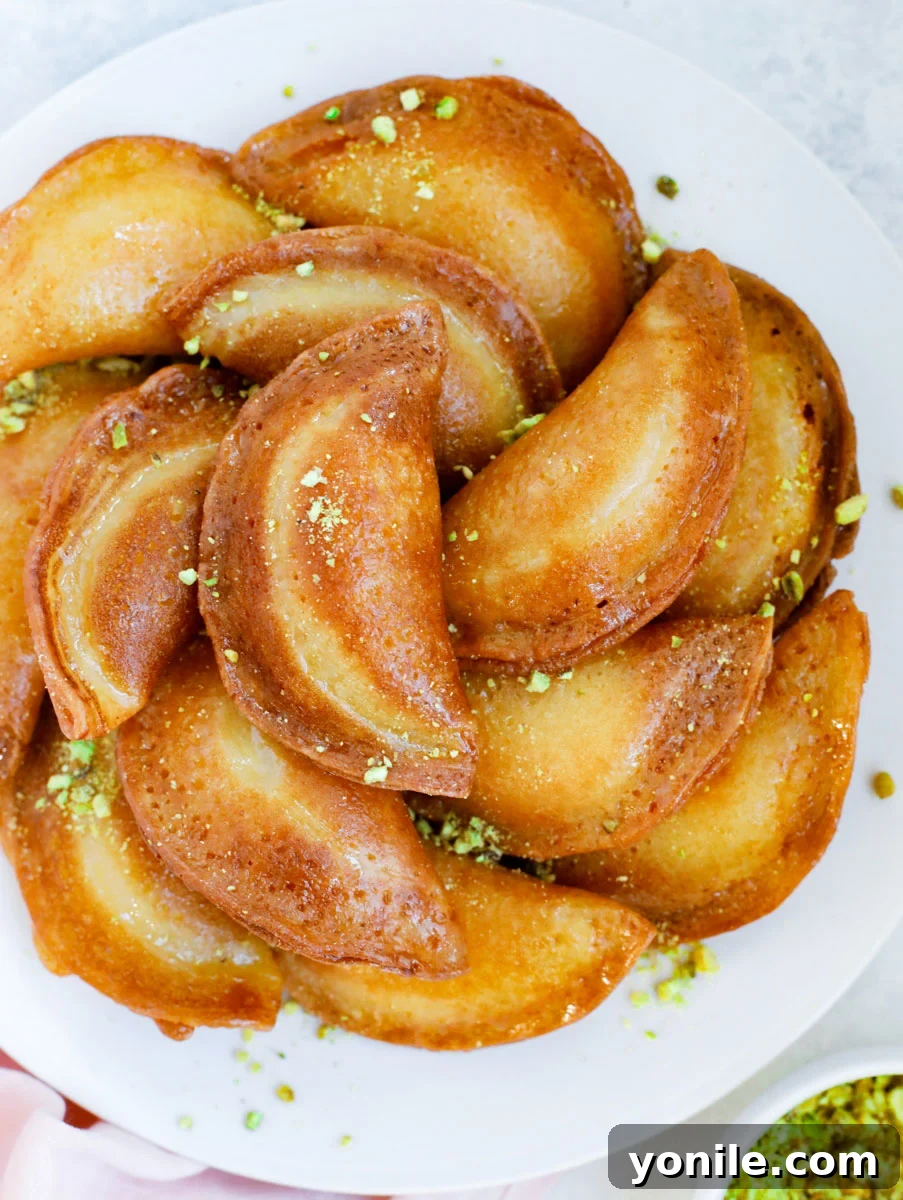
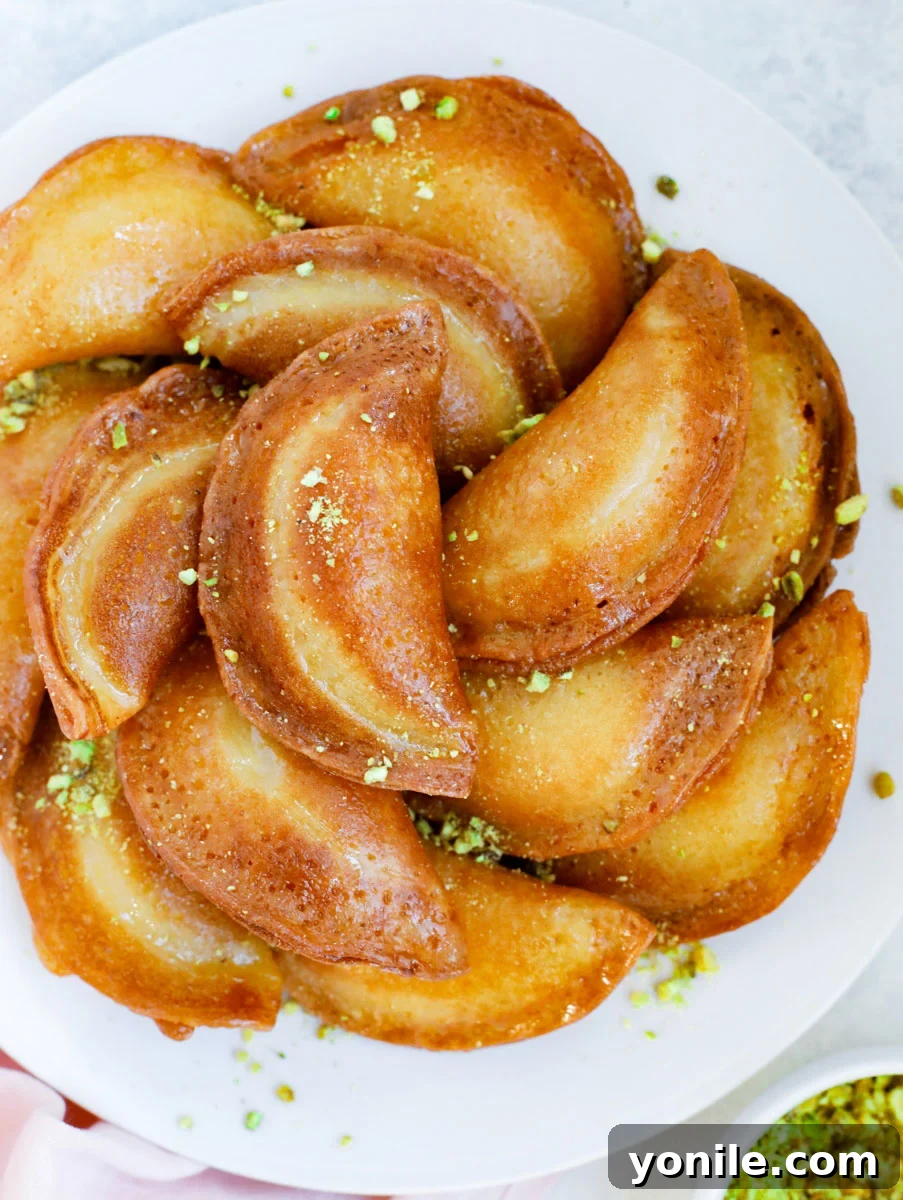
If you’ve ever savored the delightful tastes of Lebanese cuisine, you’ll know that their desserts hold a special place in the heart of Middle Eastern gastronomy. Among these sweet treasures, Atayef (also spelled Katayef) stands out as an exceptionally cherished delicacy, particularly during the holy month of Ramadan. Imagine perfectly golden-fried pancakes, generously stuffed with either a rich, homemade Ashta (oriental cream) or a sweet, spiced nut mixture, then lovingly dipped into an aromatic simple syrup. The result is a symphony of textures and flavors that capt’ivates the palate. While Atayef is synonymous with Ramadan festivities, its irresistible charm makes it a perfect dessert to enjoy all year round.
For those who adore the rich tapestry of Middle Eastern desserts, exploring other Lebanese confections is a must. You might find yourself equally enchanted by the flaky layers of Lebanese Shaabiyat Dessert. Dive deeper into the diverse world of Lebanese sweets and savory dishes by exploring more Lebanese Recipes HERE. Each one promises an authentic taste experience.
Why This Qatayef Recipe Will Become Your New Favorite
This Atayef recipe isn’t just another dessert; it’s an experience waiting to happen. Here’s why you’ll be making it again and again:
- Unforgettable Flavor: Prepare for a dessert that’s truly addicting. These Atayef are so incredibly delicious, boasting a perfect balance of crispy exterior, creamy filling, and fragrant syrup, that they rarely last long enough to become leftovers. Each bite is a delightful journey for your taste buds, leaving you craving more.
- Surprisingly Simple to Master: Don’t let the exquisite appearance of Atayef intimidate you. While the steps might seem detailed, this recipe is crafted to be straightforward and easy for home cooks of all skill levels. With clear instructions, you’ll find the process enjoyable and rewarding, resulting in a dessert that tastes like it came from a professional patisserie.
- Superior Homemade Quality: While store-bought Atayef can be a quick fix, nothing compares to the freshness and customizable perfection of a homemade batch. This recipe allows you to control every ingredient, ensuring the highest quality and the exact flavor profile you desire. Experiment with fillings, adjust the sweetness of the syrup, or add your personal touch to create Atayef that are undeniably better than anything you can buy.
What Exactly is Atayef (Qatayef)? A Dive into a Middle Eastern Culinary Icon
Atayef, often referred to as Qatayef, is much more than just a dessert; it’s a culinary symbol deeply embedded in Middle Eastern culture, particularly during special occasions like Ramadan. At its core, Atayef consists of delicate, semi-cooked pancakes. Unlike typical breakfast pancakes, Atayef pancakes are cooked only on one side, resulting in a unique texture with a spongy, bubbly top and a smooth, lightly cooked base.
These distinctive pancakes serve as a soft, pliable shell for a variety of sumptuous fillings. The most traditional and beloved filling is **Ashta**, a rich, creamy oriental custard made from milk, cream, and often flavored with aromatic rose and orange blossom waters. Other popular fillings include sweet cheese, offering a delightful tang, or a mixture of crushed nuts (like walnuts or pistachios) sweetened and spiced with cinnamon and nutmeg. Once filled, the pancakes are carefully sealed into crescent shapes.
The preparation doesn’t end there; these stuffed delights undergo a final transformation. They are typically deep-fried to a beautiful golden crispness, or for a lighter alternative, they can be baked until golden. Immediately after frying or baking, the warm Atayef are briefly submerged in a chilled, fragrant simple syrup (known as Ater). This quick dip allows the dessert to absorb just enough sweetness without becoming overly saturated. Atayef is traditionally served cooled, garnished with a sprinkle of ground pistachios, offering a textural contrast and a pop of color. There’s also a delightful variation called Atayef Asafiri, where the smaller pancakes are only partially sealed and served fresh (uncooked) with Ashta cream, often enjoyed for breakfast or a light snack.
Crafting the Creamy Heart: Homemade Ashta Ingredients
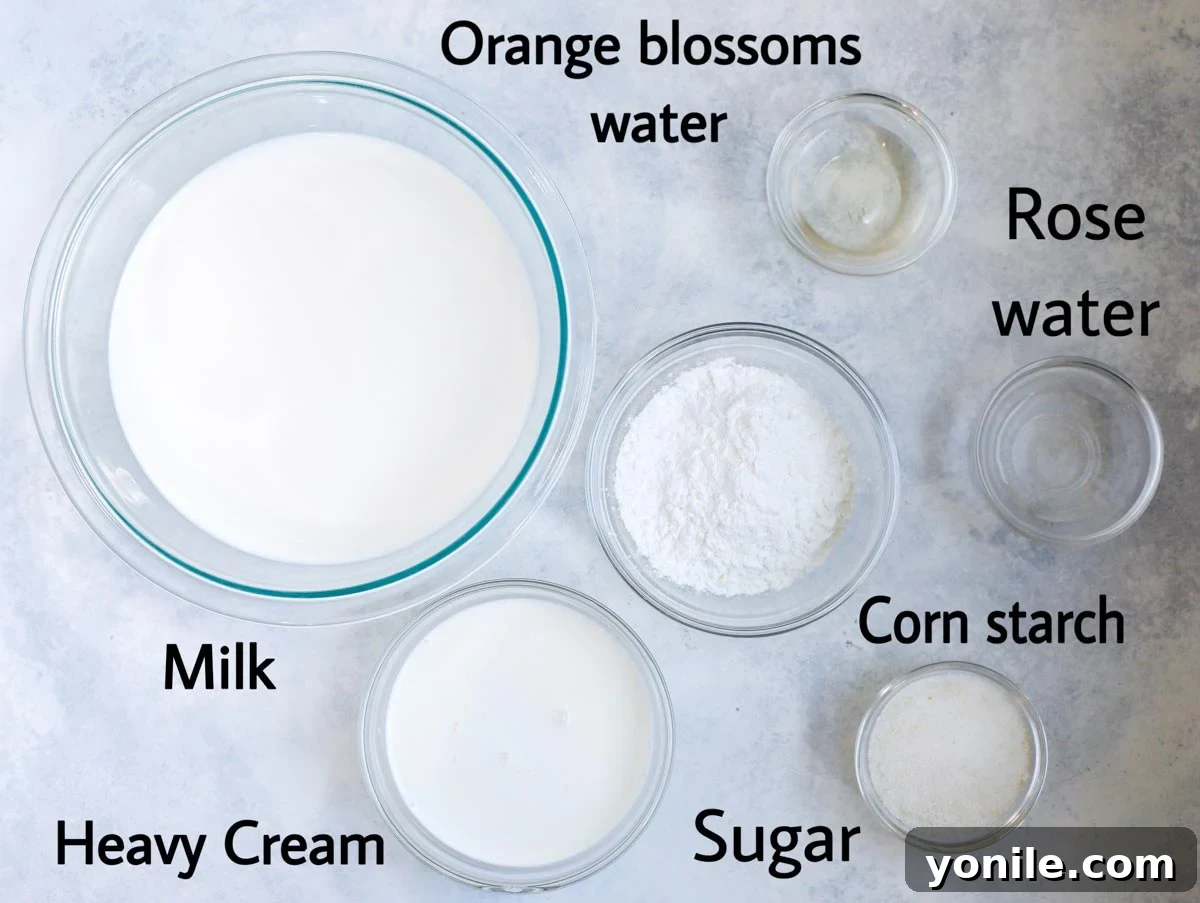
The secret to truly exceptional Atayef often lies in its filling, and homemade Ashta is the crown jewel. This rich, ethereal oriental cream elevates the dessert with its delicate flavor and luxurious texture. While the recipe card provides precise measurements, the essential ingredients for a perfect Ashta include:
- Whole Milk
- Heavy Cream
- Corn Starch (for thickening)
- Sugar
- Rose Water
- Orange Blossom Water
These simple ingredients combine to create a filling that is far superior to any store-bought alternative, imparting an authentic taste that is both comforting and exotic.
The Art of Making Atayef: A Step-by-Step Culinary Journey
Step 1: Prepare the Aromatic Simple Syrup (Ater)
Before you begin any other preparations, creating your simple syrup is crucial, as it needs ample time to cool completely. A cold syrup ensures the fried Atayef absorb the perfect amount of sweetness without becoming soggy.
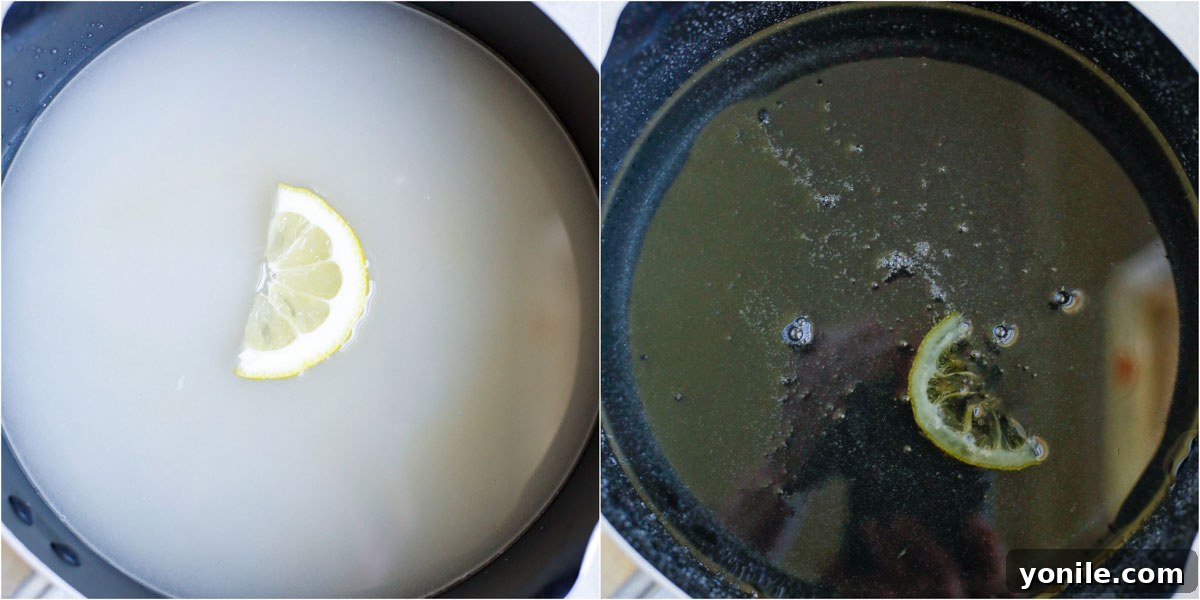
- Combine all simple syrup ingredients (sugar, water, lemon juice, orange blossom water, rose water) in a medium saucepan. Stir gently to help the sugar dissolve.
- Bring the mixture to a boil over medium heat. Once it starts boiling, set a timer for 5 minutes.
- After 5 minutes, add the lemon juice, orange blossom water, and rose water. Reduce the heat to low and let it simmer for another 2 minutes. The lemon juice helps prevent crystallization, while the floral waters infuse a distinct Middle Eastern aroma.
- Remove from heat and transfer the syrup to a heatproof container. Allow it to cool completely to room temperature, then refrigerate until thoroughly chilled. This cooling process is essential for the syrup’s consistency and how it interacts with the warm Atayef.
Step 2: Craft the Luscious Homemade Ashta Cream Filling
While your syrup chills, it’s the perfect time to prepare the creamy Ashta filling. The smooth, rich texture of freshly made Ashta is unparalleled.
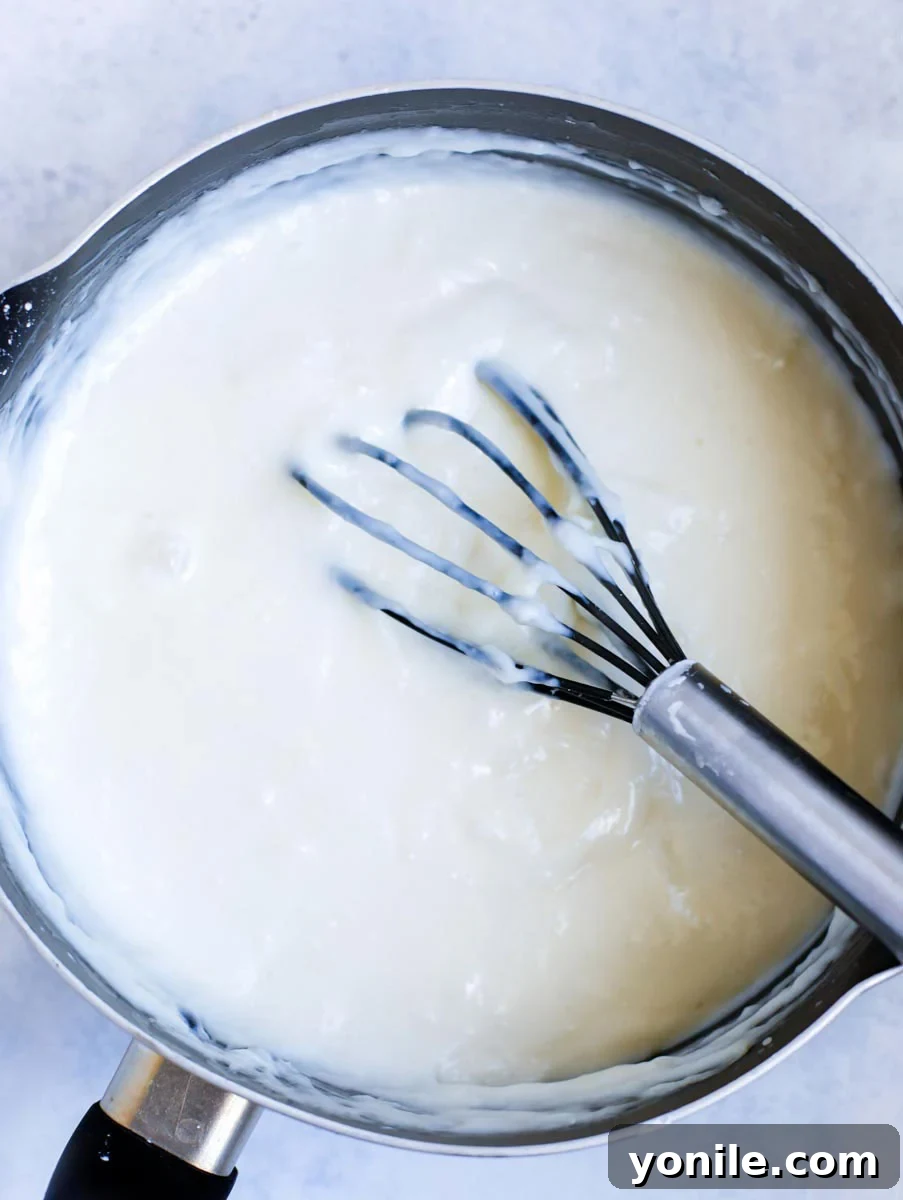
- In a medium-sized pot, combine all the Ashta ingredients (whole milk, heavy cream, corn starch, sugar, rose water, orange blossom water). Whisk vigorously until all ingredients are well combined and there are no lumps, especially from the corn starch.
- Place the pot over medium heat and continue whisking constantly. Consistent whisking is key to achieving a silky-smooth cream without any undesirable clumps.
- Bring the mixture to a boil. As it heats, you’ll notice it gradually thickening. Once it reaches a rolling boil and has thickened considerably, reduce the heat to low. Continue whisking for a few more minutes to ensure it’s perfectly set and smooth.
- Remove the thickened Ashta from the heat and immediately transfer it to a clean Pyrex dish or a shallow bowl.
- Cover the surface of the cream directly with plastic wrap to prevent a skin from forming. Let it cool at room temperature for at least 30 minutes. For optimal texture and to speed up cooling, transfer it to the refrigerator for an additional 15-30 minutes, or even prepare it a day in advance and chill overnight. A well-chilled Ashta is easier to work with when stuffing the pancakes.
Step 3: Master the Atayef Pancakes
The unique texture of Atayef pancakes is central to this dessert. They are softer and more delicate than regular breakfast pancakes, and crucially, cooked only on one side.
Atayef Pancake Ingredients
The batter for Atayef is distinct, featuring a blend of flours and leavening agents that give it its characteristic bubbly texture. You’ll need:
- All-purpose flour, sifted
- Fine semolina
- Warm whole milk
- Warm water
- Sugar
- Baking powder
- Orange blossom water
- Corn starch (optional, for extra crunch)
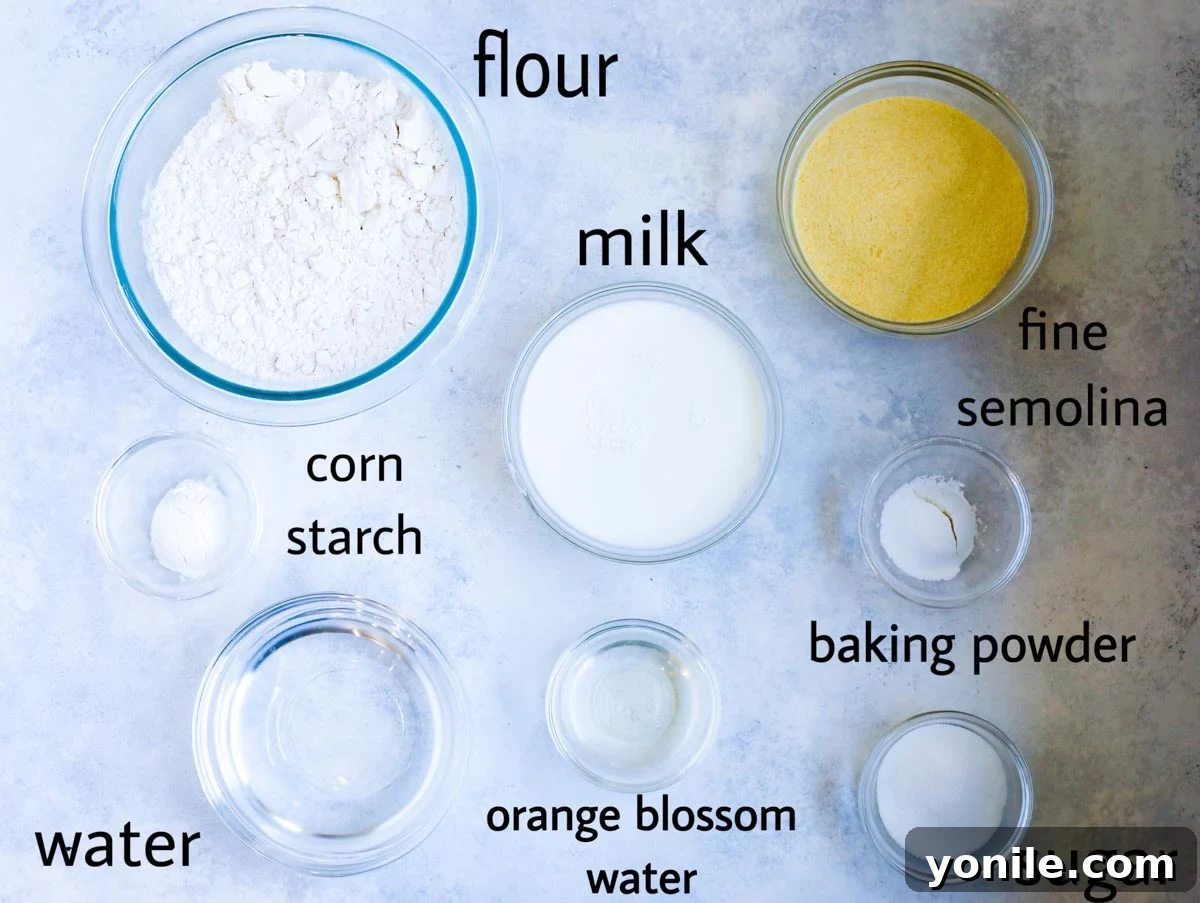
- In a blender, combine all the pancake ingredients. Blend thoroughly for 2-3 minutes until the batter is completely smooth and free of any lumps. The consistency should be thinner than typical pancake batter, quite loose. Let the batter rest for at least 20 minutes; this allows the semolina to hydrate and the leavening agents to activate, contributing to the signature texture.
- Heat a non-stick heavy skillet or griddle over medium-high heat. Lightly spray or brush it with a tiny amount of oil or butter, then wipe it down with a paper towel. Maintaining a consistent heat throughout the cooking process is important for even browning.
- Pour approximately 1/4 cup of batter onto the hot skillet for each pancake. Do not spread the batter. Allow the pancakes to cook undisturbed. You’ll notice bubbles forming on the surface; these bubbles will eventually dry out and solidify. This indicates the pancake is cooked through on one side. Do NOT flip the pancakes.
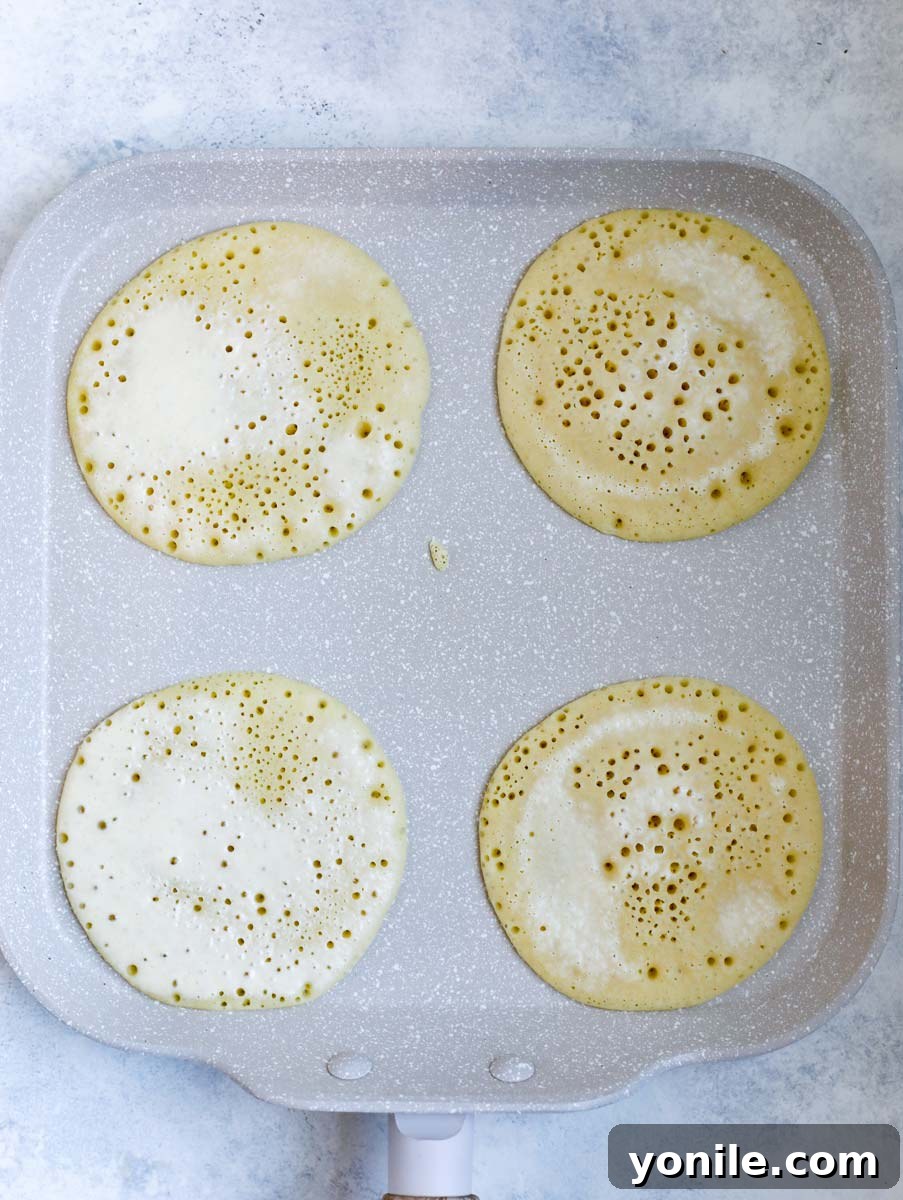
- Once the bubbles on top have dried, carefully remove the pancake from the skillet. Place it face-down (cooked side up) on a clean kitchen towel or paper towel. Cover the cooked pancakes with another towel to keep them soft and pliable as you continue cooking the remaining batter. This prevents them from drying out.
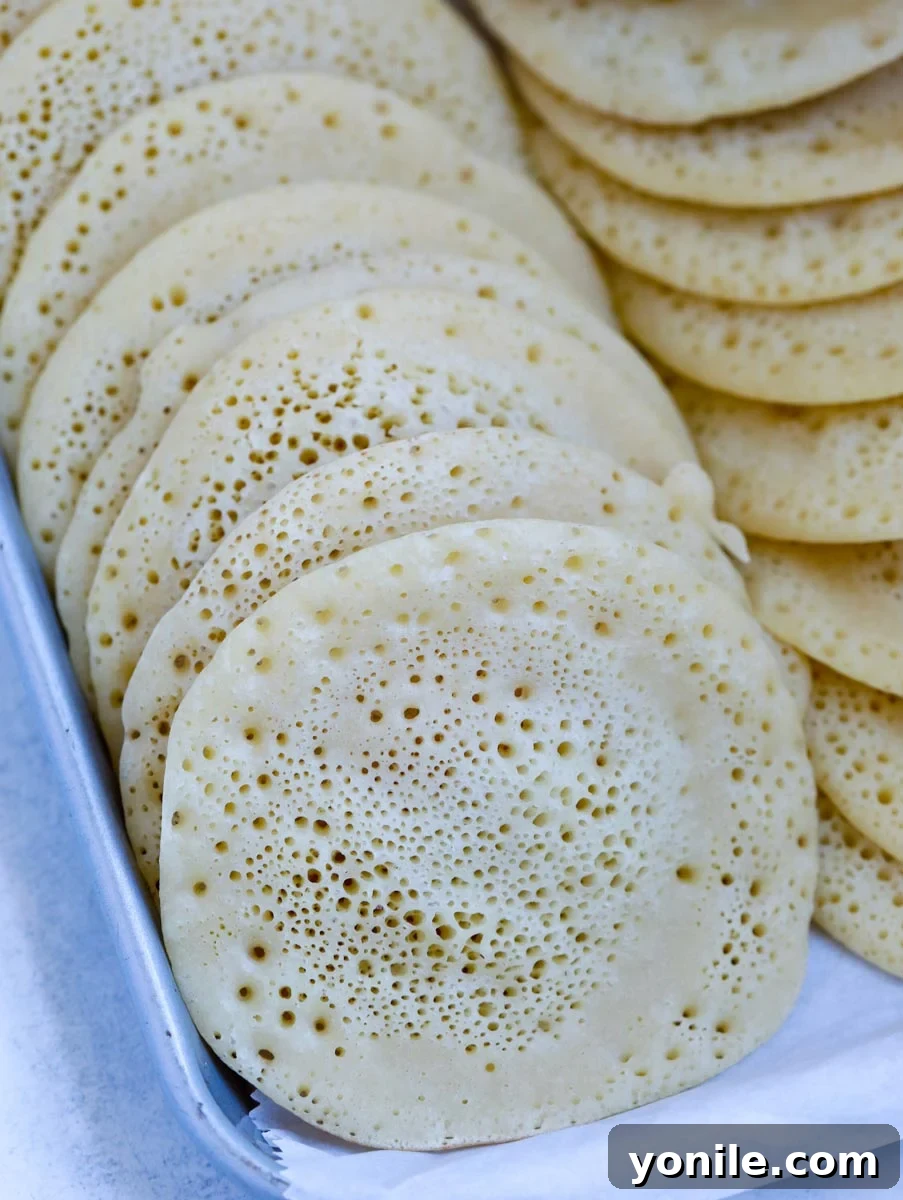
- Once all the pancakes are cooked and cooled slightly, you’re ready for the exciting step of assembling and filling them.
Step 4: The Art of Stuffing and Sealing Your Atayef
Now that your pancakes, Ashta cream, and syrup are ready, it’s time to bring them together into the recognizable crescent shape.
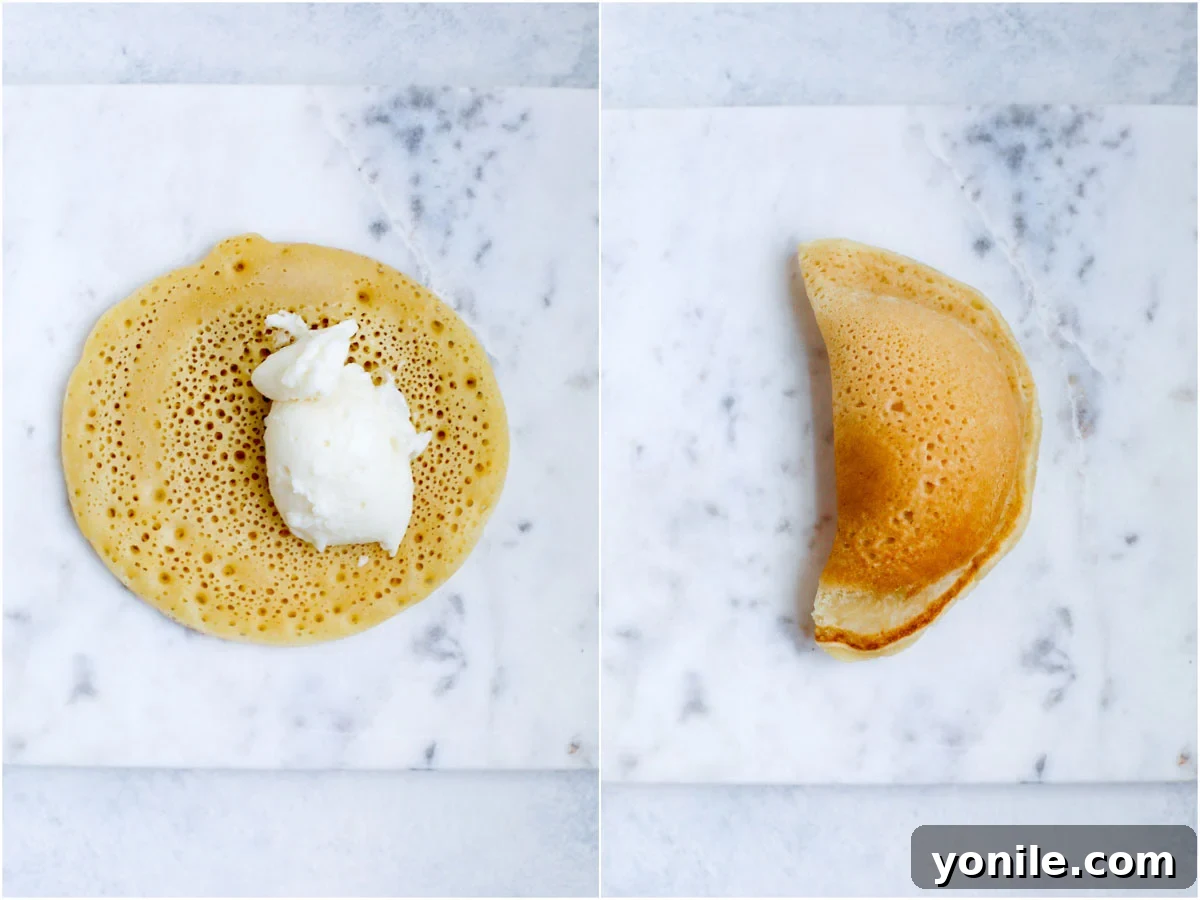
- Take one Atayef pancake. Place a regular teaspoonful of the chilled Ashta cream on one half of the pancake. Be mindful not to overfill, as this can cause the pancake to tear when sealing.
- Gently fold the pancake in half, bringing the uncooked edges together. Press the edges firmly with your fingertips to create a secure seal, forming a beautiful crescent shape. Repeat this process for all the cooked pancakes.
- While Ashta is a classic, don’t hesitate to explore other delicious fillings! A popular alternative is a sweet nut mixture. You can prepare this by combining crushed walnuts with sugar, a dash of orange blossom water, and a pinch of cinnamon and nutmeg. Alternatively, simply mix crushed walnuts with a little simple sugar syrup and nutmeg.
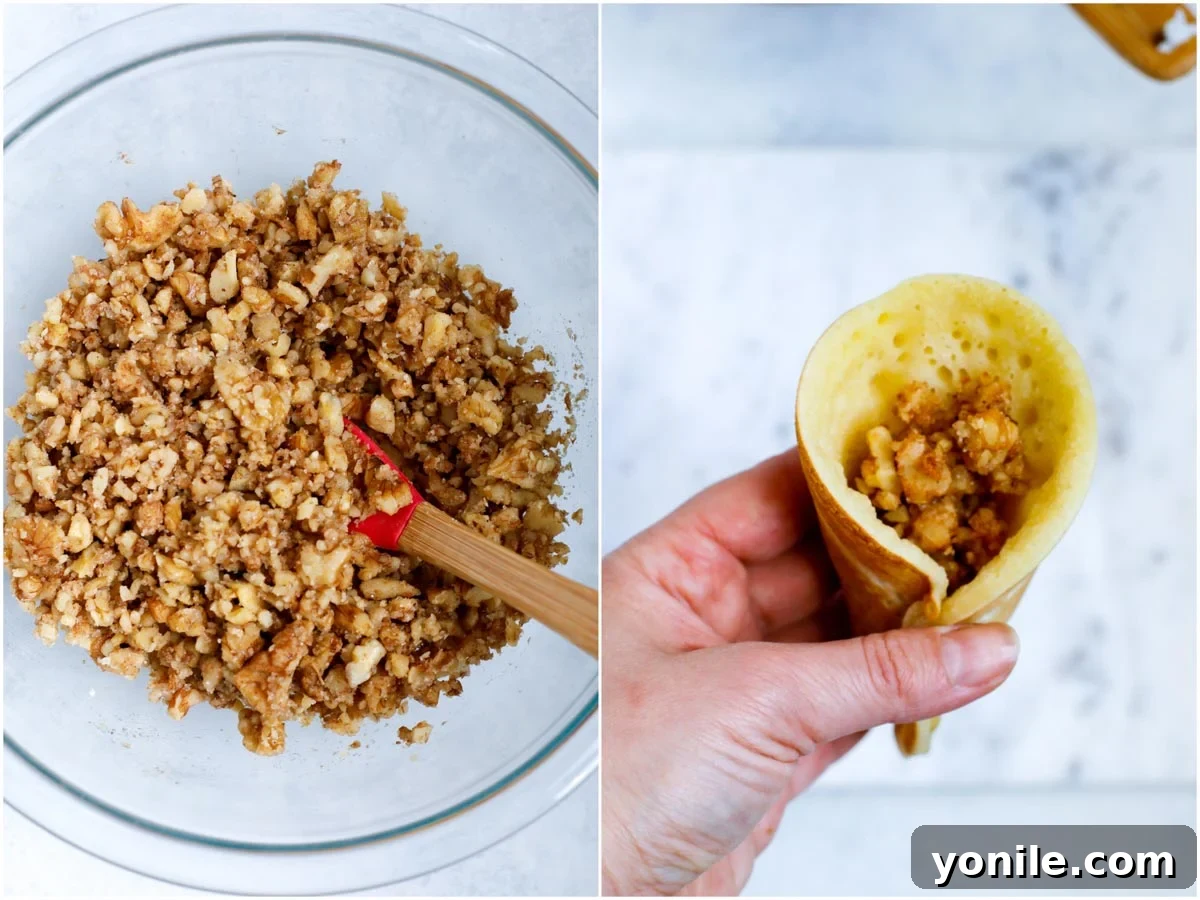
- Seal the nut-filled pancakes in the same crescent shape. Some people also enjoy Atayef filled with sweet cheese, offering another delightful flavor dimension. The choice of filling is entirely a matter of personal preference.
Step 5: Fry or Bake to Golden Perfection
The final cooking stage gives Atayef its characteristic crispy exterior.
- For Frying: Heat canola or vegetable oil in a deep pan over medium-high heat. Once the oil is hot (around 350-375°F or 175-190°C), carefully place the stuffed Atayef pancakes into the hot oil. Fry them in batches, ensuring not to overcrowd the pan, until they turn a beautiful golden brown on both sides. This usually takes only a couple of minutes per side.
- For Baking (Lighter Option): If you prefer a lighter version, preheat your oven to 350°F (175°C). Arrange the stuffed Atayef on a baking sheet and generously brush them with oil on both sides. Bake until they achieve a lovely golden-brown color and are crisp, typically around 15-20 minutes, flipping halfway through.
Step 6: The Final Dip and Elegant Garnish
This quick dip in the chilled syrup is what infuses the Atayef with its signature sweetness.
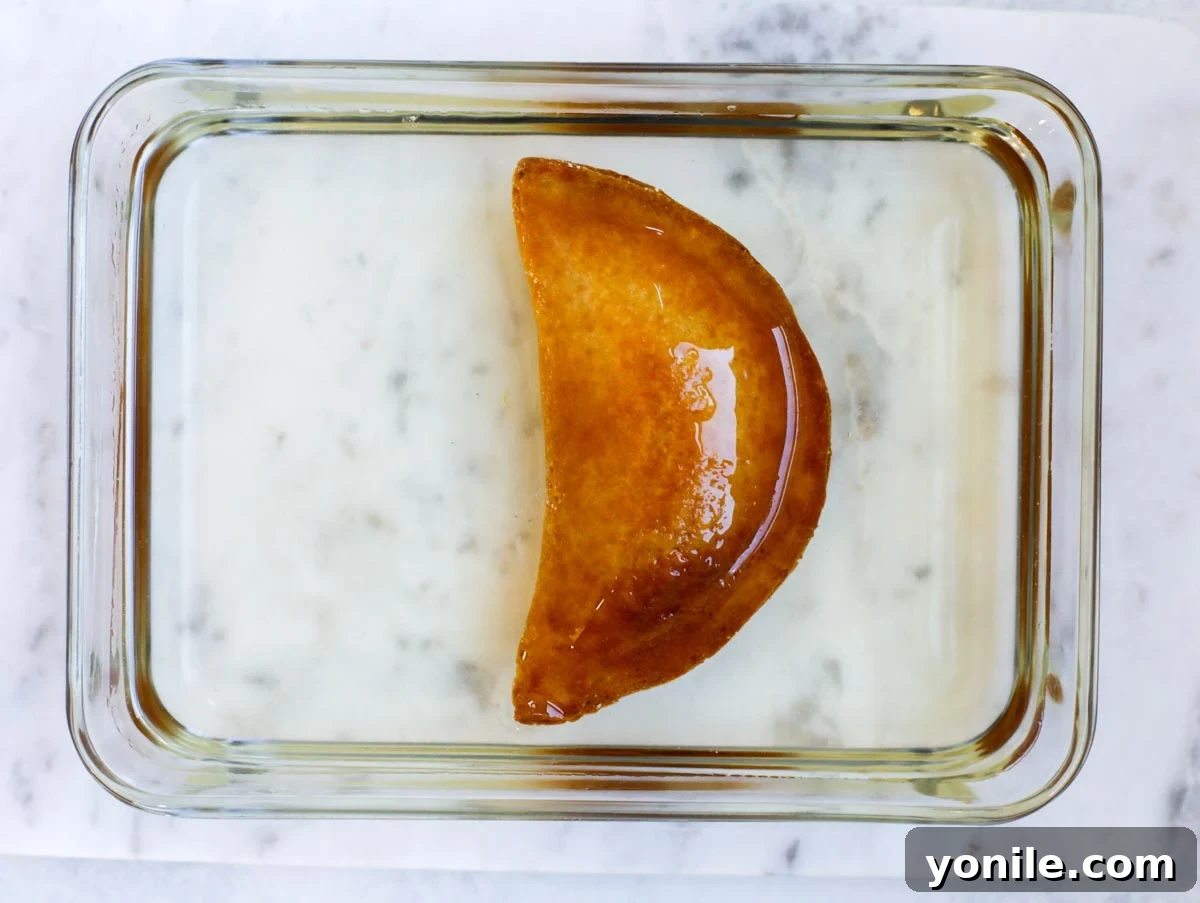
- Immediately after frying or baking, carefully drop the warm Atayef into the cold simple syrup. Quickly coat each side, ensuring they are submerged for only a few seconds. It’s crucial not to leave them in the syrup for too long, as they can become excessively sweet or lose their crispness.
- Remove the syruped Atayef and place them on a serving plate or a wire rack. If you desire additional sweetness, you can always drizzle more syrup just before serving.
- Allow the Atayef to cool down completely. For a truly authentic experience, many prefer to cool them in the refrigerator for at least 2 hours after they’ve reached room temperature. This chilling process enhances their texture and flavor.
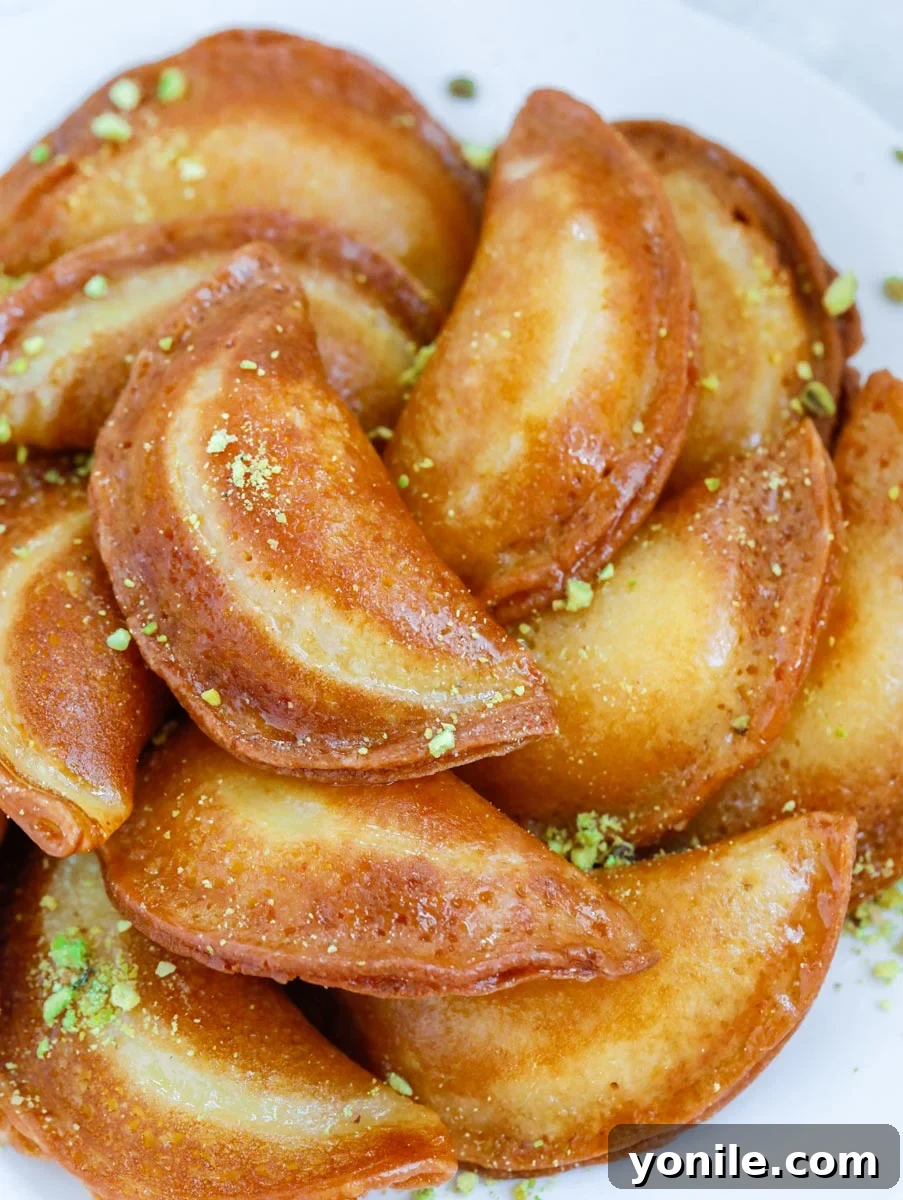
- Before serving, garnish generously with some ground pistachios. The vibrant green of the pistachios adds a beautiful visual appeal and a subtle nutty crunch that perfectly complements the soft, sweet dessert. While some enjoy Atayef warm, the traditional way to savor them is chilled, offering a refreshing contrast to their richness.
Expert Tips for Mastering Your Atayef Dessert
Achieving perfect Atayef is simple with a few insider tricks. Follow these tips to ensure your homemade Lebanese pancakes are nothing short of spectacular:
- Prioritize Preparation: Always prepare your Ashta cream and any other chosen fillings *before* starting the pancake batter. This ensures they are properly chilled and ready for assembly, preventing delays and maintaining optimal texture.
- Syrup First: Similarly, make your simple syrup (Ater) well in advance. It must be completely cool, preferably chilled, when the warm Atayef are dipped. This temperature contrast is vital for achieving the desired consistency and preventing the pancakes from becoming overly soggy.
- The Crunch Factor: For an extra delightful crispness in your Atayef pancakes, consider adding 1 teaspoon of corn starch to the batter. This small addition can significantly enhance the texture when fried.
- Optimal Cooling: After frying and syrupping, allow the Atayef to cool at room temperature for about an hour. For the best flavor and firmer texture, transfer them to the refrigerator for an additional 2 hours before serving.
- Maintain Crispness in Storage: If storing leftover Atayef in the refrigerator, keep them uncovered. This helps prevent moisture accumulation and maintains their desirable crunchy exterior.
- Embrace Floral Aromas: Do not skip the orange blossom water in both the Ashta and the simple syrup. Its unique, fragrant notes are characteristic of authentic Middle Eastern desserts. If you can only find one, orange blossom water is generally preferred over rose water for its broader usage in Lebanese sweets.
- Avoid Overfilling: When stuffing the pancakes, use a conservative amount of filling (a regular teaspoon is usually sufficient). Overfilling can cause the delicate pancake edges to tear, making it difficult to seal them properly.
- Baking Alternative: If you opt to bake your Qatayef instead of frying, ensure you generously brush both sides of the stuffed pancakes with oil. Bake them in a preheated 350°F (175°C) oven until beautifully golden and crisp, then immediately dip them into the chilled sugar syrup.
Expand Your Sweet Horizons: More Lebanese Desserts to Try
If your journey into Lebanese sweets has just begun with Atayef, there’s a world of flavor waiting to be discovered. Here are a few other beloved Lebanese desserts that are sure to delight:
- Lebanese Nights Dessert: A creamy, semolina-based pudding often topped with pistachios and syrup.
- Sfouf (Turmeric Cake): A vibrant yellow, moist semolina cake flavored with turmeric and aniseed.
- Namoura (aka. Basbousa): A rich, dense semolina cake soaked in simple syrup, often garnished with almonds.
- Maamoul Date Cookies: Delicate shortbread cookies traditionally filled with dates or nuts, especially popular during holidays.
We truly hope you enjoy every recipe shared, especially this delightful and relatively simple Atayef creation. We encourage you to try it, savor every bite, and share your experience by rating it and passing it along to your cherished friends and family!
Should you decide to make this recipe and love it as much as we do, please take a moment to leave a star rating and a comment below. Your feedback is invaluable! Additionally, stay connected with Cookin’ With Mima for all our latest culinary adventures and recipes. Follow us on FACEBOOK | INSTAGRAM | PINTEREST.

Rating: 5 out of 5 stars (13 votes)
Atayef with Ashta (Katayef)
A delicious Middle Eastern pancake dessert stuffed with homemade Ashta or nuts and then dipped into an aromatic sugar syrup.
Ingredients
- 2 cups all-purpose flour, sifted
- ¾ cup fine semolina
- ½ cups whole milk, warm
- 2¾ cup water, warm
- 2 tbsps. sugar
- 1 tbsp baking powder
- 3 tbsps. orange blossom water
- 1½ tbsp corn starch, optional (for crunch)
- Canola or Vegetable oil for frying
Ashta filling
- 2 cups whole milk
- 1 cup heavy cream
- ¾ cup corn starch
- 1 tbsp. rose water
- 1½ tbsp. orange blossom water
- ¼ cup sugar
Sugar Syrup
- 2 cups granulated cane sugar (white sugar)
- 1 cup water
- 1 tsp. lemon juice
- 1 tbsp. orange blossom water
- 1 tbsp. rose water
Instructions
- Prepare the sugar syrup and let it cool completely. Refer to the Simple Syrup recipe for detailed instructions.
Ashta Filling:
- In a medium-sized pot, combine all the Ashta ingredients and mix well.
- Bring to a boil on medium heat while whisking consistently. Whisking ensures a very smooth, creamy texture without lumps. Once the cream thickens significantly, lower the heat and continue whisking for a few more minutes until it’s very well thickened.
- Remove from heat and transfer the mixture to a Pyrex dish. Cover the surface directly with plastic wrap and let it cool at room temperature for at least 30 minutes. You can also cool it for an additional 30 minutes in the fridge or prepare it a day ahead to save time.
Atayef Pancakes
- To prepare the pancakes, place all pancake ingredients in a blender and blend for 2-3 minutes until well combined and lump-free. Allow the batter to rest for 20 minutes.
- Lightly spray a non-stick heavy skillet and wipe it down with a paper towel. Heat the skillet on medium-high heat, maintaining consistent heat throughout the cooking process.
- Add ¼ cup of the pancake batter to the skillet. Without touching, allow the bubbles on the top to dry out. Do not flip. Once cooked on one side, transfer the pancake face down onto a kitchen towel and cover it. Continue repeating this step until all the batter is used.
- Once the Ashta filling is thoroughly chilled, fill each pancake with a regular teaspoonful of Ashta cream. Fold the pancake in half and firmly press the edges together to seal them. Repeat for the remaining pancakes.
- Heat canola or vegetable oil in a deep pan over medium-high heat. Fry the stuffed Atayef until golden brown. Immediately transfer the fried pancakes to dip them briefly into the chilled sugar syrup. Transfer them to a serving plate or wire rack. Repeat for the rest.
- Garnish with ground pistachios and allow to cool completely before eating.
Notes
- Always cook the Ashta cream and prepare any filling before making the pancakes.
- Prepare the sugar syrup ahead so that it cools down before serving.
- You may add 1 tsp. of corn starch to the batter to make it crunchier.
- Cool Atayef in the fridge for 2 hours after cooling at room temperature if you are in a hurry for them to cool.
- Keep the Atayef uncovered in the fridge so they keep their crunch.
- Be sure not to skip the Orange Blossom Water. If you can’t find both that and the rose water, you can use the Orange Blossom Water only instead.
- Do not overfill the pancakes or else they will rip.
- If you prefer to bake, brush generously with oil and bake in a preheated 300°F (150°C) oven until golden then dip in the sugar syrup.