
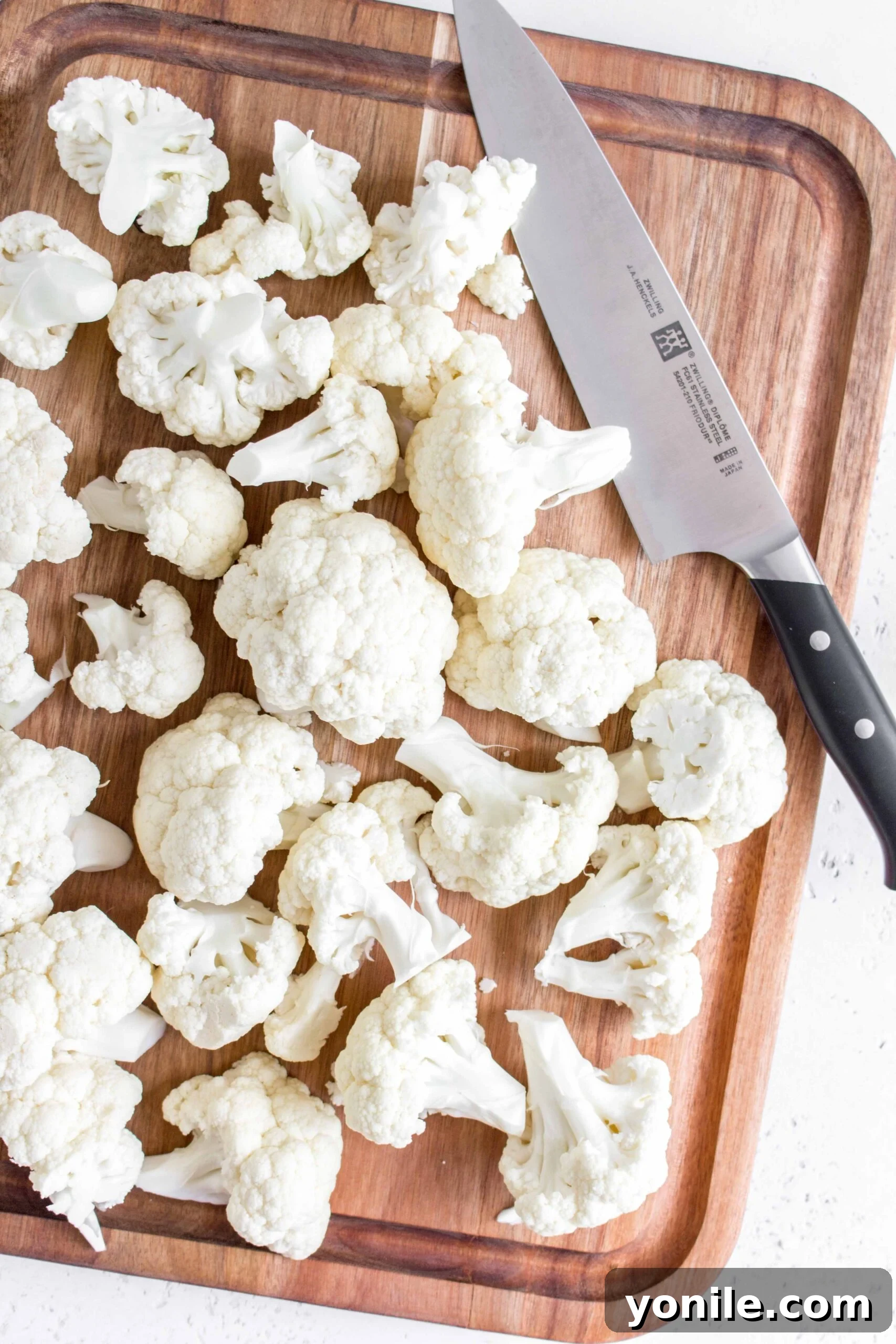
Unlock significant savings and enjoy fresher, better-tasting meals by learning how to expertly cut a head of cauliflower into perfect florets yourself. This comprehensive guide will walk you through the simplest and most efficient method, ensuring minimal waste and easy cleanup. Forget pre-packaged florets; mastering this essential kitchen skill will transform your cooking and expand your culinary repertoire.
Why Choose Cauliflower? The Unsung Hero of Vegetables
Cauliflower, often overshadowed by its greener cousin broccoli, is a nutritional powerhouse deserving of a prime spot on your plate. This versatile cruciferous vegetable is packed with vitamins C and K, folate, and an impressive array of antioxidants, making it a fantastic addition to any diet. Its low-calorie and low-carb profile also makes it a favorite for those following keto, paleo, or gluten-free lifestyles. Beyond its health benefits, cauliflower’s mild flavor and ability to absorb other tastes make it incredibly adaptable to countless dishes, from creamy purees and hearty roasts to innovative rice substitutes and “steaks.” Learning to prepare it from scratch allows you to fully harness its potential, providing better texture and flavor compared to pre-cut options.
Selecting the Perfect Head of Cauliflower
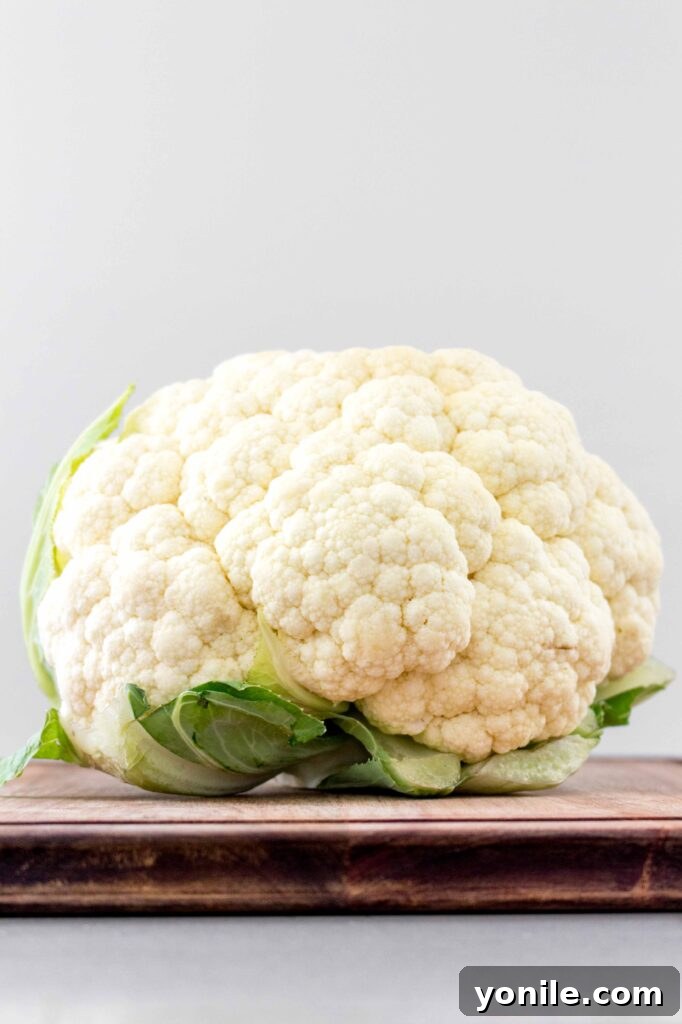
Before you even pick up your knife, the secret to delicious cauliflower dishes begins at the grocery store. Choosing a high-quality head ensures better flavor, texture, and a longer shelf life. Here’s what to look for when selecting the freshest cauliflower:
- Vibrant Color: The ideal cauliflower should be a bright white or creamy white color throughout. Avoid any heads that appear dull, yellowed, or discolored, as these are signs of aging.
- Spot-Free Surface: Carefully inspect the cauliflower for any brown spots, blemishes, or wet areas. These indicate spoilage or bruising and should be avoided. A few tiny speckles are often harmless and can be easily trimmed, but widespread discoloration is a red flag.
- Firm and Dense Texture: Gently squeeze the head of cauliflower. It should feel firm and heavy for its size, indicating a healthy, well-hydrated vegetable. A soft or squishy cauliflower suggests it’s past its prime.
- Fresh Green Leaves: Check the base of the stem for crisp, green leaves. These leaves act as natural indicators of freshness. Limp, yellowed, or wilting leaves suggest that the cauliflower has been sitting around for too long.
Essential Tools and Pre-Preparation for Cutting Cauliflower
Having the right tools and performing a quick pre-prep will make cutting cauliflower a breeze and significantly safer. You don’t need fancy equipment, just a few kitchen staples:
- Sharp Chef’s Knife: This is your most important tool. A sharp, heavy-duty chef’s knife (8-inch or 10-inch) will slice cleanly through the dense head, requiring less force and reducing the risk of slippage.
- Sturdy Cutting Board: A large, stable cutting board is crucial. Place a damp paper towel or a non-slip mat underneath to prevent it from sliding around on your countertop.
- Large Bowl: Have a bowl ready to collect your beautiful florets.
- Small Paring Knife (Optional): Useful for trimming smaller imperfections or shaping individual florets.
Before you begin cutting, always wash your cauliflower under cold running water. Gently scrub the surface to remove any dirt or debris. Pat it thoroughly dry with a clean kitchen towel or paper towels. A dry surface reduces slippage, making the cutting process safer and more precise.
Step-by-Step Guide: How to Cut Cauliflower into Perfect Florets
Achieving neatly cut cauliflower florets is simpler than you might think, and it significantly reduces the mess often associated with this vegetable. Follow these steps for the easiest and most efficient method:
- Position the Cauliflower: Place the whole head of cauliflower on your cutting board with the stem side facing down. This creates a stable base, preventing the cauliflower from rocking as you cut.
- Cut in Half: Using your sharp chef’s knife, carefully slice the cauliflower in half. Start at the top of the crown and cut straight down through the center, all the way to the core. Hold the cauliflower firmly with your non-dominant hand, keeping your fingers curled away from the blade.
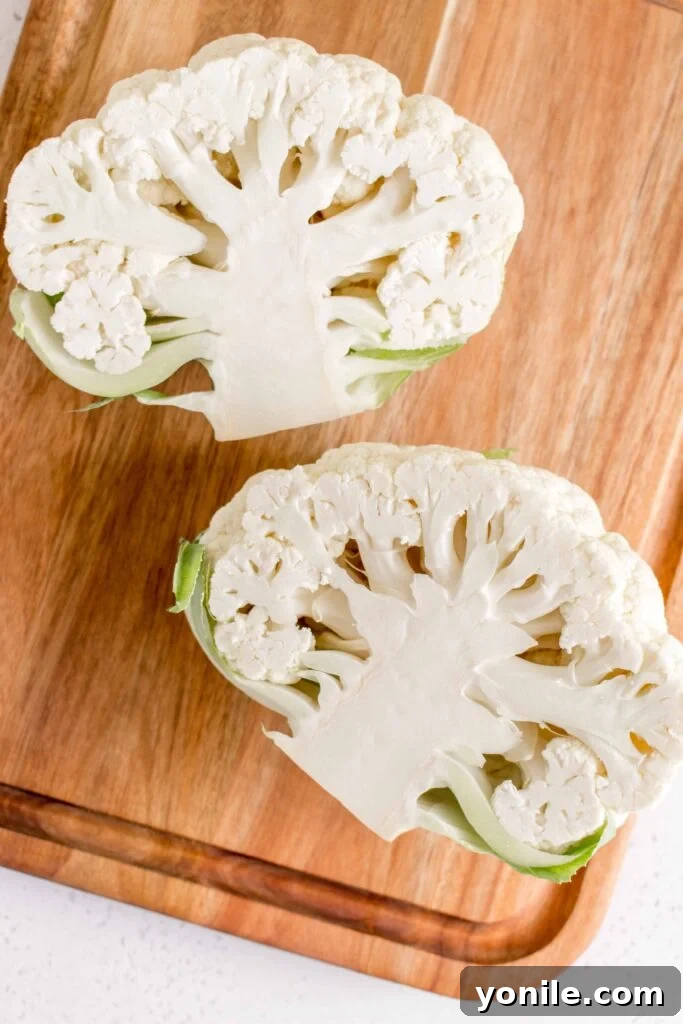
- Remove the Core: Place each half, cut-side down, on your cutting board. Angle your knife to cut a V-shape around the core of each half. The goal is to separate the tough central core from the edible florets. Make sure to remove as much of the hard core as possible.
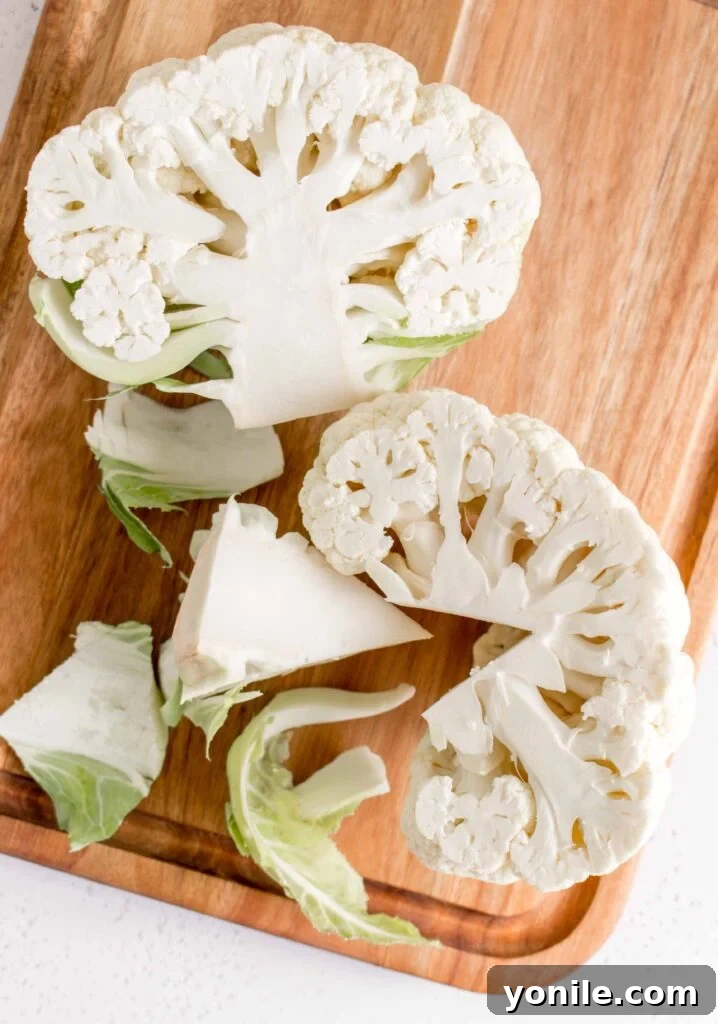
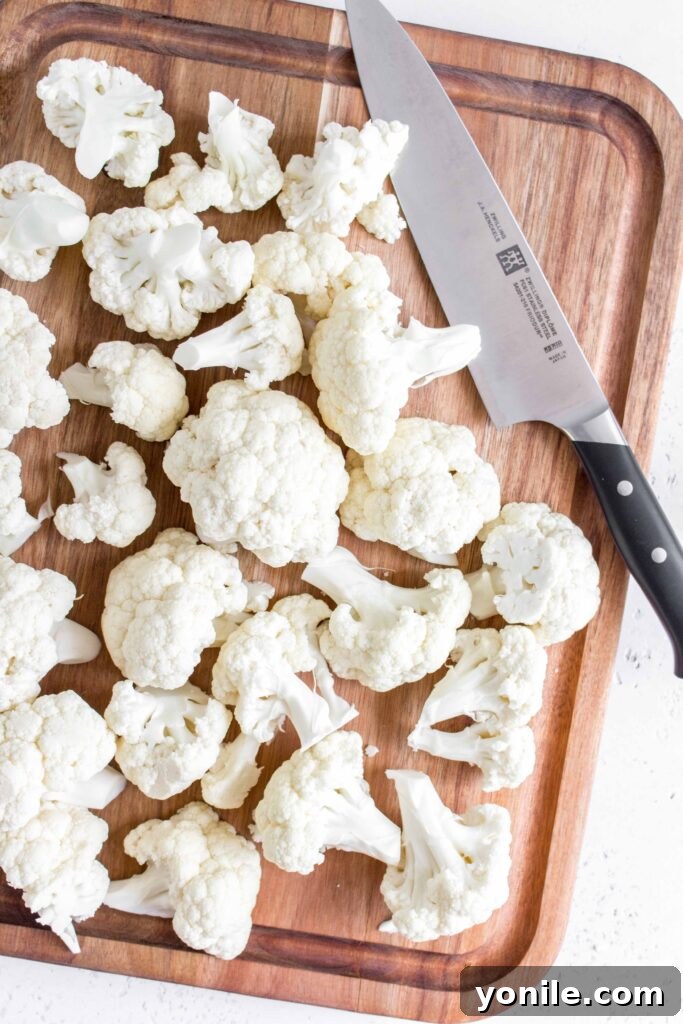
- Break Apart the Florets: Once the core is removed, many florets will naturally begin to separate. Use your hands to gently pull apart the cauliflower into individual florets. For any stubborn sections, you can make small cuts with your knife near the base of the florets to help them detach. This method minimizes crumbling and small pieces.
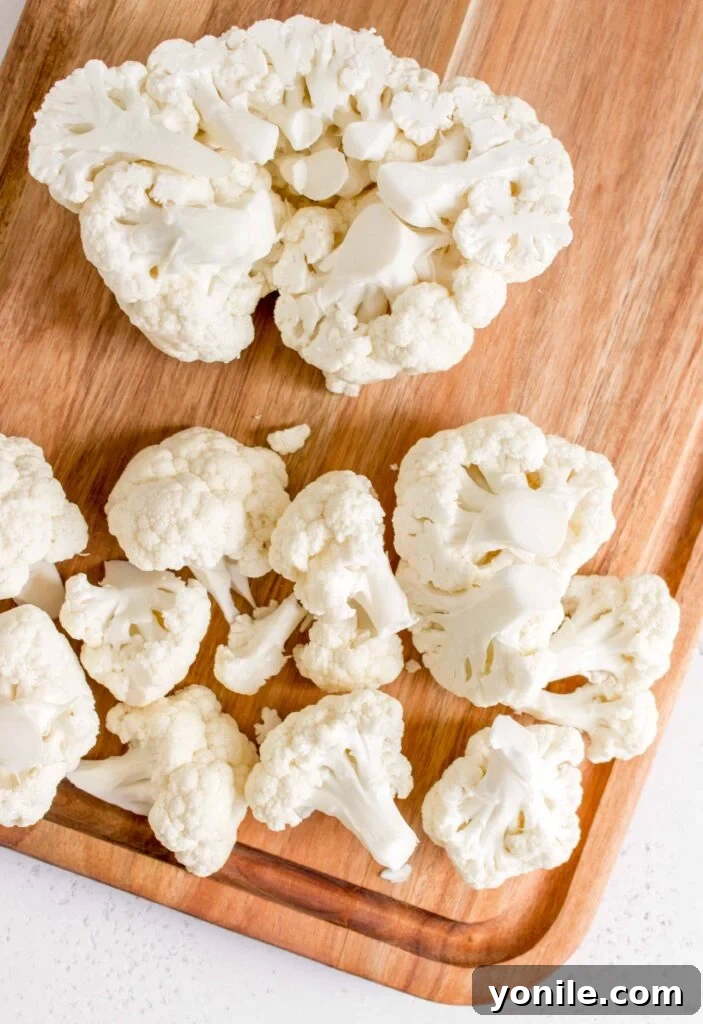
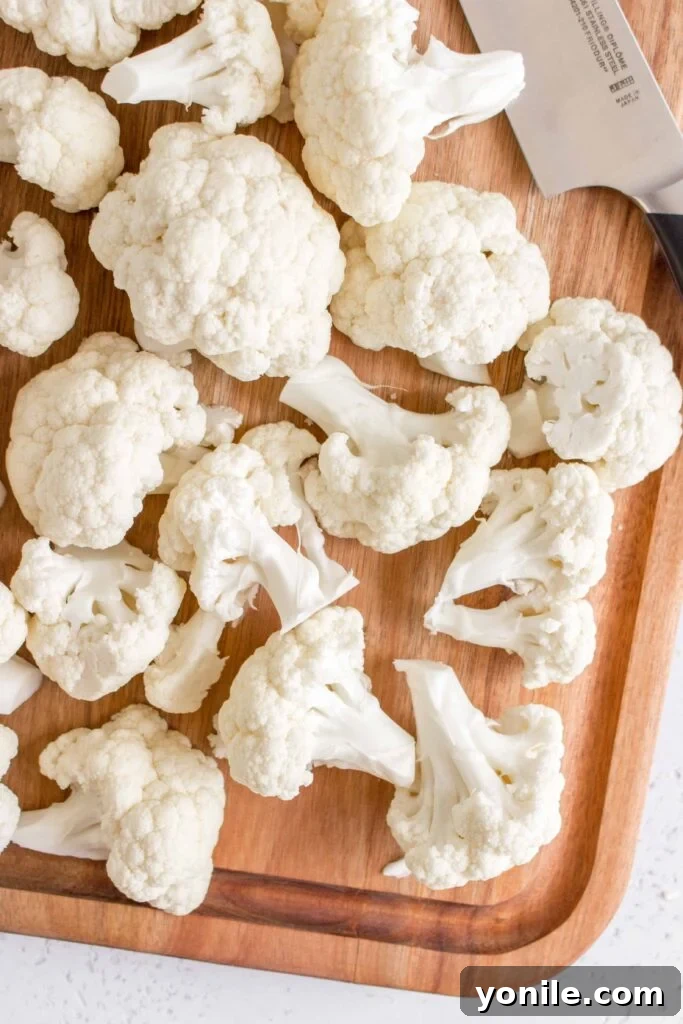
- Adjust Floret Size: If some florets are too large for your recipe, you can easily cut them into smaller, bite-sized pieces. Simply slice larger florets in half or quarter them. You can also group similar-sized florets together for even cooking, or separate larger ones for roasting and smaller ones for stir-fries.
Minimizing Mess and Waste
The beauty of this method lies in its clean execution. By cutting the core out first, you reduce the need to hack at the head, which is where most of the “crumbs” are created. Also, remember that the leaves and stem are edible! Don’t toss them without considering their potential uses, which we’ll discuss further down.
Beyond Florets: Exploring Other Cauliflower Cutting Techniques
While florets are the most common way to enjoy cauliflower, this versatile vegetable can be prepared in other exciting forms, each lending itself to different culinary applications:
- Cauliflower Steaks: For an impressive main course or side, cut your cauliflower into thick, steak-like slices. After removing the leaves, place the cauliflower stem-side down. Slice the entire head into 1-inch thick “steaks” from the center outwards. The trick is to keep the core intact for the central slices, which holds them together. The outer pieces will naturally break into florets, which can still be used. These “steaks” are fantastic grilled, roasted, or pan-fried.
- Cauliflower Rice: A popular low-carb alternative, cauliflower rice is incredibly easy to make. After cutting your cauliflower into florets, simply pulse them in a food processor until they resemble grains of rice. Alternatively, you can grate them using a box grater. Be careful not to over-process, or you’ll end up with a paste.
- Whole Roasted Cauliflower: For a stunning presentation with minimal cutting, you can roast a whole head of cauliflower. Simply trim the tough outer leaves, rub the entire head with olive oil and seasonings, and roast until tender and caramelized.
Maximizing Freshness: How to Store Cauliflower
Proper storage is key to extending the life of your cauliflower, whether it’s a whole head or freshly cut florets. Following these guidelines will keep your cauliflower crisp and delicious for longer.
How to Store a Full Head of Cauliflower from the Store
Many cauliflowers are sold wrapped tightly in plastic. While this protects it during transport, it can trap moisture and accelerate spoilage once you get it home. I recommend removing the plastic wrap and instead wrapping the cauliflower loosely with a few paper towels. This allows for some air circulation while absorbing excess moisture. Place the wrapped head in the vegetable crisper drawer of your refrigerator, where it can stay fresh for up to a week, sometimes even longer.
How to Store Cut Cauliflower Florets
Once cut, cauliflower florets have a slightly shorter shelf life. To keep them fresh, store them in an airtight container or a resealable plastic bag (like a Ziploc) in the refrigerator. This minimizes exposure to air and prevents them from drying out or absorbing odors from other foods. Properly stored, cut florets will last for 3-5 days in the fridge.
Can You Freeze Cauliflower? Absolutely!
Freezing cauliflower is an excellent way to preserve its freshness and extend its usability for months. It’s perfect for meal prep or when you find a great deal on cauliflower and want to stock up. While you can freeze raw cauliflower, blanching it first helps preserve its texture, color, and nutritional value when thawed.
- Blanching (Recommended):
- Bring a large pot of salted water to a rolling boil.
- Prepare an ice bath: a large bowl filled with ice water.
- Add your cauliflower florets to the boiling water and cook for 2-3 minutes. They should be slightly tender but still firm (al dente).
- Quickly remove the florets with a slotted spoon and immediately plunge them into the ice bath to stop the cooking process.
- Once cooled, drain the florets thoroughly and pat them very dry with paper towels. Excess moisture will lead to freezer burn.
- Freezing Method:
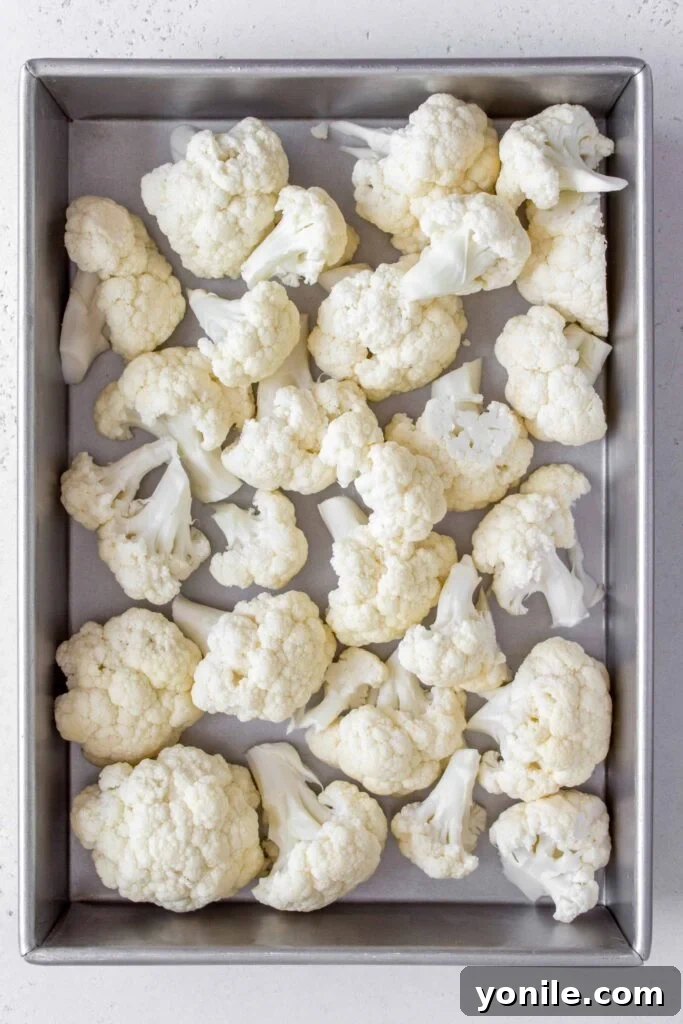
- Arrange the blanched and dried cauliflower florets in a single layer on a baking sheet or tray.
- Place the baking sheet in the freezer for 1-2 hours, or until the florets are completely frozen solid. This “flash freezing” prevents them from clumping together.
- Once frozen, transfer the florets into a freezer-friendly airtight plastic bag (like a heavy-duty Ziploc) or a rigid freezer-safe container. Remove as much air as possible from the bag to prevent freezer burn.
- Label the bag or container with the date. Frozen cauliflower can be stored in the freezer for up to 3-4 months. When ready to use, you can usually cook them directly from frozen.
Troubleshooting and FAQs for Cauliflower Prep
How to Deal With Brown Spots on Cauliflower
Occasionally, you might find small brown spots on your cauliflower, especially if it’s been in the fridge for a few days. Don’t panic! These are usually just minor oxidation and don’t necessarily mean the entire head is spoiled. For small, superficial spots, simply use a microplane, a vegetable peeler, or a small paring knife to gently shave or cut off the discolored areas. If the spots are widespread, mushy, or accompanied by an off-odor, it’s best to discard the cauliflower.
Can You Eat Cauliflower Leaves and Stem?
Absolutely! The leaves and central stem of a cauliflower are entirely edible and surprisingly nutritious. Many people discard them, but they can add a wonderful flavor and texture to various dishes.
- Leaves: The outer green leaves can be treated much like kale or collard greens. They are delicious sautéed with garlic and olive oil, added to stir-fries, or chopped and incorporated into soups and stews.
- Stem: The inner, tender parts of the stem are also edible. While the very outermost layer can be tough and fibrous, a quick peel with a vegetable peeler can remove it. The peeled stem can then be chopped and roasted alongside the florets, added to vegetable stocks, or pureed into soups for extra body and flavor.
Best Knife to Cut Cauliflower
As mentioned earlier, a sharp chef’s knife is truly your best friend when tackling a head of cauliflower. Its weight and blade length allow for clean, efficient cuts through the dense vegetable. While a paring knife can be helpful for intricate trimming of florets, for the initial cuts, stick to your chef’s knife for safety and effectiveness.
When Is Cauliflower In Season (and Cheapest!)?
Understanding peak season can help you snag the freshest and most affordable cauliflower. Cauliflower is typically in season from late summer through early winter, with its peak months being fall (roughly September to November). During these times, you’ll likely find the highest quality heads at the best prices at your local farmers’ market or grocery store.
Unleash Its Potential: Delicious Ways to Use Cauliflower
Once you’ve mastered cutting cauliflower into beautiful florets, a world of culinary possibilities opens up. Its mild flavor and adaptable texture make it a fantastic ingredient for a wide array of dishes:
- Roast It: Roasting brings out cauliflower’s natural sweetness and creates delicious caramelized edges. Toss florets with olive oil, salt, pepper, and your favorite spices (paprika, cumin, turmeric) and roast at high heat until tender and golden brown.
- Steam It: A simple and healthy cooking method that preserves cauliflower’s nutrients. Steamed florets are perfect as a quick side dish, or can be mashed or pureed for creamy textures.
- Boil It: Similar to steaming, boiling cauliflower can make it very tender, ideal for mashing or adding to curries and stews. Be careful not to over-boil, which can make it watery.
- Stir Fry It: Add cauliflower florets to your favorite stir-fry recipes for a crunchy, healthy vegetable component. They absorb flavors wonderfully from sauces.
- Turn It Into Cauliflower Rice: A popular low-carb substitute for grain rice. Sauté it with a little oil and seasonings, or use it as a base for grain bowls, burritos, or as a side with curries.
- Blend It Into a Smoothie: Yes, really! Raw or lightly steamed cauliflower can add creaminess and a nutritional boost to smoothies without altering the taste significantly.
- Turn It Into a Soup: Cauliflower makes incredibly creamy and satisfying soups, often without the need for heavy cream. Roast it first for a deeper flavor profile before blending.
- Mash It: Mashed cauliflower is a fantastic low-carb alternative to mashed potatoes. Steam or boil until very tender, then mash with butter, garlic, and seasoning for a comforting side.
Inspiring Cauliflower Recipes
Now that you’ve honed your knife skills and have perfectly cut cauliflower florets, it’s time to put them to delicious use! Here are some fantastic recipes that highlight the versatility of this incredible vegetable:
- Vegetarian Cauliflower Pita Wrap
- Buffalo Cauliflower Wings
- Cheesy Cauliflower Bread Sticks
For more useful cooking guides, explore my other tutorials, such as the popular guide on How To Cut a Watermelon.
How to Cut Cauliflower: Recipe Card
Here’s a quick summary of the method for cutting cauliflower into florets, plus its nutritional value, for your convenience.
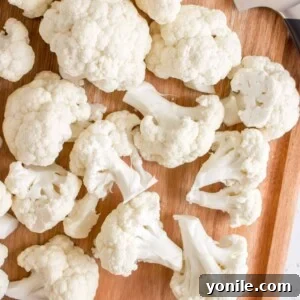
How to Cut Cauliflower
By: Mariam Ezzeddine
Save money by buying a head of cauliflower and cutting it into florets yourself! Here’s my best and easiest method of cutting cauliflower with the least amount of cauliflower crumbs to clean up after!
Prep Time: 5 minutes
Total Time: 5 minutes
Servings: 4 servings
Ingredients
- 1 head cauliflower, or more
Instructions
- Place the cauliflower stem side down.
- Slice the cauliflower in half by starting at the top of the cauliflower crown down to the core.
- Cut the core out of each half of the cauliflower by angling your knife to cut a V shape into the core.
- Some florets will separate naturally but to help it along, use your hands and break apart the cauliflower into florets.
- If you wish, you can cut larger florets into halves or quarters. Or you can store larger florets together and smaller florets together for different uses.
Nutrition
Calories: 36kcal | Carbohydrates: 7g | Protein: 3g | Fat: 0.4g | Saturated Fat: 0.2g | Polyunsaturated Fat: 0.04g | Monounsaturated Fat: 0.1g | Sodium: 43mg | Potassium: 430mg | Fiber: 3g | Sugar: 3g | Vitamin C: 69mg | Calcium: 32mg | Iron: 1mg
I genuinely hope this detailed guide helps you feel more confident and inspired in the kitchen. Mastering basic vegetable prep like cutting cauliflower not only saves money but also opens up a world of culinary creativity. Give this method a try, and enjoy the freshest florets in your next meal!
If you found this tutorial helpful, I would be thrilled if you would share it with your friends and family. Your support means the world!
For more delicious recipes and helpful kitchen tips, be sure to follow Cookin’ With Mima on INSTAGRAM | FACEBOOK | PINTEREST for all my latest updates!