
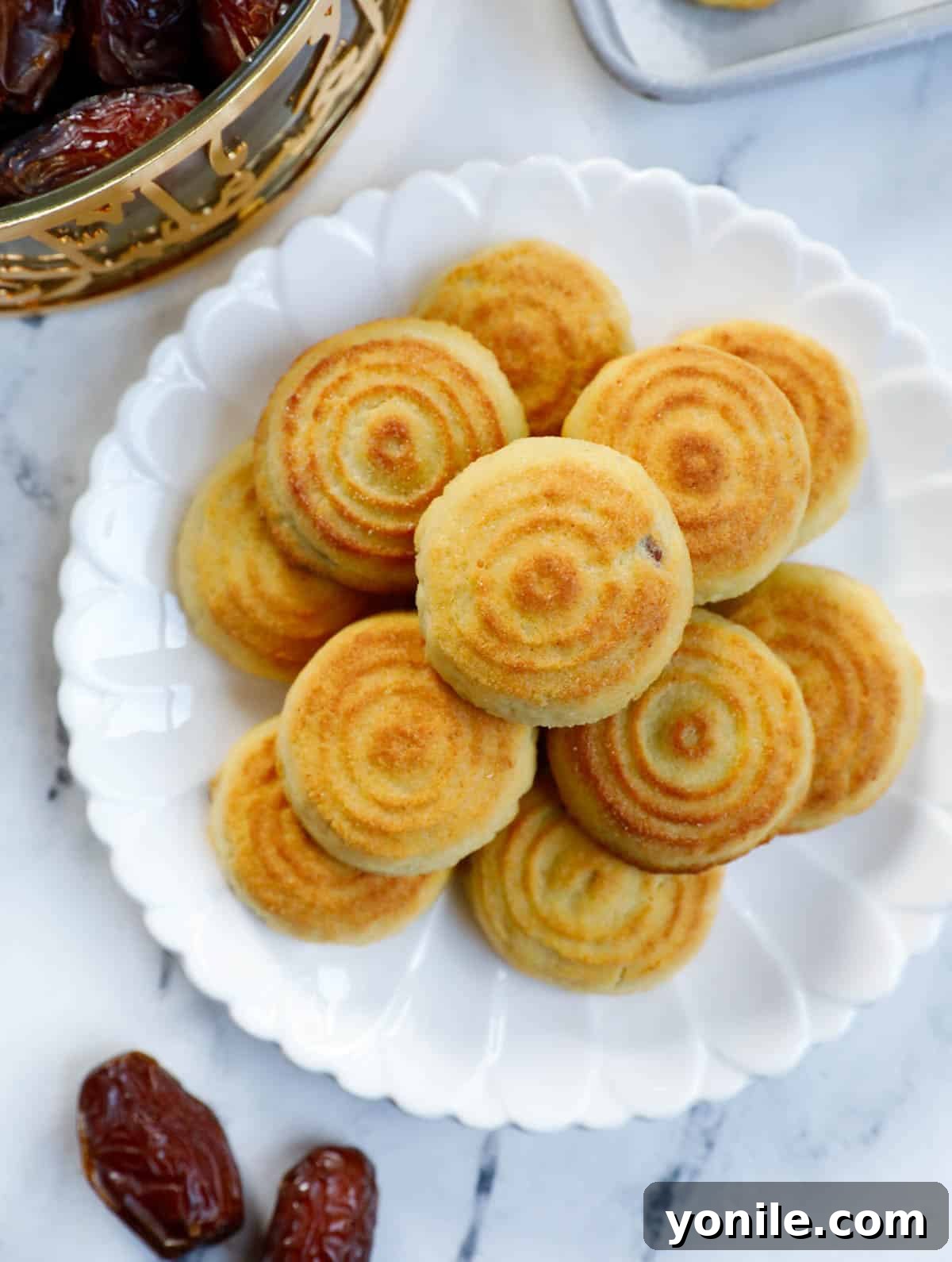
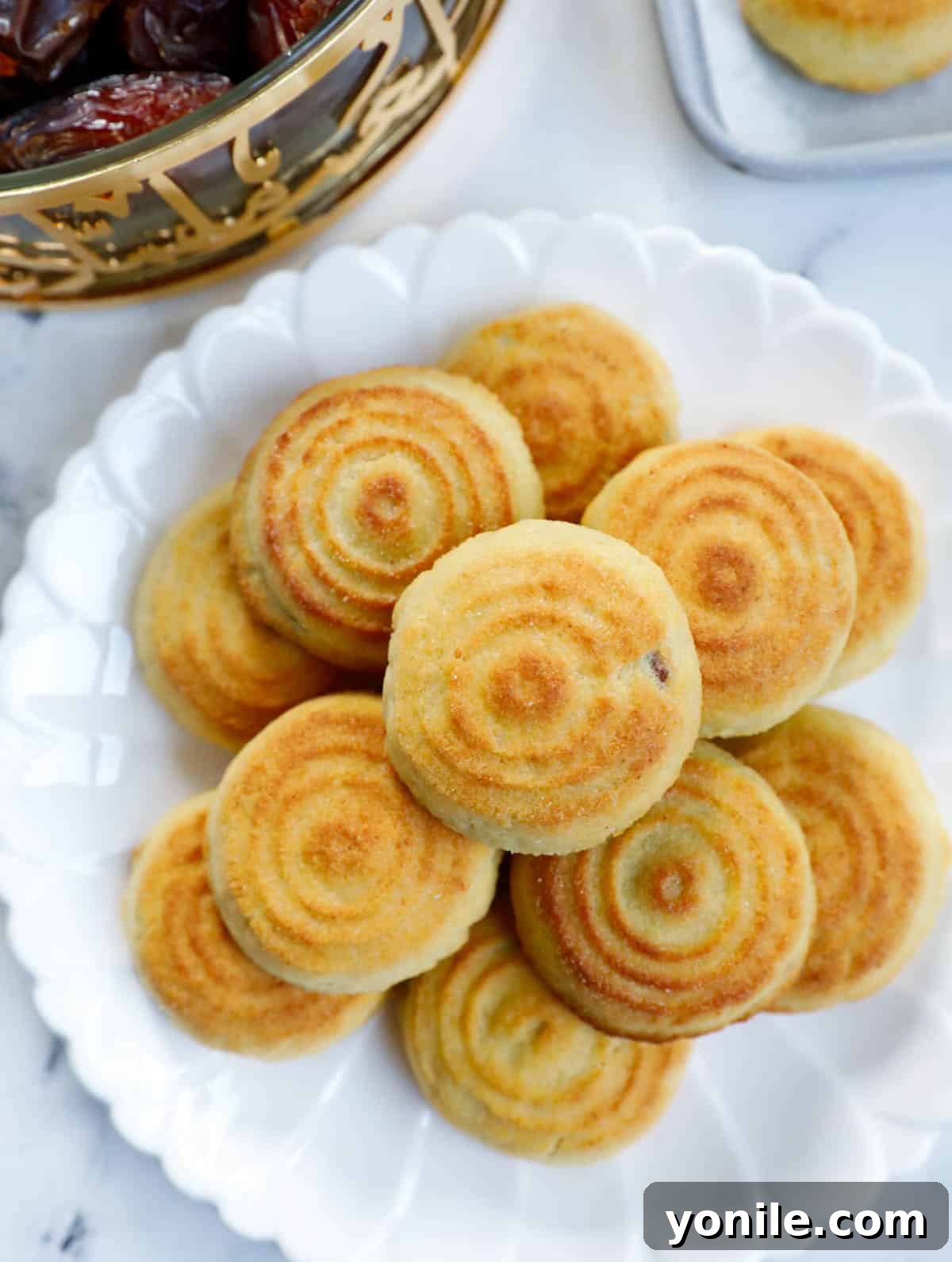
Maamoul, often spelled Ma’amoul (معمول بالتمر), are exquisite buttery Middle Eastern cookies, deeply cherished for their delicate texture and sweet, flavorful fillings. These traditional pastries are primarily filled with rich date paste or finely ground nuts like walnuts and pistachios. More than just a dessert, Maamoul hold significant cultural value, becoming a staple during joyous festive occasions such as Eid al-Fitr, Easter, and the holy month of Ramadan. Among the various delectable versions, Maamoul Date Filled Cookies consistently remain the most beloved and iconic.
For those who appreciate the rich culinary heritage of the Middle East, these delightful pastries offer a truly unique experience. If you find yourself captivated by the allure of authentic Middle Eastern cookies, we encourage you to explore other cherished recipes, including our Pistachio Maamoul Cookies and the elegant Lebanese Ghraybeh Cookies.
What are Maamoul Cookies?
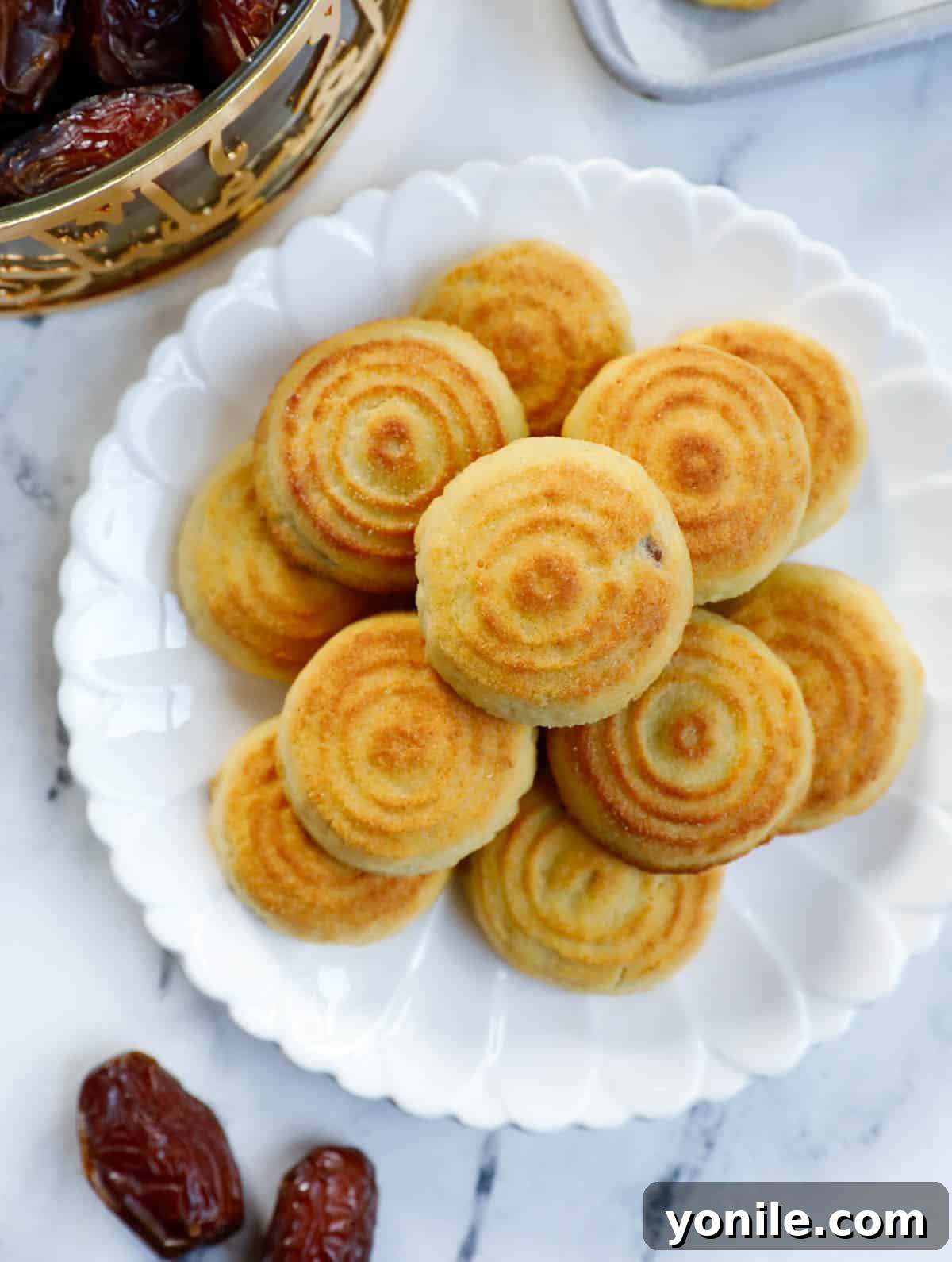
Ma’amoul cookies are a testament to traditional Middle Eastern baking, renowned for their melt-in-your-mouth texture and aromatic fillings. These mouthwatering delights are typically crafted from a delicate dough made with fine semolina flour (durum wheat), often combined with a touch of all-purpose flour for the perfect consistency. The dough is enriched with staple ingredients such as luxurious butter or clarified ghee, a hint of sugar, and a touch of yeast, creating a pastry that is both tender and subtly crumbly.
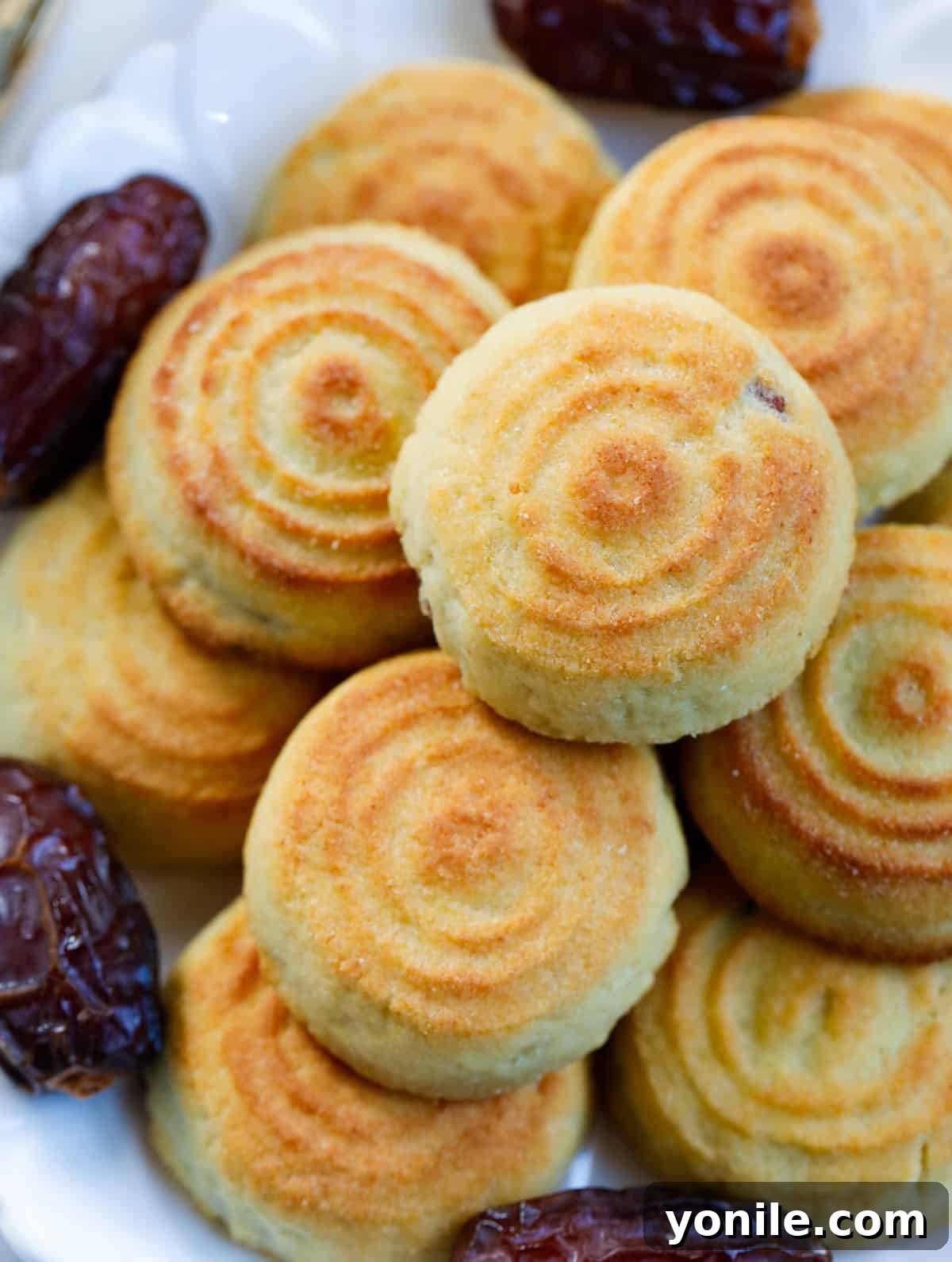
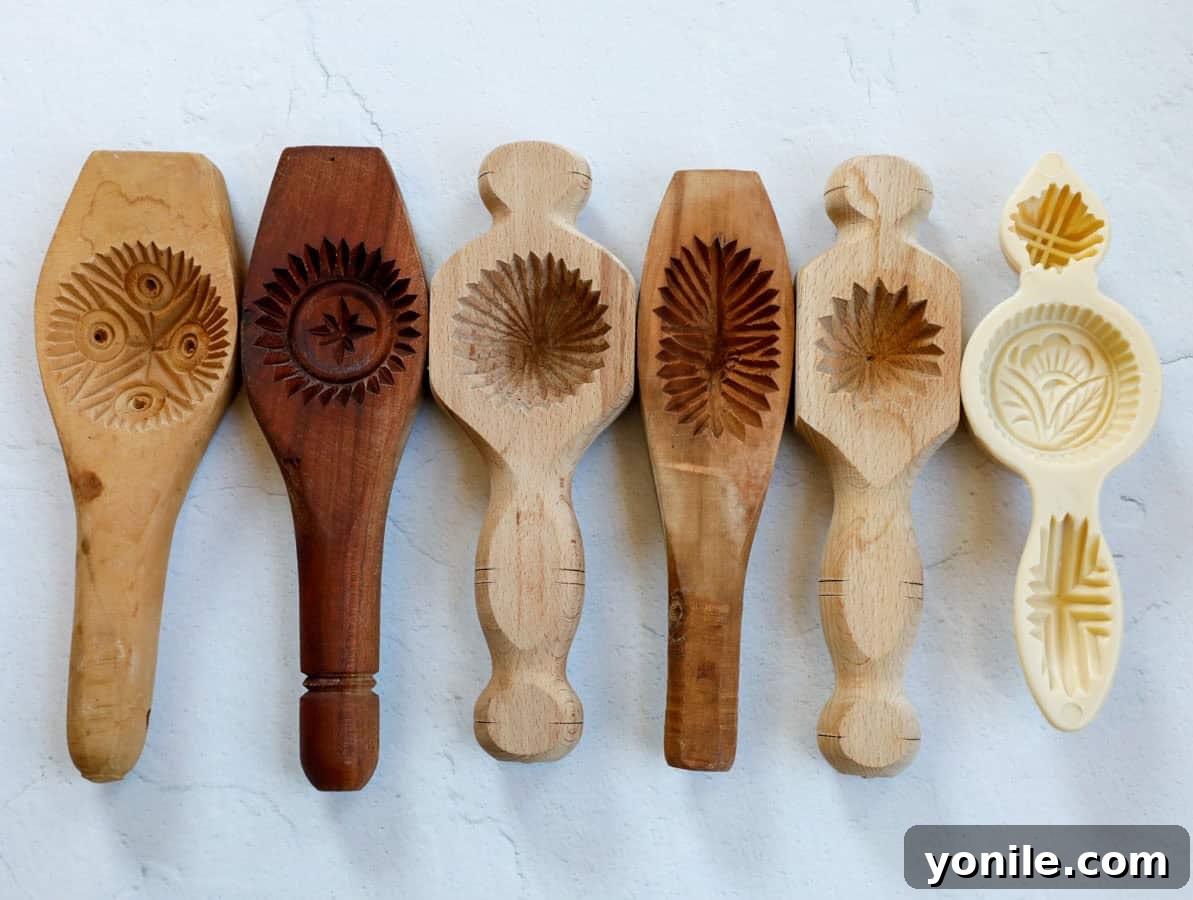
One of the most distinguishing features of Maamoul is their unique and beautiful presentation. Each cookie is meticulously shaped using intricately carved wooden molds, which come in a variety of traditional designs. These patterns are not merely decorative; they traditionally serve as a charming way to identify the cookie’s filling—a specific design might signify a date filling, while another denotes a walnut or pistachio center. This artisanal touch transforms each Maamoul into a small work of edible art, reflecting centuries of culinary craftsmanship.
Recipe Highlights
- Authentic & Traditional: This recipe adheres closely to the time-honored methods of crafting classic Maamoul, featuring a delicate semolina-based dough and a luscious, naturally sweet date filling.
- Naturally Sweetened Filling: The heart of these cookies lies in the dates, which impart a rich, natural sweetness to the filling, minimizing the need for additional refined sugars.
- Customizable Delights: While date-filled Maamoul are immensely popular, this recipe offers the flexibility to explore other traditional variations. You can easily adapt it to create Maamoul with aromatic pistachio or walnut fillings, providing a wonderful variety to suit all tastes.
Essential Maamoul Ingredients
Crafting the perfect Maamoul begins with selecting the right ingredients. Each component plays a vital role in achieving the desired taste, aroma, and signature texture of these beloved Middle Eastern cookies. Here’s a detailed look at what you’ll need:
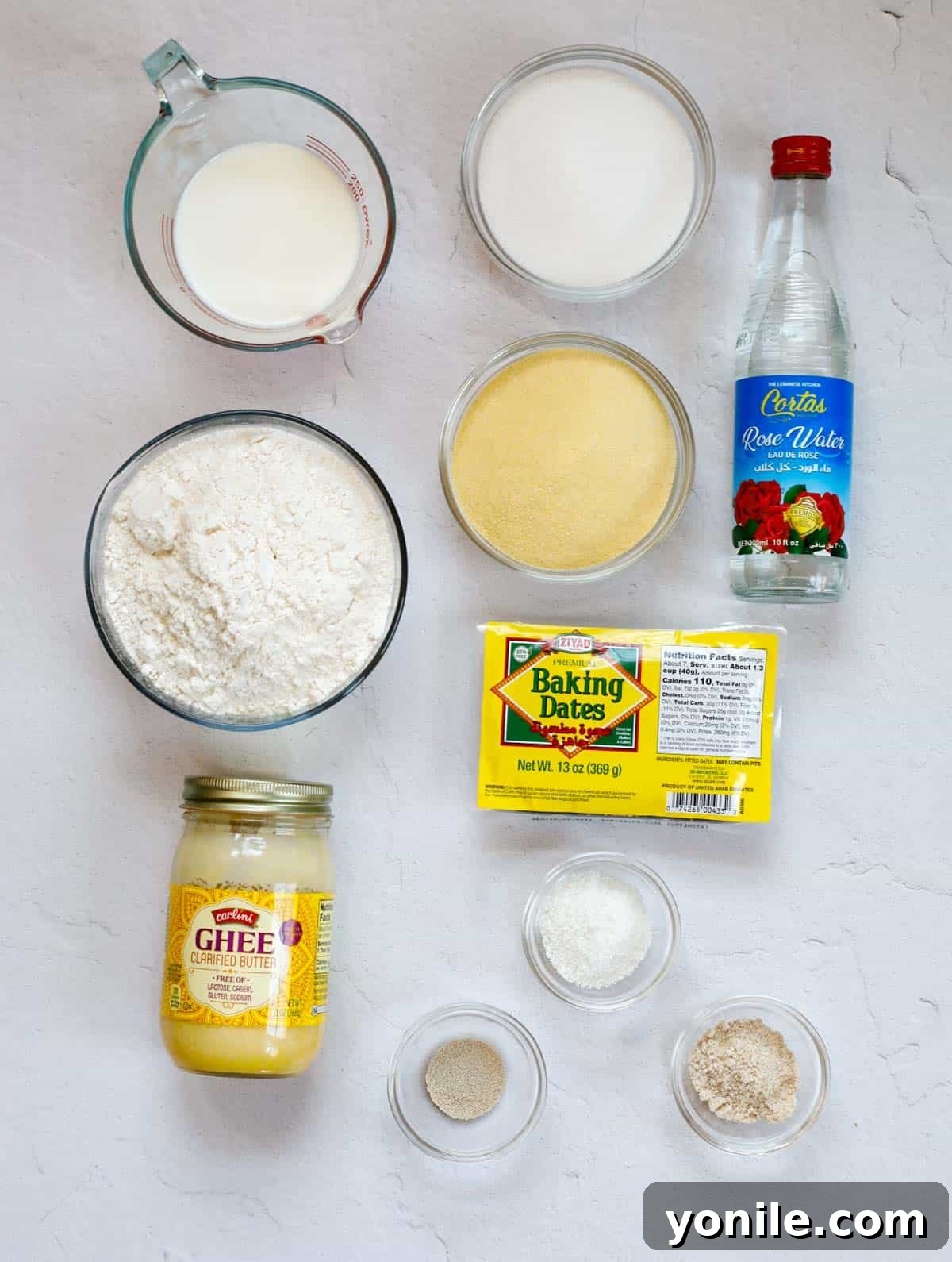
- Semolina & All-Purpose Flour: The foundation of the dough, this combination creates the signature tender yet slightly grainy texture. For the authentic Maamoul experience, fine durum semolina, often known as “ferkha,” is crucial. It’s finer than regular semolina, contributing to the cookie’s delicate crumb.
- Ghee (Clarified Butter): This golden, aromatic fat is indispensable for achieving the rich, melt-in-your-mouth quality that Maamoul are famous for. Ghee provides a depth of flavor that butter cannot fully replicate. If ghee is unavailable, unsalted butter can be used as a substitute, though the flavor profile will be slightly different. For those interested in making their own, our guide on How to Make Ghee is an excellent resource.
- Milk: Warm milk is used to hydrate the semolina and flour mixture, bringing the dough together into a cohesive, pliable mass. Whole milk is generally preferred for its richness.
- Dates: The star of the date filling, dates provide natural sweetness and a sticky, luscious texture. You can either purchase ready-made date paste, or if you prefer, process pitted dates in a food processor until smooth. Medjool dates are particularly good for their soft texture and rich flavor.
- Coconut (Optional): Finely shredded coconut adds a delightful texture and tropical hint to the date filling. While a wonderful addition, it can be omitted for those with allergies or different preferences.
- Rose Water: A traditional aromatic, rose water imparts a beautiful floral aroma and a subtle, distinctive depth of flavor to the date filling. It is a hallmark of Middle Eastern sweets.
- Yeast: Only a very small amount of instant yeast is added to the dough. Its primary role is not for significant leavening, but rather to contribute to the dough’s texture and slight puffiness. Baking powder can serve as a substitute if yeast is not on hand.
- Sugar: Sugar is typically incorporated into the Maamoul dough to enhance its sweetness. However, since the date filling itself is quite sweet, adding sugar to the dough is often left as an optional step, allowing for adjustment based on personal preference.
- Mahlab: This unique spice is derived from the seeds of the mahaleb cherry tree and is a quintessential ingredient in many Middle Eastern pastry recipes. Mahlab boasts a distinctive, slightly bitter, almond-like flavor with hints of cherry, adding an authentic and complex aroma to the Maamoul dough. Its subtle presence is key to the traditional taste.
*A comprehensive list of precise ingredient measurements is provided in the detailed recipe card at the conclusion of this article.
Step-by-Step Guide: Crafting Delicious Maamoul
Making Maamoul is a labor of love that rewards patience with incredibly flavorful results. Follow these steps carefully to create your own batch of these treasured Middle Eastern cookies.
Step 1: Prepare the Maamoul Dough
Note: For optimal texture and flavor, it is highly recommended to begin preparing the dough the night before you plan to bake.
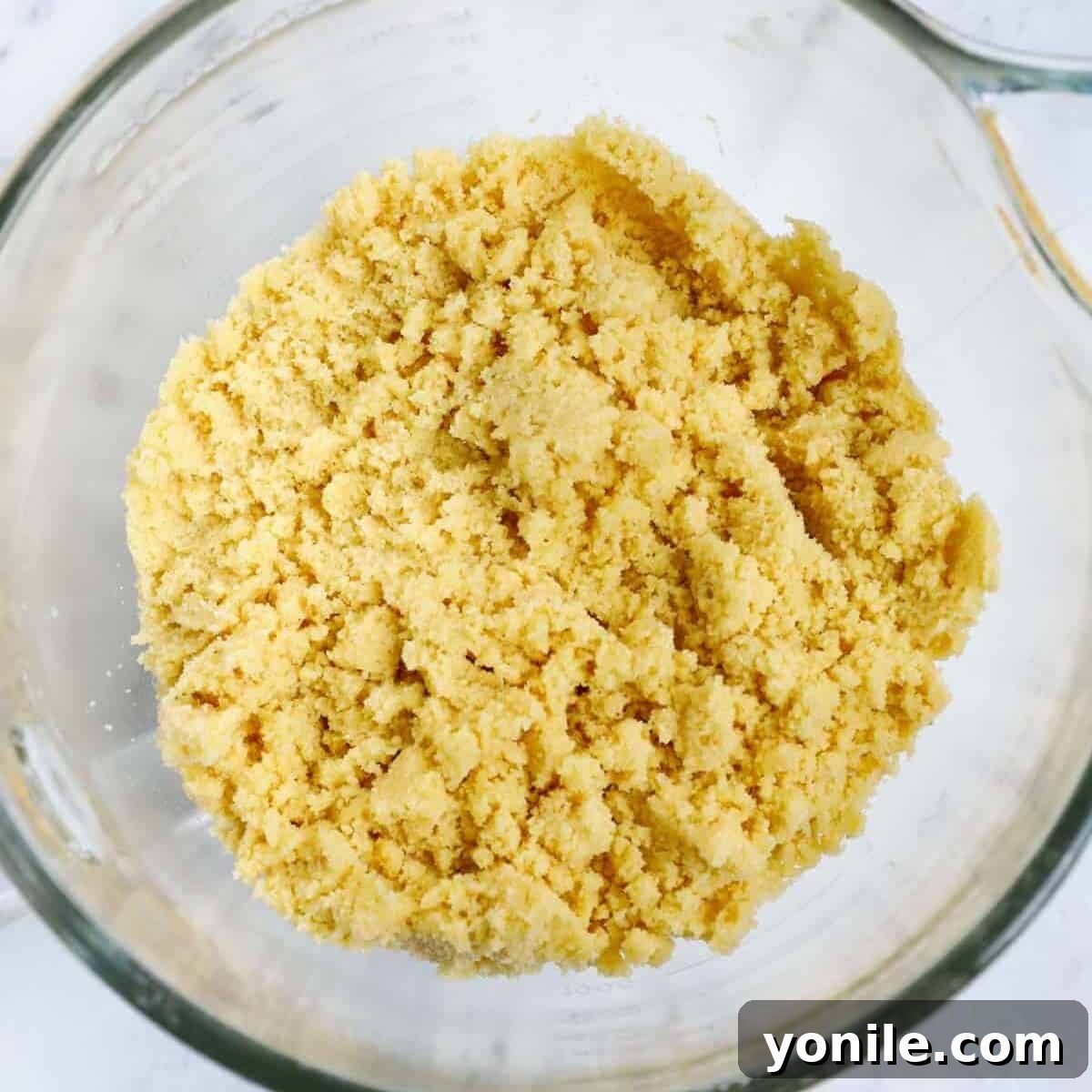
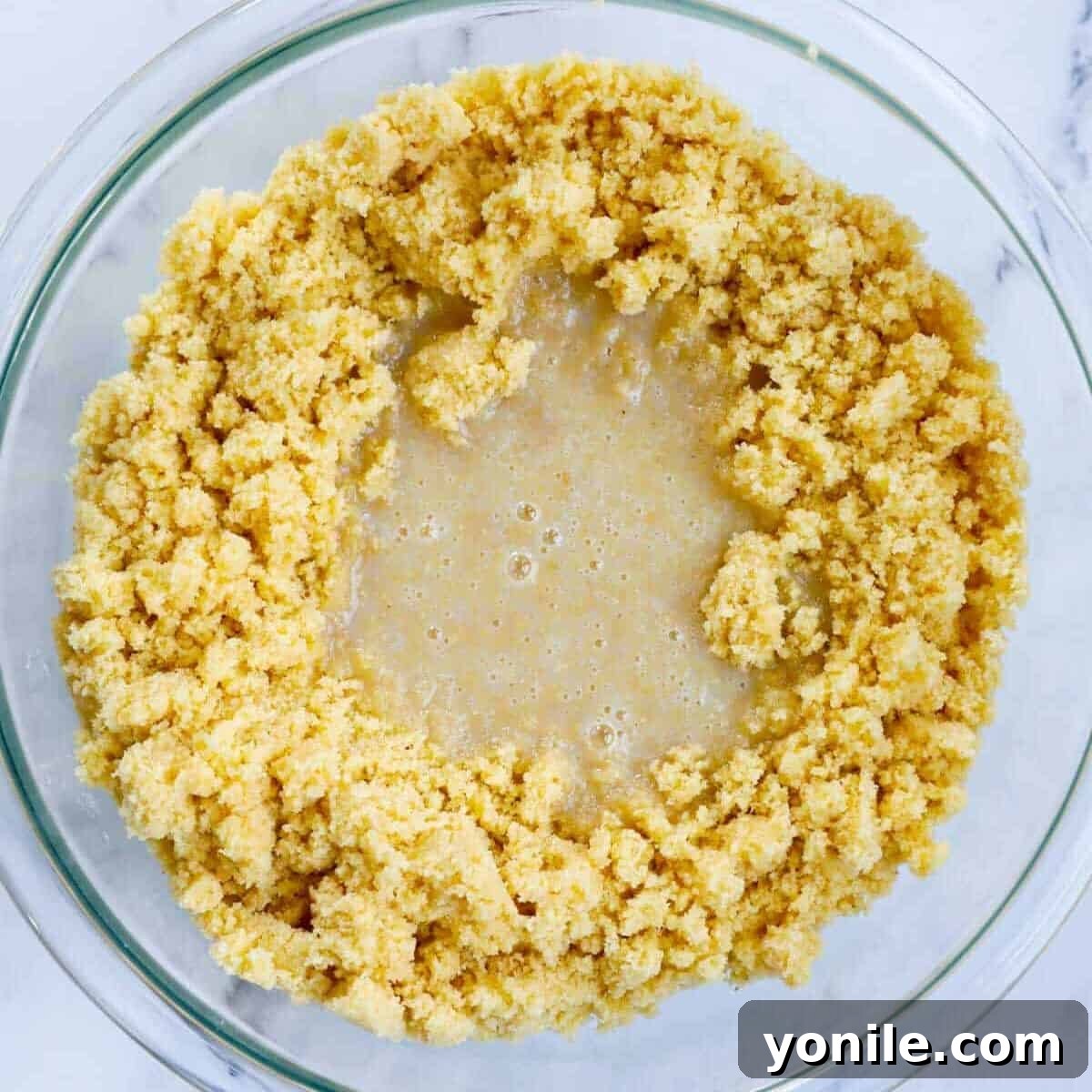
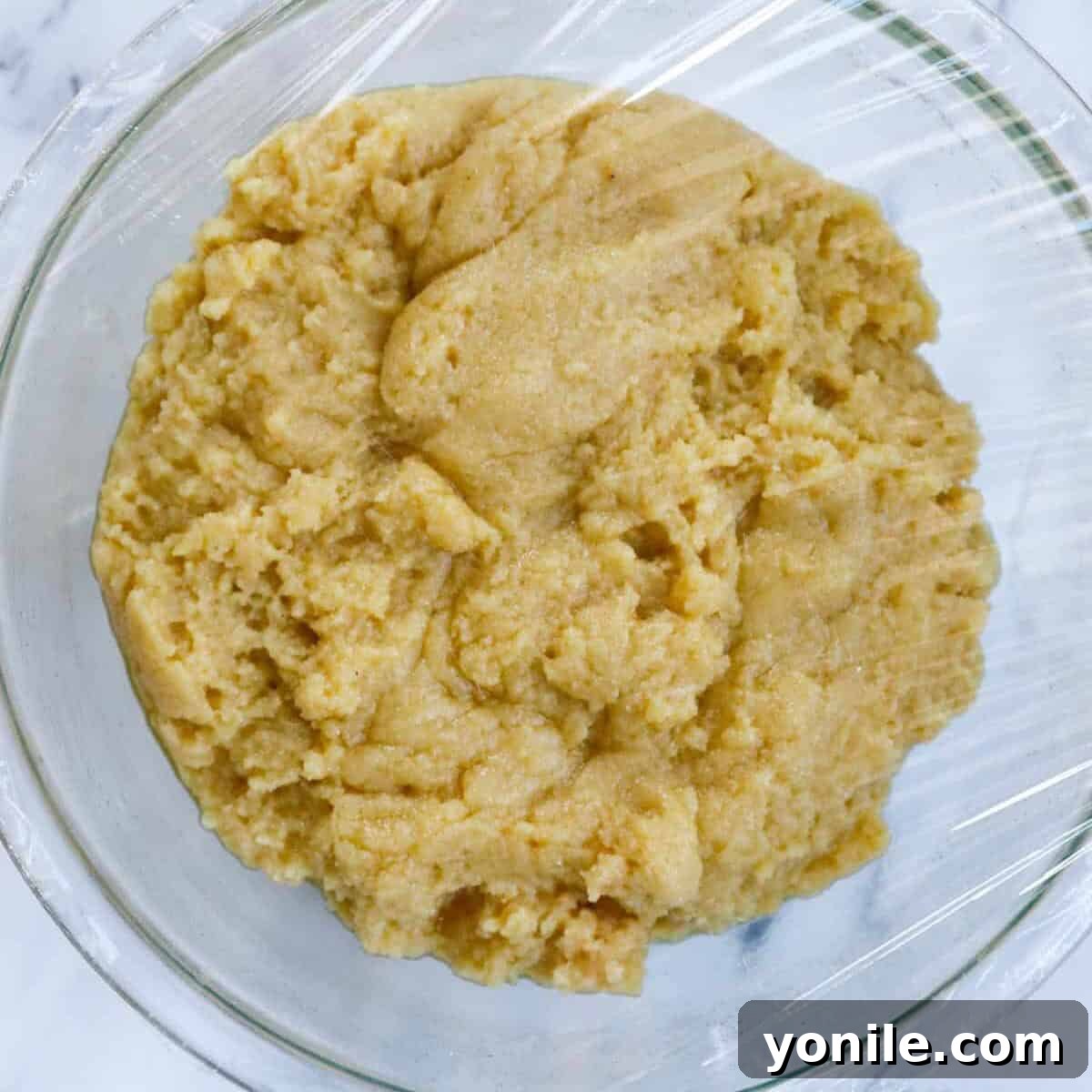
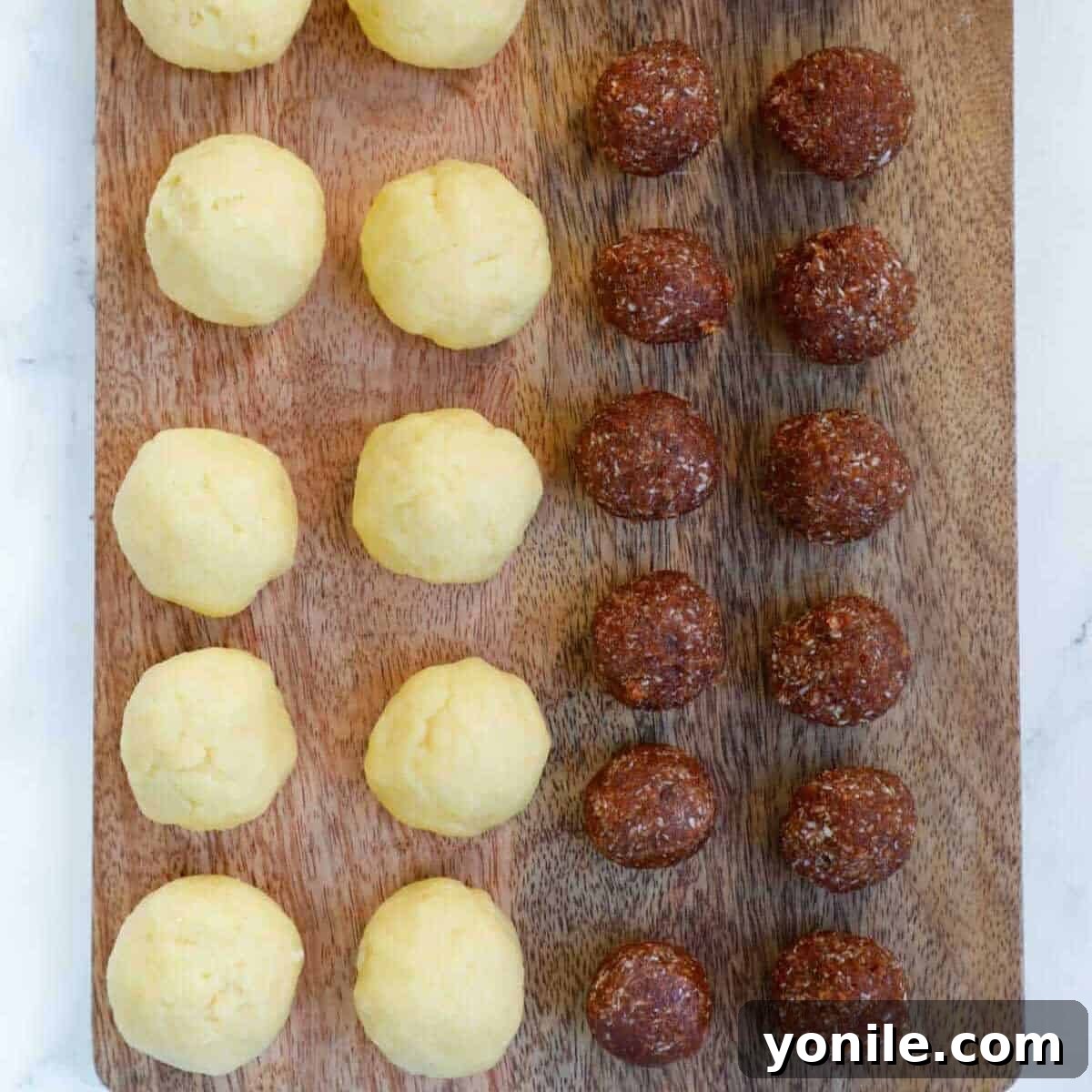
Step 2: Prepare The Date Filling
The sweet, aromatic date filling is the heart of these traditional cookies, providing a delightful contrast to the delicate semolina dough.
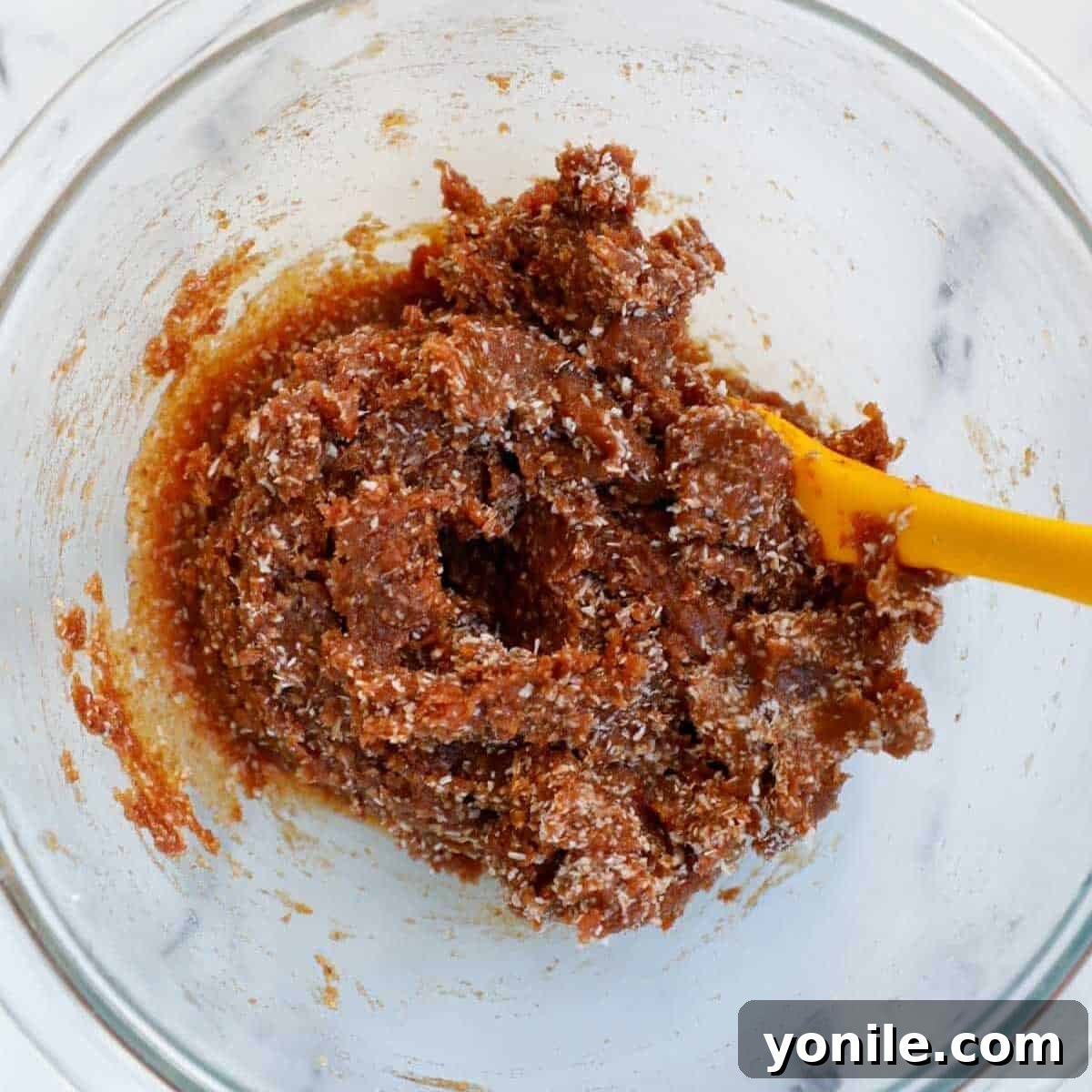
Step 3: Assemble The Maamoul Cookies
This is where the magic happens, transforming simple dough and filling into beautiful, patterned cookies.
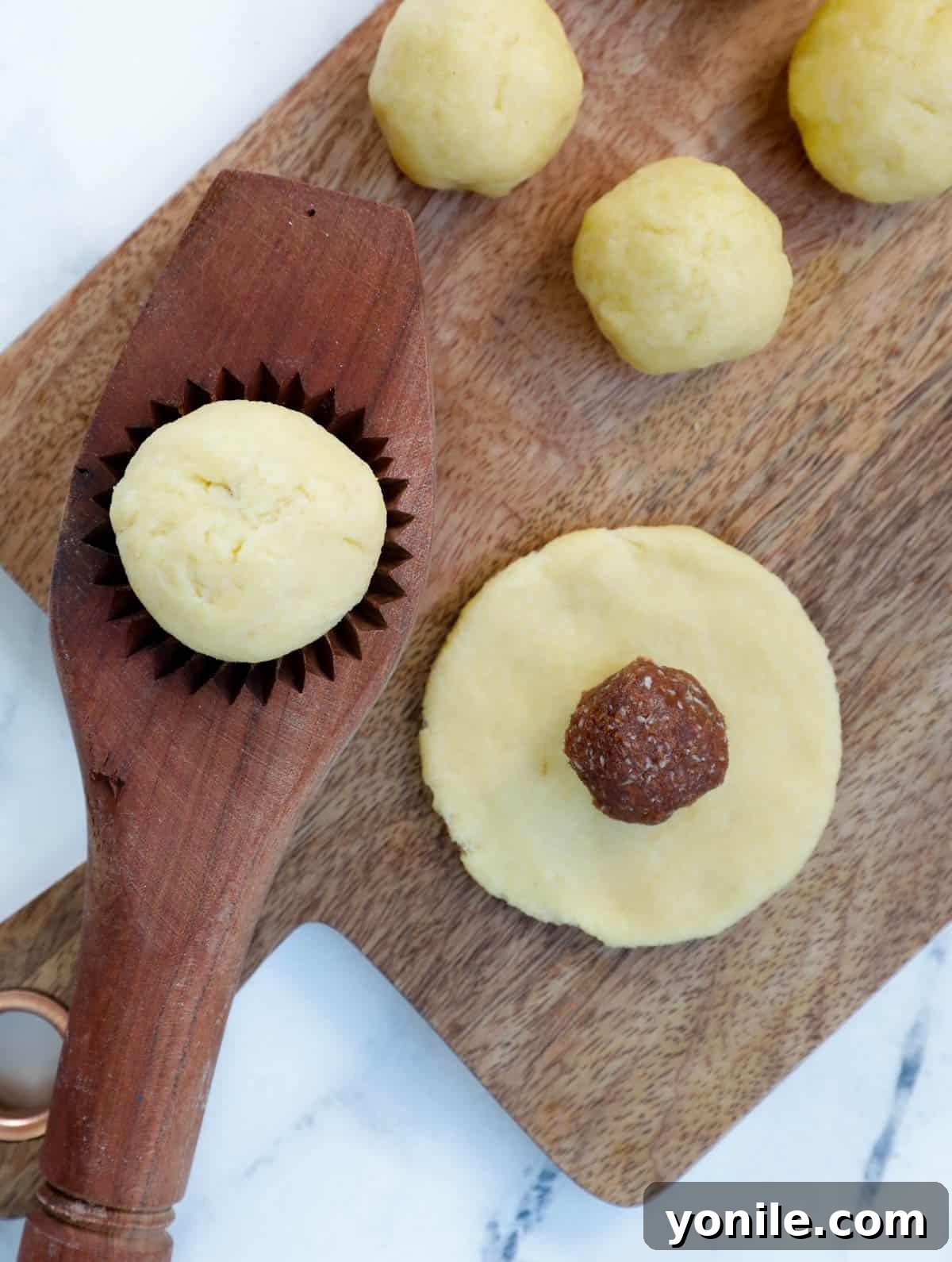
- Take one portion of the rested Maamoul dough and gently flatten it into a disc in the palm of your hand, creating a small cup-like shape.
- Place one prepared date ball directly into the center of the flattened dough. Carefully wrap the dough around the filling, ensuring the date ball is completely enclosed and sealed within the dough, leaving no gaps. Gently roll it between your palms to ensure a smooth sphere.
- Lightly flour your chosen Maamoul mold. Press the dough ball firmly into the mold, ensuring the pattern is fully imprinted. Then, gently tap the mold against a clean surface or your hand to release the shaped cookie. Place the perfectly patterned cookie onto a baking sheet that has been lined with parchment paper. Repeat this process with the remaining dough and filling until all cookies are shaped.
Step 4: Bake the Cookies
Baking Maamoul requires a keen eye to achieve that perfect golden hue without over-browning.
- Preheat your oven to a high temperature of 450°F (230°C). This initial high heat helps to set the dough quickly and create a tender interior.
- Arrange the shaped Maamoul cookies on a baking pan, ensuring they are placed on parchment paper. Leave a little space between each cookie for even baking.
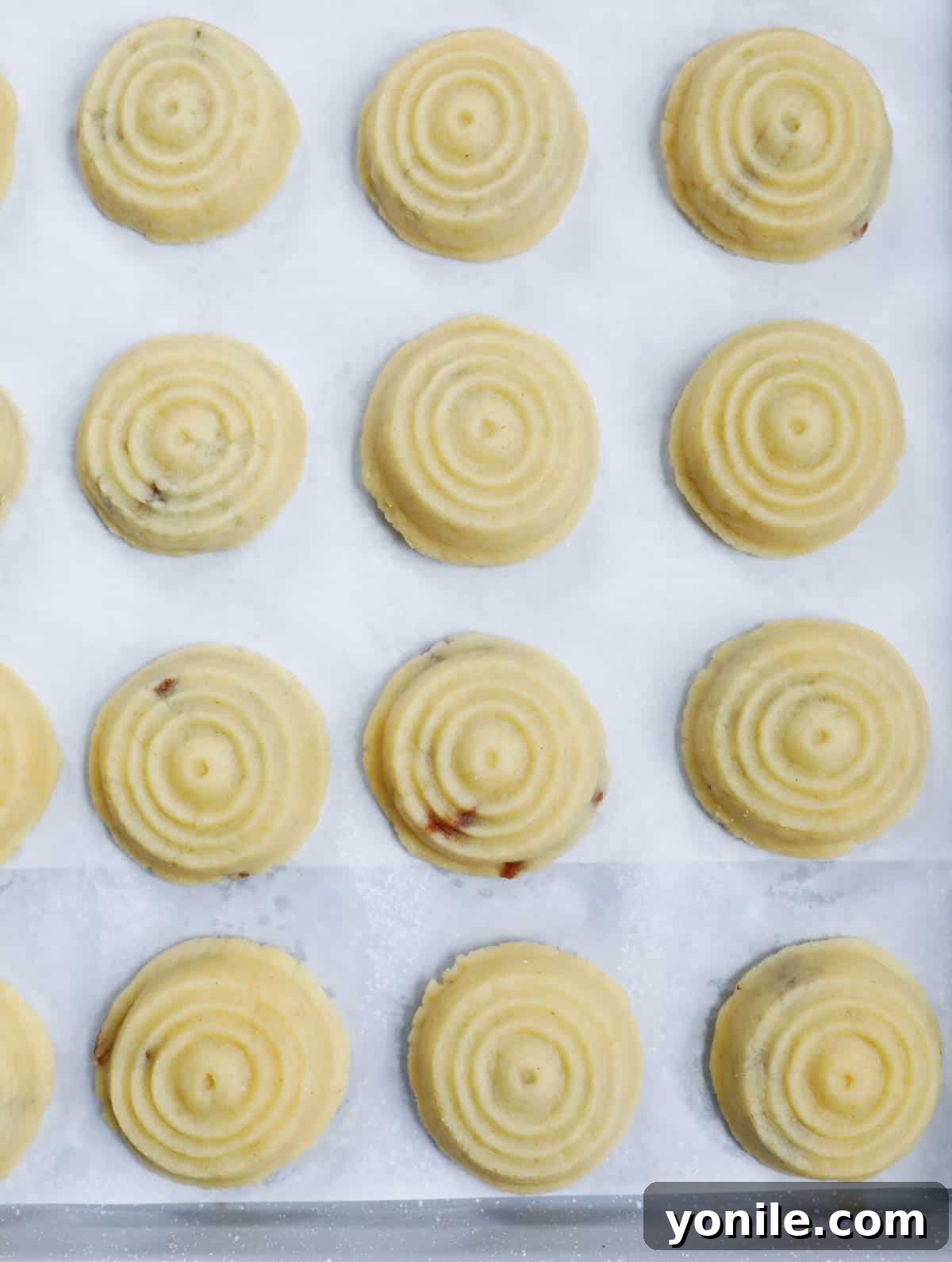
- Place the baking pan on the middle rack of your preheated oven. Bake for approximately 13 minutes, or until the bottoms of the cookies are lightly golden. The tops should remain relatively pale.
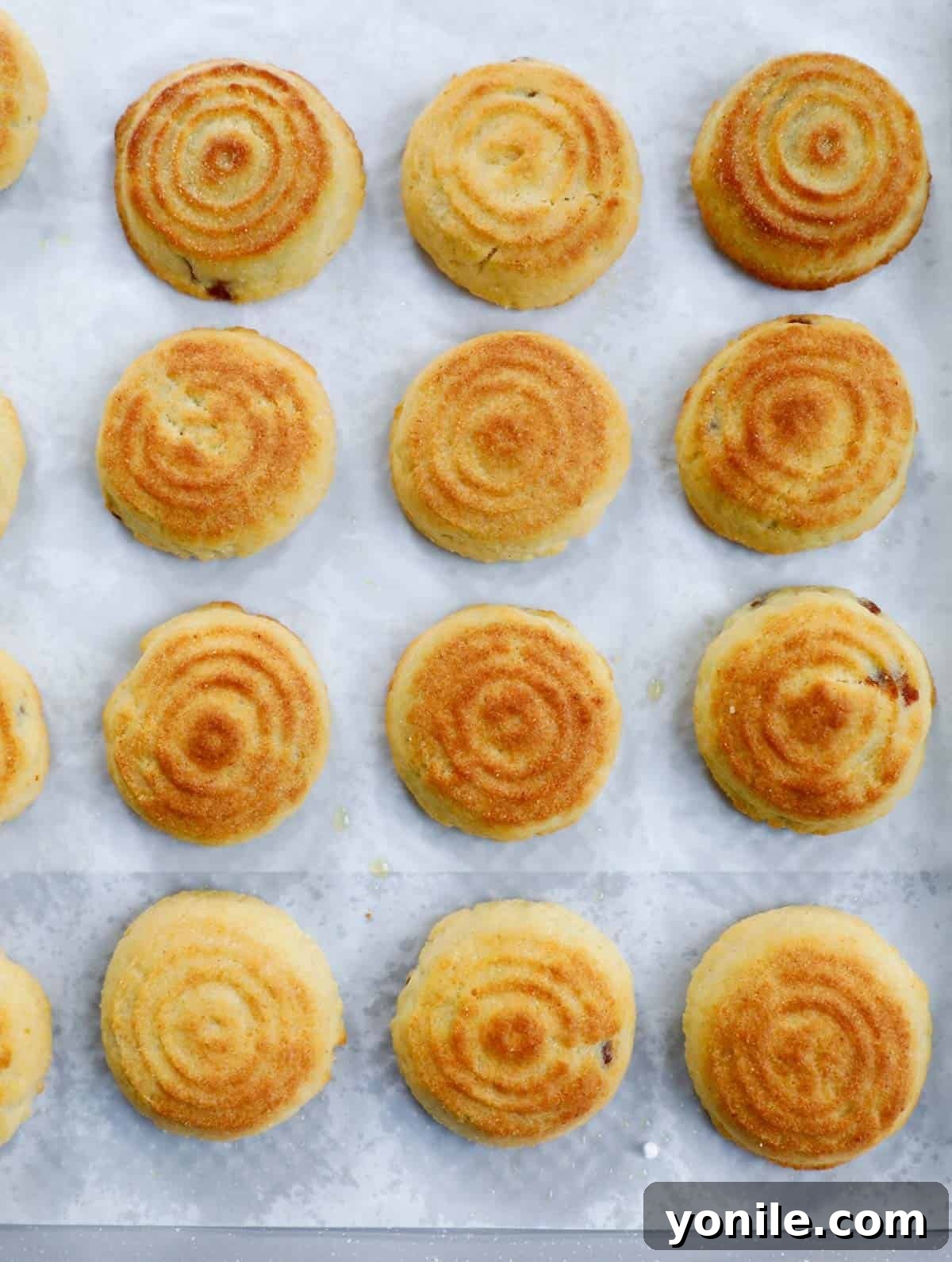
- Once the bottoms are lightly golden, carefully switch your oven to the broiler setting. Broil the tops of the cookies for a very short period, just until they turn a light golden color. This step is crucial for achieving a beautiful finish, but it happens very quickly. Stay vigilant and do not step away from the oven, as broiling can cause burning in mere seconds. This process typically takes only 1-2 minutes, but exact times will vary significantly depending on the strength of your oven’s broiler.
- Once baked to perfection, remove the cookies from the oven and allow them to cool completely on the baking sheet before serving. Cooling allows the cookies to firm up and their flavors to fully develop.
Expert Maamoul Recipe Tips for Success
Achieving perfect Maamoul involves a few key techniques. Keep these tips in mind to ensure your cookies are nothing short of spectacular:
- Embrace the Rest: The most crucial step for a tender, crumbly Maamoul is allowing the semolina dough to rest overnight after being mixed with ghee. This extended rest allows the semolina grains to fully hydrate and soften, preventing a tough or dry cookie. If time is genuinely pressing, a minimum rest of at least 6 hours is essential, though overnight is always preferred for the best texture.
- Choosing the Right Molds: For beautifully defined patterns, invest in Maamoul molds with deep grooves and intricate designs. These molds help the patterns hold their shape during baking. Don’t be discouraged if your first few cookies don’t come out perfectly; practice makes perfect, and rest assured, they will still taste absolutely delicious. The joy is in the making and sharing!
- Semolina Consistency: Different brands of semolina can vary in absorption. If, after the resting periods, your dough feels overly stiff or dry, gradually incorporate one tablespoon of warm milk at a time until the dough reaches a soft, pliable consistency. This flexibility ensures your dough is perfect for shaping.
- Adjusting Portion Sizes: The suggested portion size for dough and filling (25g dough, 15g filling) is a guideline. Depending on the specific size and depth of your Maamoul molds, you may need to subtly increase or decrease these amounts to achieve a perfect fit and a well-filled cookie.
- Avoid Overbaking: Maamoul are delicate cookies that should maintain a light, pale color on top, with only the bottom edges turning a gentle golden brown. Overbaking will result in dry, hard cookies that lose their signature melt-in-your-mouth quality. Keep a close watch, especially during the broiling step.
Delectable Maamoul Filling Variations
While the date filling is a classic favorite, Maamoul’s versatility shines through its wonderful array of alternative fillings. Experiment with these popular variations to create a diverse assortment of cookies:
- Date Filling Enhancements: The traditional date filling can be elevated with various aromatics. Consider incorporating a pinch of warm spices like ground cardamom, a touch of nutmeg, or a dash of cinnamon to complement the dates’ natural sweetness. Beyond rose water, you can also add a teaspoon of orange blossom water for a different floral note. For added texture and richness, finely crushed nuts such as walnuts or pecans, or even finely shredded coconut, can be mixed into the date paste. A teaspoon of ghee or softened butter is often added to the date paste to keep it moist, pliable, and incredibly flavorful.
- Pistachio Filling: For a vibrant and nutty alternative, ground or crushed pistachio filling is a household favorite for many. To prepare, finely grind shelled pistachios and combine them with a small amount of powdered sugar for sweetness. A delicate splash of orange blossom water beautifully enhances the pistachio flavor and binds the mixture, creating an aromatic and brightly colored filling.
- Walnut Filling: The robust flavor of walnuts pairs exquisitely with warm spices. For a traditional walnut filling, combine finely crushed walnuts with powdered sugar and a generous sprinkle of cinnamon. This combination creates a deeply aromatic and comforting flavor profile. It’s a good practice to rinse walnuts with hot water and dry them thoroughly before crushing; this helps to remove any residual bitterness and enhances their natural flavor.
Storage and Freezing Tips for Maamoul
Proper storage ensures your Maamoul remain fresh and delicious for as long as possible. Here’s how to keep them at their best:
Storing Maamoul: After baking, allow the Maamoul cookies to cool completely to room temperature. Once cooled, transfer them to an airtight container. Stored this way, they will maintain their optimal freshness and delightful texture for 7-10 days. They can typically last for up to two weeks, though it’s often observed that these irresistible treats rarely last that long!
Freezing Maamoul: Maamoul can be successfully frozen, offering the convenience of preparing them in advance. While freezing may cause a slight reduction in their initial crispiness, they remain wonderfully flavorful. To freeze, arrange the cooled cookies in a single layer in freezer bags or an airtight freezer-safe container, ensuring they are well-protected from freezer burn. They can be frozen for up to two months. When ready to enjoy, simply thaw the Maamoul at room temperature before serving.
Commonly Asked Questions About Maamoul
Here are answers to some frequently asked questions about making and enjoying Maamoul cookies:
Maamoul cookies are distinctively shaped using specialized carved wooden or plastic molds. These molds come in an array of beautiful designs and patterns. Traditionally, specific shapes and patterns are associated with different fillings, allowing people to easily identify what type of delicious filling is inside each cookie (e.g., dates, walnuts, pistachios). These traditional molds are readily available at most Middle Eastern grocery stores or can be purchased online. The molding process not only imparts a beautiful design but also gives Maamoul its signature charming appearance.
Mahlab is a unique and aromatic spice that is central to many Middle Eastern pastry recipes, including Maamoul. It is derived from the ground kernels found inside the pits of the mahaleb cherry tree. Mahlab imparts a distinctive, slightly bitter, and sweet flavor profile, often described as a blend of almond, cherry, and rose. Its subtle yet complex aroma is a key component of authentic Maamoul and other traditional Middle Eastern sweets.
While traditional molds create the iconic patterns, you can absolutely shape Maamoul cookies by hand if you don’t have a mold. A common method is to roll the filled dough into a smooth ball. To add a decorative touch, you can gently press a fork onto the surface of the ball to create a crosshatch pattern, or use a small pastry tong (often called a “manakish” or “naqash” tong) to pinch and create intricate, unique designs around the cookie. This handmade approach gives each cookie a rustic and charming appeal.
Maamoul, being a rich and sweet treat, pairs wonderfully with beverages that complement its flavors. The most popular accompaniments are traditional hot drinks like aromatic Arabic coffee or robust black tea, which offer a delightful contrast and cleanse the palate. The slight bitterness of coffee or the briskness of tea perfectly balances the sweetness of the cookies. If hot beverages are not preferred, a refreshing cup of juice, such as apricot or mango juice, can also be a lovely pairing.
Explore More Lebanese Dessert Recipes
- Lebanese Nights Dessert
- Coconut Basbousa Recipe
- Lebanese Namoura
- Sfouf (Lebanese Turmeric Cake)
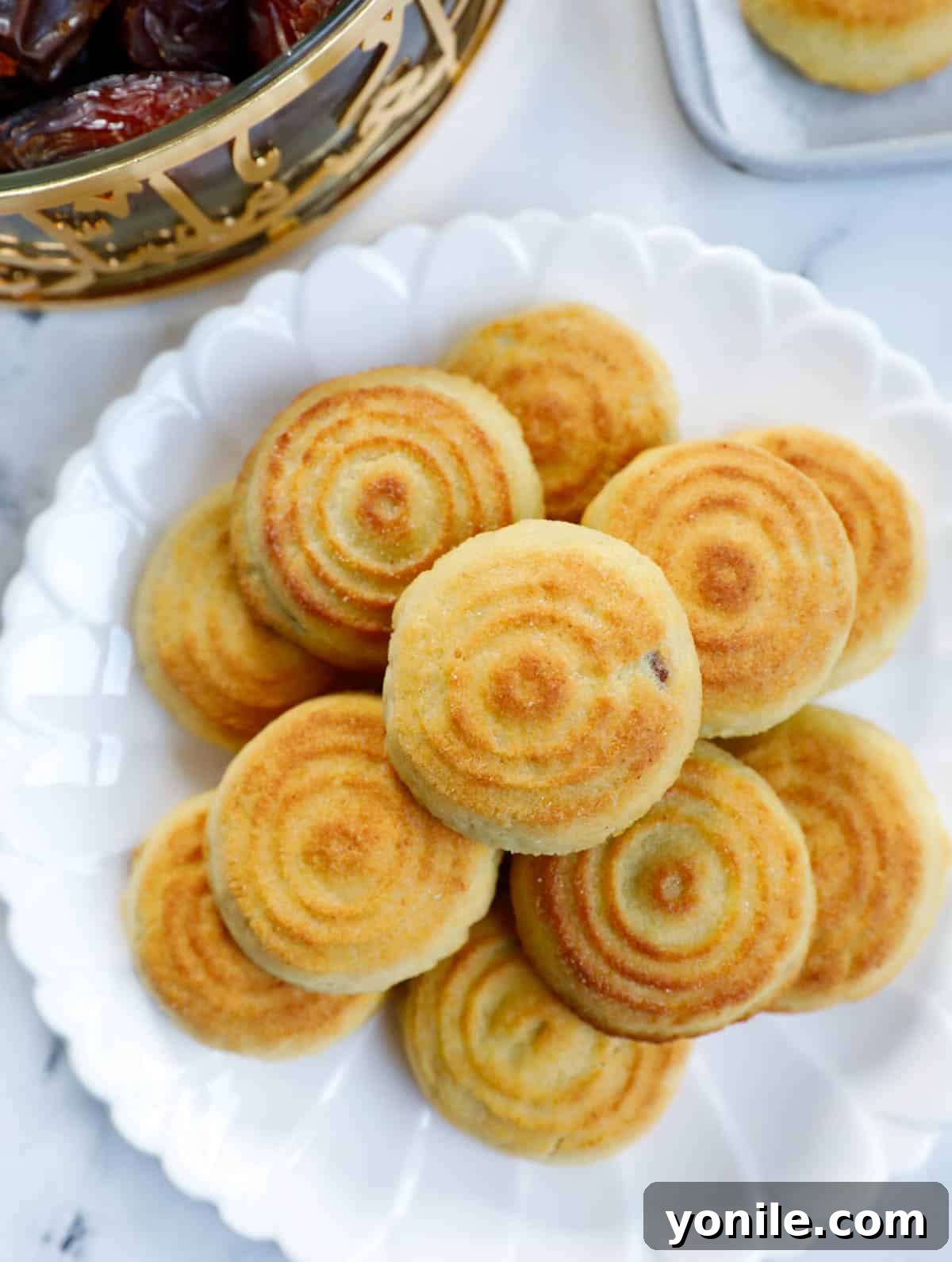
These Ma’amoul Date Filled Cookies are more than just a dessert; they are a perfect snack to brighten any day and an indispensable, delightful addition to any celebration. Their buttery dough and sweet date filling create a truly irresistible treat that promises to melt in your mouth. So, roll up your sleeves, gather your ingredients, and embark on the rewarding journey of making a batch of these exquisite Middle Eastern cookies. Prepare to savor every bite and watch as everyone asks for more!
If you embark on this culinary adventure and enjoy this recipe, please consider leaving a star rating and a comment below to share your experience. Your feedback is greatly appreciated!
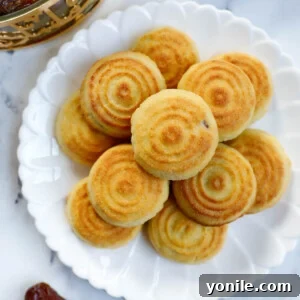
Maamoul (Date Filled Cookies) (معمول بالتمر)
Maamoul Date Filled Cookies (معمول بالتمر) are buttery Middle Eastern cookies filled with sweet date paste, offering a soft interior and a delightful crunch on the outside. These traditional treats are a cherished staple for Eid, Easter, and various other special occasions, bringing joy and flavor to every celebration.
By: Mariam Ezzeddine
Prep Time: 1 hour 30 minutes
Cook Time: 15 minutes
Resting Time: 12 hours
Total Time: 13 hours 45 minutes
Servings: 22 Servings
Equipment
- Maamoul mold
Ingredients
Maamoul Dough:
- 1¼ cup fine durum semolina, ferkha
- ½ cup all purpose flour, plus 2 tablespoons
- ½ cup ghee, warm
- ⅔ cup whole milk, warm
- ½ tsp mahlab
- ¼ tsp. instant yeast
- 2 tbsps sugar, optional
Date Filling
- 13 oz (375g) date paste, or pureed pitted dates
- ¼ cup fine coconut flakes, or nut of choice like pecan or walnuts
- 1 tbsp. rose water
- 1 tbsp unsalted butter, soften
Instructions
Prepare The Dough
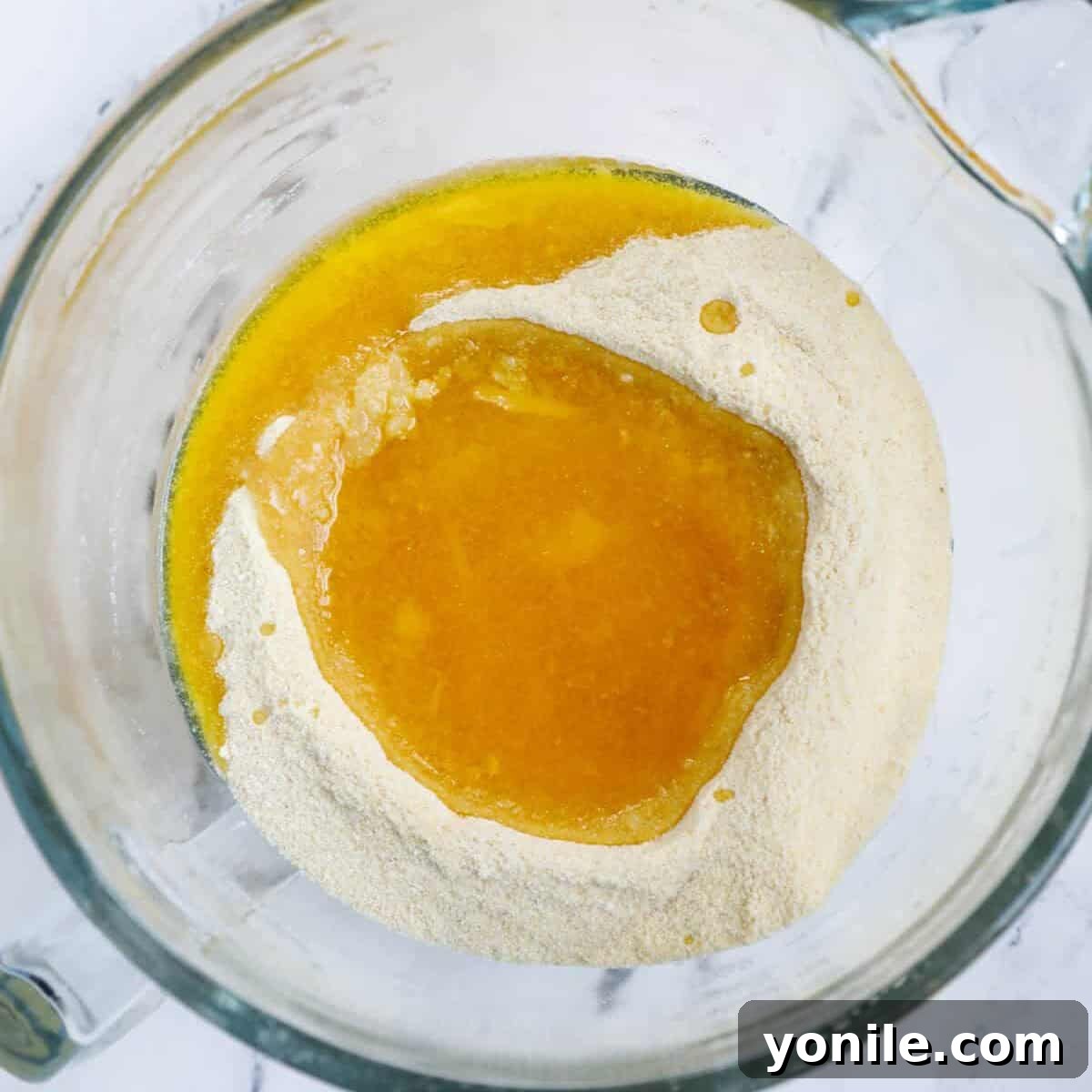
- Prepare the night before. In a large bowl, mix the fine semolina and flour. Add the melted ghee. Rub it into the semolina mixture using your fingers or a stand mixer using a paddle attachment, until it looks like wet sand. Cover and let it rest overnight for best texture (about 12 hours).
- The next day, after resting, rub the dough again with your fingers to get a nice smooth sandy texture.
- In a cup, warm the milk and sugar until lukewarm (just about 40 seconds). When it comes out, add the yeast and mahlab and give it a quick stir.
- Pour the warm milk into the semolina mixture and gently knead until a soft dough forms. Cover and let it rest again for 30 minutes.
- When ready to form into balls, knead one last time for a few seconds and divide the dough into 22 equal portions (about 25 grams). You can just eye the size, you don’t have to weigh them. You can also roll the dough into a long log and cut into 22 even pieces. Be sure to cover it if you have not yet formed the date balls.
Prepare The Filling
- In a small bowl, combine the date paste, butter, coconut, and rose water until smooth.
- Roll 1.5 teaspoon (15 grams) into small balls about the size of a gumball. You can just eye the balls and don’t have to weigh or measure each one.
Assemble The Cookies
- Place a date ball in the center, then wrap the dough around it and seal it.
- Press the ball into a Maamoul mold, then gently tap it out onto a baking sheet lined with parchment paper. Line the cookies on a baking pan over parchment paper.
Bake The Cookies
- Preheat oven to 450°F. On the middle rack, bake for 13 minutes until lightly golden on the bottom.
- Turn on the broiler and broil the cookies on top until lightly golden. Keep a very close eye on them. This will only take 1-2 minutes. The exact time will vary depending on your oven.
- Let them cool completely before serving.
Notes
- Resting the dough: You must allow the semolina to rest overnight. If for any reason you can’t do this and you are desperate for same day ma’amoul, allow it to rest at least 6 hours.
- Best molds: Get a mold with deep grooves for the shape to hold. If you don’t get a perfect shape, don’t worry. Your cookies will still taste the same. Enjoy them and don’t sweat about it.
- Type of semolina: Every brand of semolina is different. If the dough is stiff, add one tablespoon of milk at a time to make it a little softer.
- Portions: You might have to increase or decrease the suggested portion size depending on the mold you are using.
- Do not overbake—Maamoul should be light in color and only golden on the bottom.
Nutrition
Serving: 1g | Calories: 148kcal | Carbohydrates: 23g | Protein: 2g | Fat: 6g | Saturated Fat: 4g | Polyunsaturated Fat: 0.2g | Monounsaturated Fat: 1g | Trans Fat: 0.02g | Cholesterol: 13mg | Sodium: 4mg | Potassium: 148mg | Fiber: 2g | Sugar: 12g | Vitamin A: 30IU | Vitamin C: 0.1mg | Calcium: 18mg | Iron: 1mg