
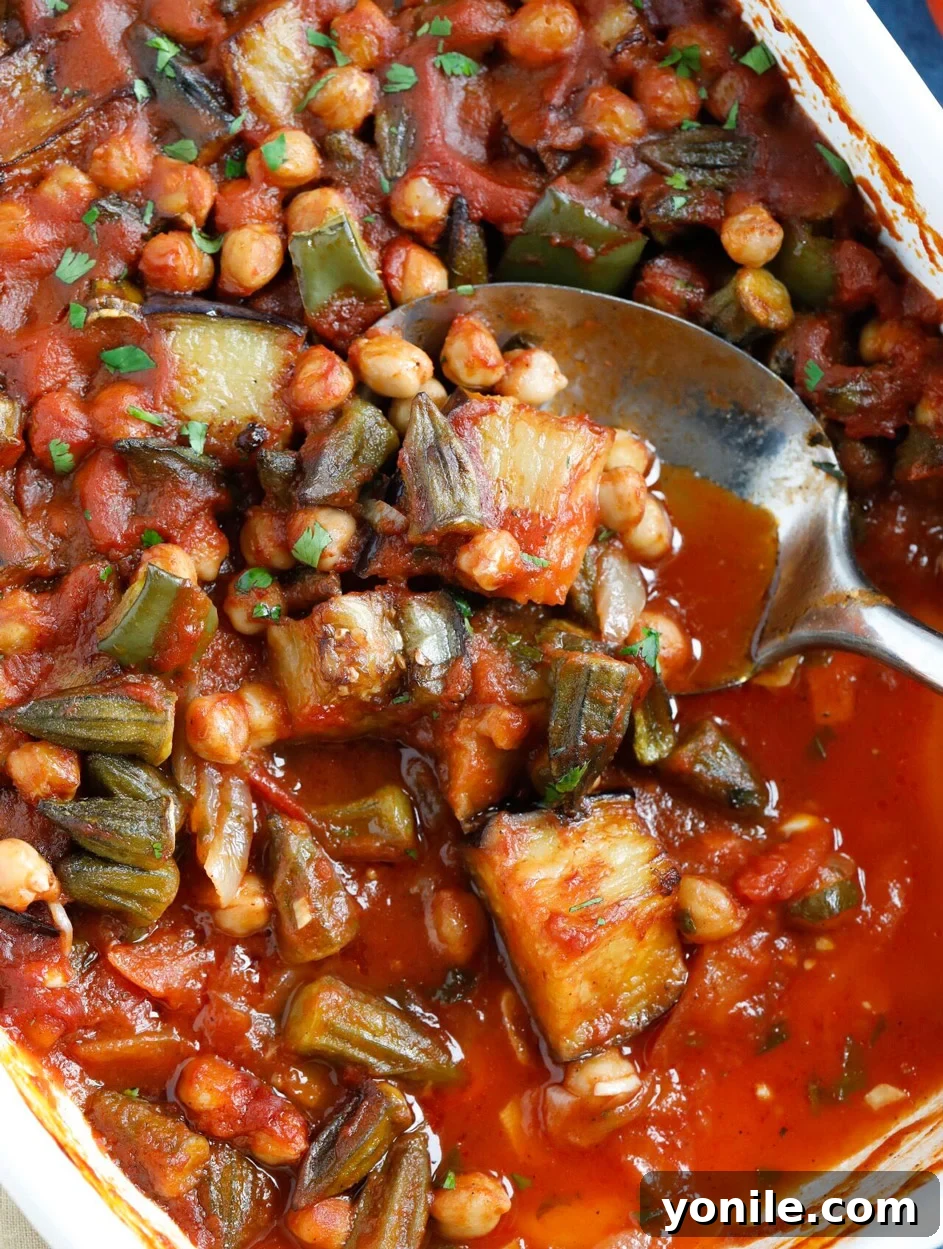
Discover the rich flavors and comforting embrace of Maghmour (Lebanese Moussaka), a culinary gem from the heart of the Middle East. This versatile dish is celebrated for its incredible taste, equally delightful whether served warm or chilled. A staple in Lebanese households, Maghmour offers a beautiful blend of tender vegetables, aromatic spices, and a savory tomato base, making it a perfect meal for any occasion. What’s more, it’s wonderfully adaptable – easily prepared as a wholesome vegetarian or vegan option, or enriched with meat for a heartier dish. Ready in approximately 45 minutes, it stands out as an ideal easy weeknight meal, and its ability to be made ahead of time makes it a fantastic choice for meal prep or entertaining.
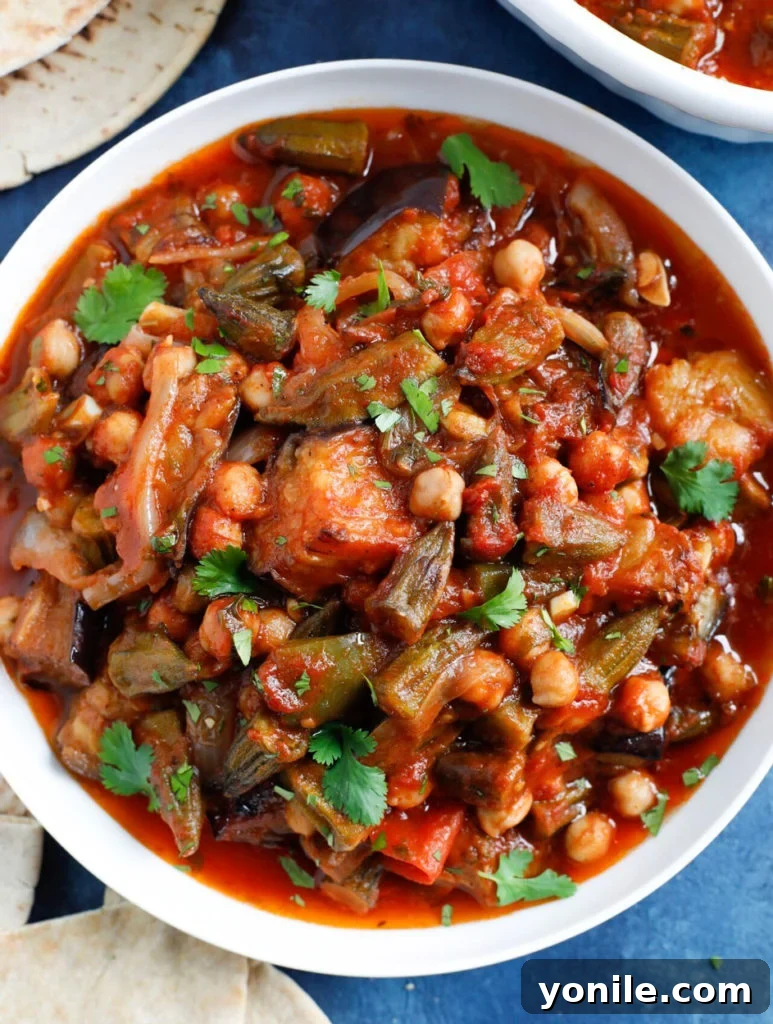
This Lebanese recipe holds a deeply special place in my heart, evoking cherished memories of my childhood. Like Sheikh El Mahshi (شيخ المحشي), it’s one of my most beloved traditional main dishes, though it can also grace your table as an elegant appetizer. I vividly remember my Grandma preparing this exquisite dish for me every time I visited Lebanon. Her version, often made with succulent meat, was simply unparalleled. There’s a certain magic in a grandma’s cooking, isn’t there? Just thinking about the mouth-watering Maghmour she used to make brings a nostalgic smile to my face. Today, I find immense joy in carrying on her tradition, preparing it for my own children and sharing a piece of our culinary heritage.
What Is Maghmour (Lebanese Moussaka)? Unveiling a Middle Eastern Delight
While the name “Moussaka” might immediately bring to mind its famous Greek counterpart, the Lebanese Maghmour offers a distinctly different and equally captivating experience. Unlike the Greek Moussaka, which often resembles a shepherd’s pie with layers of meat, potatoes, and béchamel sauce, Maghmour is a vibrant vegetable-centric dish. At its core, it features a rich medley of vegetables, primarily eggplant and chickpeas, simmered in a robust, tangy tomato sauce. Many traditional recipes also include tender pieces of beef, adding another layer of depth and flavor, a practice my own grandmother fondly followed.
This Lebanese interpretation of moussaka is a celebration of fresh, seasonal produce, often highlighting the versatility of eggplant. The inclusion of chickpeas not only adds a delightful texture but also makes it a remarkably satisfying and nutritious meal, especially for those seeking plant-based options. It’s a dish that truly embodies the warmth and hospitality of Lebanese cuisine, often passed down through generations, each family adding their unique touch. The beauty of Maghmour lies in its simplicity and the way humble ingredients are transformed into a deeply flavorful and comforting dish.
How to Make Maghmour (Lebanese Moussaka): A Step-by-Step Culinary Journey
Creating authentic Maghmour is a delightful process that unfolds in a few key stages, starting with the careful preparation of its star ingredients.
Preparing the Vegetables: The Heart of Maghmour
The journey to perfect Maghmour begins with the vegetables. Eggplant is paramount, and I often opt for a generous amount. Cube the eggplants into manageable pieces. While grilling is a healthier alternative, frying them to a golden perfection truly elevates the dish, imparting an irresistible depth of flavor and a wonderfully tender texture. After frying, ensure they are thoroughly drained on paper towels to remove excess oil.
Another beloved ingredient, often overlooked in some variations, is baby okra. I absolutely adore how okra contributes a unique subtle sweetness and a tender, slightly chewy texture that pairs beautifully with the eggplant. Don’t worry if fresh okra isn’t in season; frozen baby okra from your local grocery store works perfectly fine. Just like the eggplant, fry the okra until lightly browned and drain it well on paper towels. To add a hint of freshness and a touch of subtle heat, I also incorporate some cubed green bell peppers. For those who enjoy a spicier kick, a finely diced jalapeño can be a fantastic addition.
Crafting the Aromatic Tomato Sauce
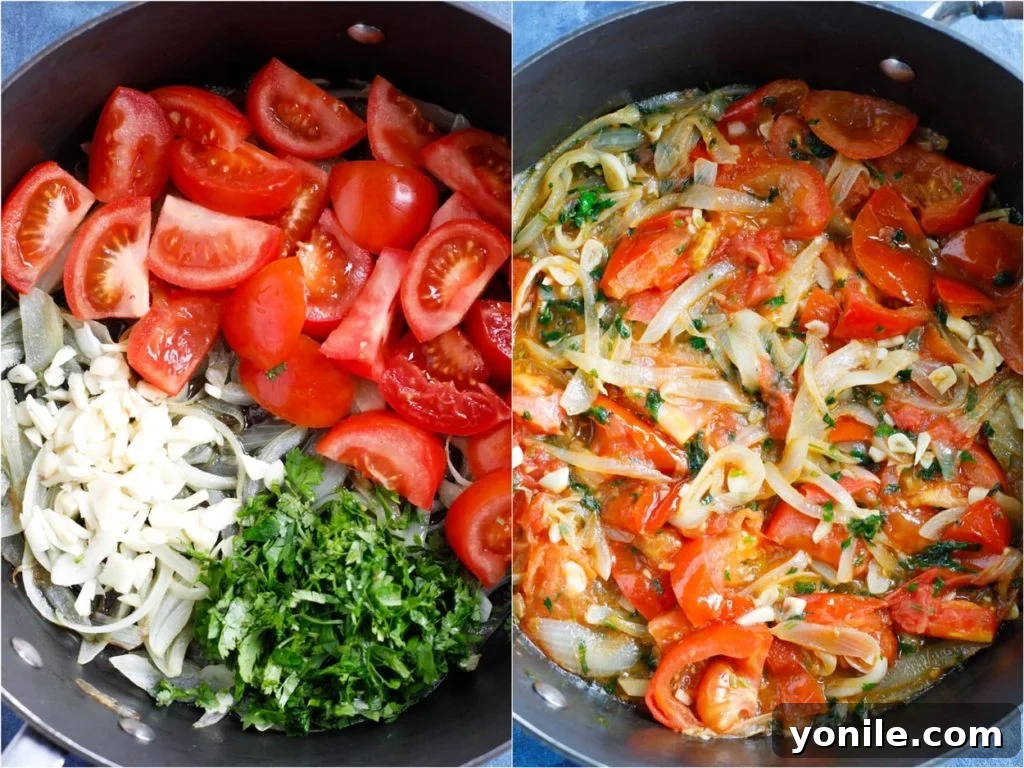
The soul of Maghmour lies in its rich, aromatic tomato sauce. Begin by sautéing thinly sliced onions in good quality olive oil. This slow caramelization process is crucial, as it builds a sweet foundation for the sauce. Once the onions are beautifully golden and tender, introduce the minced garlic, fresh cilantro, and diced fresh tomatoes. The aroma at this stage is truly captivating!
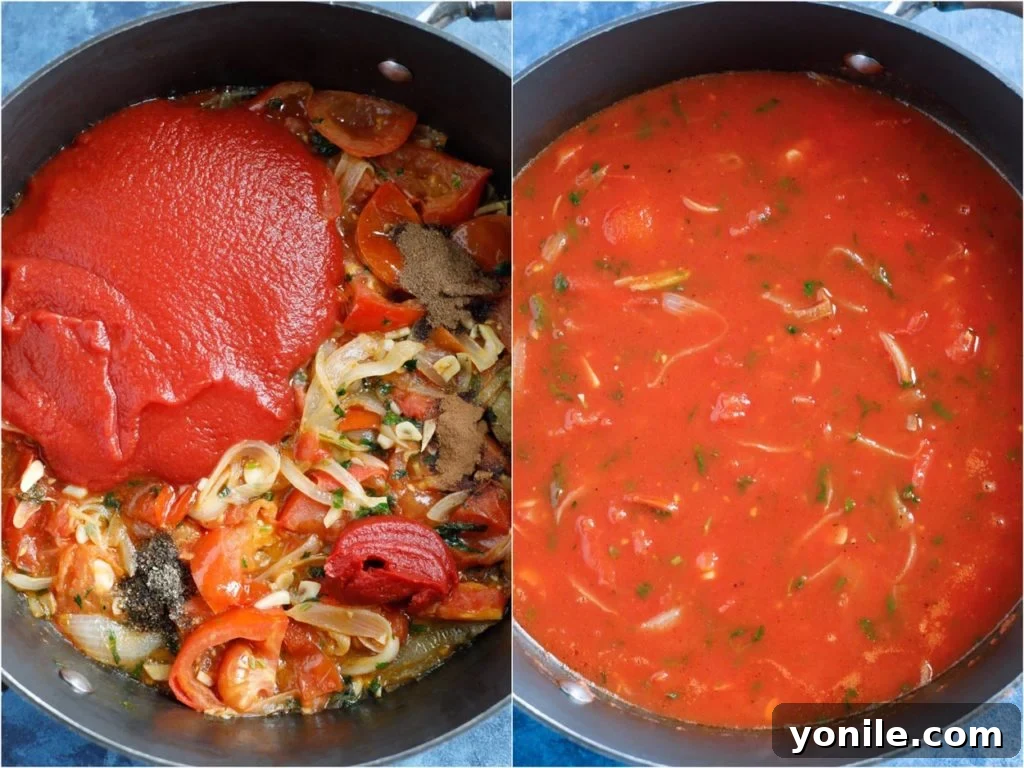
Stir everything together, allowing the flavors to meld for a few minutes. Then, reduce the heat, cover the skillet, and let the tomatoes gently cook until they become incredibly tender and begin to break down. Uncover and use a wooden spoon to mash the cooked tomatoes, creating a wonderfully rustic and saucy texture. Now, it’s time to intensify the tomato flavor with canned tomato puree sauce and a concentrated tomato paste. Incorporate your chosen spices – black pepper, 7 spice, and a hint of cinnamon are traditional and create a warm, inviting profile – along with salt and water. Give it another good stir, cover, and let it simmer for a few more minutes, allowing all the ingredients to marry into a harmonious, rich sauce.
Assembly and Baking: Bringing It All Together
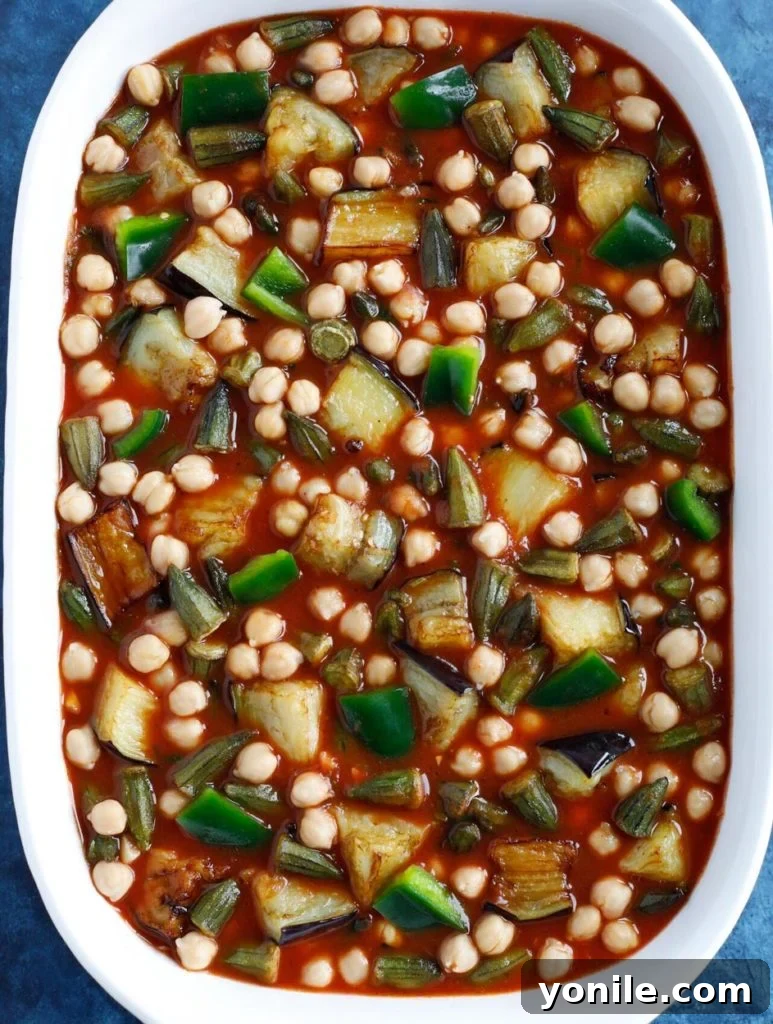
With the vegetables prepared and the sauce perfected, the final step is assembly. Pour a generous layer of the fragrant tomato sauce into a baking dish. This forms the flavorful base. Next, artfully arrange the fried eggplant, okra, bell peppers, and chickpeas over the sauce, ensuring an even distribution. If you’re adding meat or chicken, it would be layered here as well (refer to the notes below for preparation).
Once all the ingredients are nestled in the baking dish, cover it tightly with aluminum foil. This crucial step prevents the top layer of vegetables from drying out or burning, ensuring everything cooks evenly and remains deliciously moist. Bake in a preheated oven until the Maghmour is bubbling gently and the flavors have fully melded. The result is a comforting, deeply satisfying dish ready to be enjoyed.
Recipe Notes and Tips for the Perfect Maghmour
To ensure your Maghmour turns out perfect every time, consider these helpful tips and variations:
- Adding Meat or Chicken: For a heartier dish, you can incorporate beef or chicken. Season your chosen meat with salt and pepper, then sear it on both sides in a separate pan until browned. This step locks in flavor and texture. Once seared, layer the meat into the baking dish along with the vegetables before baking. Ground meat can also be sautéed with the onions and tomatoes for a more integrated flavor.
- Preheat Your Oven: Always preheat your oven to the specified temperature before placing the baking dish inside. This ensures even cooking and prevents the dish from drying out or taking longer to cook. Start preheating while you are preparing and sautéing your vegetables.
- Cover for Moisture: Covering the baking dish tightly with aluminum foil is essential. It traps steam, which helps the vegetables cook through perfectly without browning too much or becoming dry on top. Remove the foil for the last few minutes if you desire a slightly more caramelized top layer.
- Customize with Extra Vegetables: Maghmour is incredibly forgiving and can be a wonderful way to use up vegetables you have on hand. Mushrooms, zucchini, or even potatoes (diced and pre-fried) can be added to the mix. Experiment with your favorite vegetables to make this dish truly your own.
- Spice Adjustment: The “7 Spice” blend is a cornerstone of Lebanese cuisine, but if unavailable, you can create a similar warm profile using a mix of allspice, black pepper, cinnamon, nutmeg, and cloves. Adjust the amounts of salt, pepper, and other spices to your personal preference.
Frequently Asked Questions About Maghmour
How Do You Serve Maghmour?
The beauty of Maghmour lies in its versatility. Interestingly, the word “Moussaka” itself can mean “chilled” in some contexts, and this dish is traditionally enjoyed as a cold appetizer or side dish. However, I equally adore it served warm, fresh from the oven, as a comforting main course. While often categorized as an appetizer, Maghmour is hearty enough to be a complete meal, especially when enhanced with proteins like chicken or beef.
My preferred way to savor Maghmour is scooped up with fresh Lebanese Pita bread, allowing the bread to soak up every drop of the flavorful sauce. If you’re serving it as a main meal, consider pairing it with fluffy couscous or traditional Lebanese Vermicelli rice on the side. For those who prefer it chilled, simply allow the cooked Maghmour to cool to room temperature, then cover and refrigerate for an hour or two before serving. The flavors intensify beautifully when cold.
Can You Make Maghmour Ahead of Time?
Absolutely! Maghmour is an outstanding candidate for make-ahead meals. In fact, many believe the leftovers taste even better as the flavors have more time to fully develop and meld. Once cooked, let the Maghmour cool completely to room temperature. Transfer it to an airtight container and store it in the refrigerator, where it will keep wonderfully for up to three days.
For longer storage, this Lebanese moussaka freezes exceptionally well. Portion it into freezer-safe containers and freeze for up to three months. When you’re ready to enjoy it, thaw the Maghmour in the refrigerator overnight. You can then gently reheat it on the stovetop or in the oven, or simply serve it chilled if that’s your preference.
Is Maghmour Vegan?
Yes, this traditional recipe for Maghmour is inherently vegan-friendly, making it a fantastic option for plant-based diets. Thanks to the generous inclusion of chickpeas, it provides a good source of plant-based protein and complex carbohydrates, making it a well-balanced and satisfying meal. Packed with an abundance of wholesome vegetables like eggplant, tomatoes, and okra, it’s a dish you can feel incredibly good about serving to your family and friends, offering both incredible flavor and significant nutritional benefits.
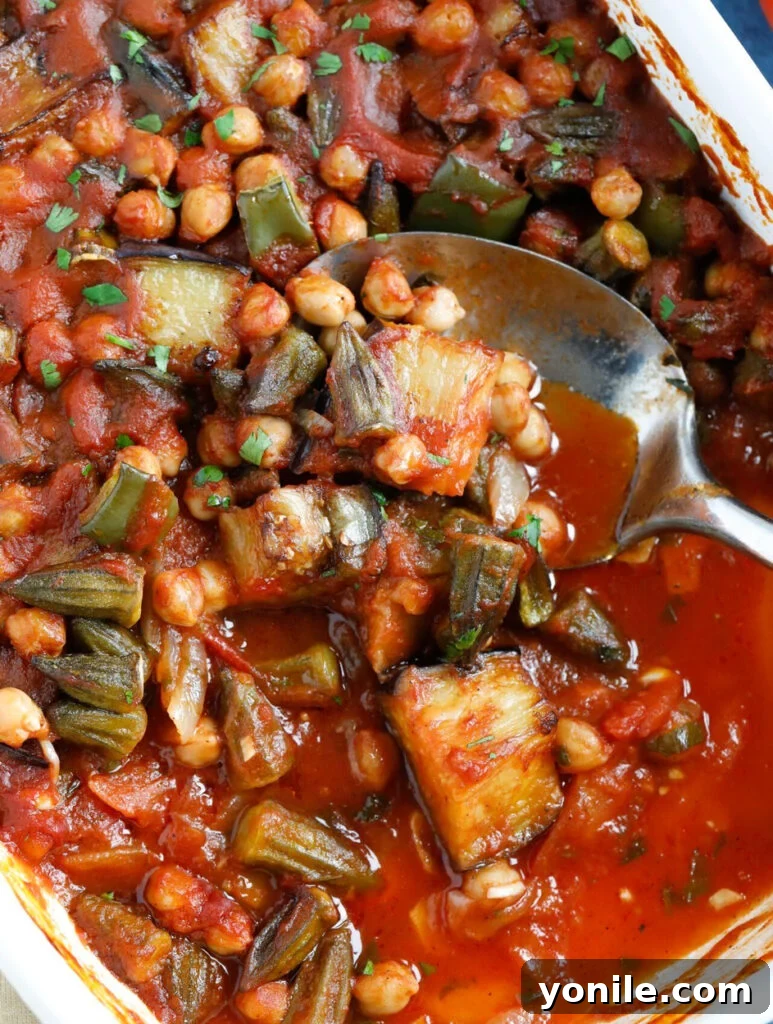
I truly cannot express enough how much I adore this Maghmour recipe! It stands as one of my all-time favorites, and I am absolutely confident that you will fall in love with it too. It’s an explosion of flavor, utterly delicious, and remarkably simple to prepare, making it accessible to home cooks of all skill levels. Embrace the taste of Lebanon with this comforting and flavorful dish.
More Delicious Lebanese Recipes to Explore
If you enjoyed this taste of Lebanese cuisine, be sure to explore more recipes from our collection:
- Lebanese Cheese Rolls
- Lebanese Rice Pudding
- Maamoul Date Cookies
- Lebanese Spicy Potatoes (Batata Harra)
- Easy Beef Shawarma Bowl
I sincerely hope you find joy in all the authentic recipes I share with you, including this incredibly flavorful and straightforward Maghmour. I encourage you to try it, savor every bite, and spread the deliciousness by sharing it with your beloved friends and family!
For more culinary inspiration and to stay updated with all my new recipes, consider signing up for my blog newsletter – new dishes delivered straight to your inbox! Don’t forget to tag me on INSTAGRAM so I can admire your delicious culinary creations. Until our next recipe adventure, XoXo…
Maghmour (Lebanese Moussaka) Recipe Card
By: Mariam Ezzeddine
This Maghmour (Lebanese Moussaka) is a super delicious recipe you can enjoy hot or cold. It’s very famous in the Middle East and can be made with or without meat for a vegetarian option.
Prep Time: 15 minutes | Cook Time: 30 minutes | Total Time: 45 minutes
Servings: 8 servings
Ingredients
- 1 lb fresh plum tomatoes, cubed
- 5 cloves garlic, chopped
- 1 medium onion, sliced
- 1/2 cup chopped cilantro, fresh only
- 1 tbsp. black pepper
- 1 tsp. 7 spice
- 1/2 tsp. cinnamon powder
- 1.5 tsp salt
- 1 can chickpeas, drained and rinsed
- 2 cups baby okra, fried
- 2 medium sized eggplant or 1 large, cubed and fried
- 12 oz. tomato puree sauce (canned)
- 2 tbsps. tomato paste
- 1/2 green bell pepper, cubed
- 4 cups water
- 2 tbsps. olive oil
Instructions
- In a large skillet, heat the olive oil over medium heat. Add the sliced onions and caramelize them until soft and golden brown.
- Add the cubed fresh tomatoes, chopped cilantro, and minced garlic to the skillet. Sauté for a few minutes until fragrant.
- Reduce the heat to medium-low, cover the skillet, and simmer for about 5 minutes until the tomatoes are tender. Mash the tomatoes lightly with a wooden spoon to create a saucy texture.
- Stir in the tomato paste, tomato puree sauce, salt, black pepper, 7 spice, cinnamon powder, and water. Mix everything well. Cover and simmer for another 5 minutes to allow flavors to meld.
- Remove the tomato sauce from the heat. Pour about half of the sauce into a 9×13 inch baking dish, spreading evenly across the bottom.
- Layer the fried eggplant, fried baby okra, cubed green bell pepper, and drained chickpeas over the sauce in the baking dish. Pour the remaining tomato sauce over the vegetables, ensuring they are well coated.
- Cover the baking dish tightly with aluminum foil. Bake in a preheated oven at 375°F (190°C) for 30 minutes.
- Carefully remove the Maghmour from the oven. Serve immediately if you prefer it hot, or allow it to cool to room temperature before refrigerating for extra cooling if serving chilled.
- Leftovers can be stored in an airtight container in the fridge for up to 3 days.
Notes
- Adding Meat or Chicken: For a heartier dish, season 1/2-1 lb beef or chicken with salt and pepper, then sear it on both sides before layering into the baking dish with the vegetables.
- Preheat the Oven: Always preheat your oven to ensure even cooking and optimal texture.
- Cover During Baking: Covering the dish with foil prevents the vegetables from browning excessively or drying out, ensuring a moist and tender result.
- Customize Your Veggies: Feel free to add other vegetables like zucchini or mushrooms to customize your Maghmour.
Nutrition
Serving: 1g | Calories: 138kcal | Carbohydrates: 20.8g | Protein: 5.5g | Fat: 9.2g | Saturated Fat: 4.3g | Sodium: 613.2mg | Sugar: 7.2g