
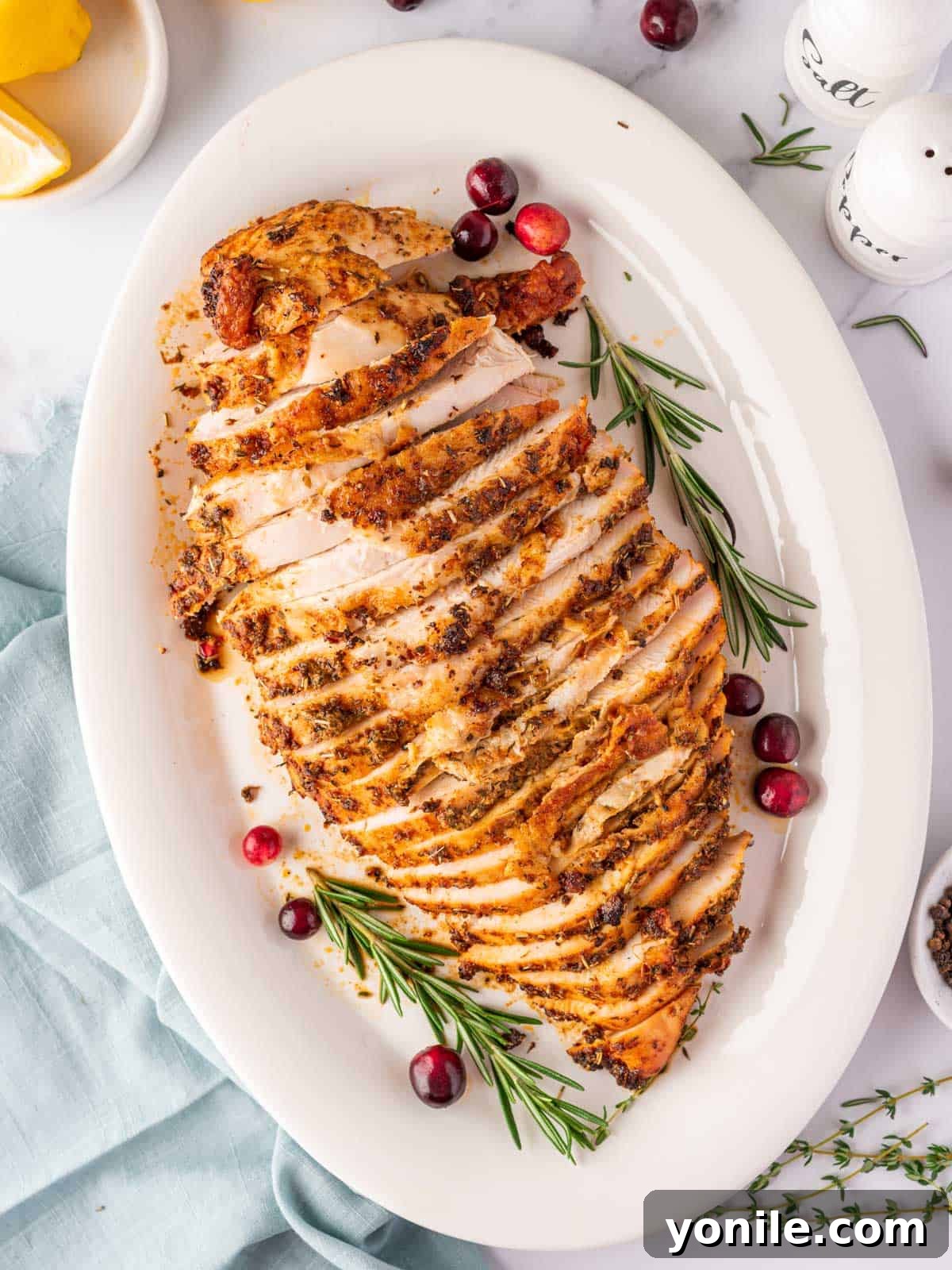
Welcome to the ultimate guide for preparing a succulent, perfectly Roasted Boneless Turkey Breast. Whether you’re planning an intimate holiday gathering for Thanksgiving or Christmas, or simply craving the comforting flavors of turkey on a regular weekend, this recipe is your go-to solution. Forget the stress and lengthy cooking times associated with a whole bird; roasting a turkey breast delivers all the deliciousness with significantly less effort. This method promises a remarkably crispy skin, incredibly tender, and moist meat that will have everyone asking for seconds. It’s an ideal choice for smaller families or when you want to enjoy turkey without the monumental commitment of a full-sized roast.
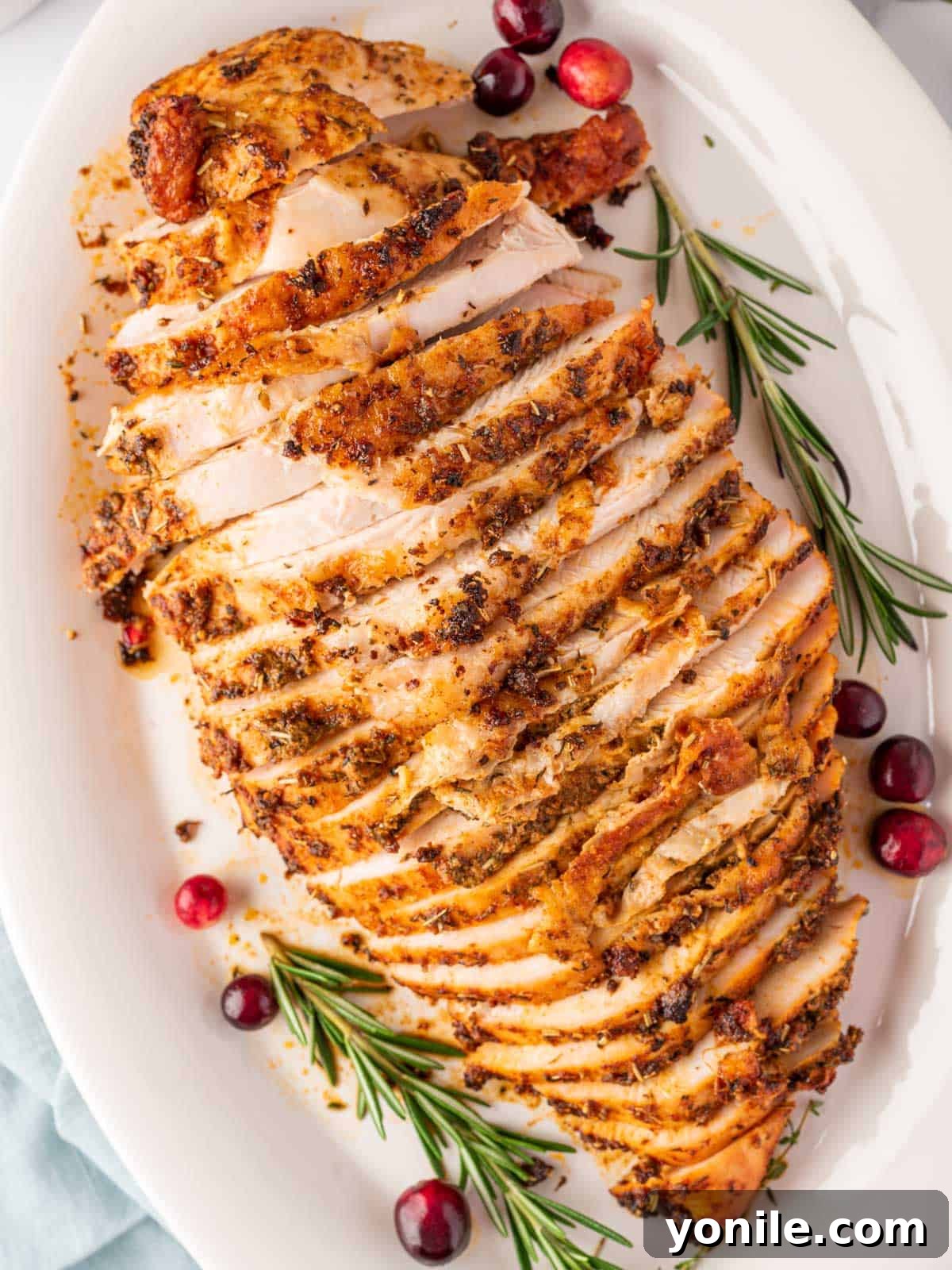
Pairing this holiday favorite with delicious sides elevates any meal. Consider serving it alongside my Roasted Garlic Mashed Potatoes, rich Homemade Cranberry Sauce, and a comforting Easy Green Bean Casserole for a complete and unforgettable feast. These complementary dishes will enhance the flavors of the turkey and create a truly memorable dining experience for you and your loved ones.
Why You’ll Love This Easy Roasted Turkey Breast Recipe
This boneless turkey breast recipe stands out for several compelling reasons, making it a favorite for both novice and experienced cooks. Here’s why you’ll be reaching for this recipe again and again:
- Effortless Preparation and Quicker Cook Time: Roasting a turkey breast is significantly less demanding than tackling an entire turkey. Not only is the prep work simpler, but the cooking time is also dramatically reduced, allowing you to spend less time in the kitchen and more time enjoying your guests or relaxing. You can even roast multiple turkey breasts simultaneously to feed a larger crowd without the hassle of carving a cumbersome whole bird. Simply slice and serve, making it incredibly convenient for any occasion.
- Consistently Juicy and Tender Results: One of the biggest challenges with roasting a whole turkey is preventing the breast meat from drying out while waiting for the darker meat (thighs and legs) to cook through. With a boneless turkey breast, this concern is eliminated. You can easily achieve perfectly cooked, succulent breast meat every single time, ensuring a moist and flavorful dish that delights the palate. The absence of bones also contributes to even cooking.
- Year-Round Availability and Versatility: Unlike whole turkeys, which are often seasonal, turkey breasts are readily available in most grocery stores year-round. This means you don’t have to wait for the holidays to enjoy a delicious turkey meal. Whether you’re craving a lighter protein option during the summer or a hearty dish in the fall, this recipe allows you to satisfy your turkey cravings whenever they strike, offering unparalleled flexibility in your meal planning.
- Incredible Flavor with Minimal Ingredients: Despite its simplicity, this recipe delivers an explosion of flavor. The carefully selected seasoning blend penetrates the meat, creating a deeply savory profile, while the crispy skin adds a delightful textural contrast. You’ll be amazed at how such a straightforward approach can yield such profound and satisfying results, proving that you don’t need a complicated ingredient list for extraordinary taste.
Key Ingredients for the Perfect Roasted Turkey Breast
Creating a truly memorable roasted turkey breast starts with fresh, quality ingredients. Each component plays a vital role in achieving that sought-after crispy skin and wonderfully juicy meat. Here’s a breakdown of what you’ll need and why:
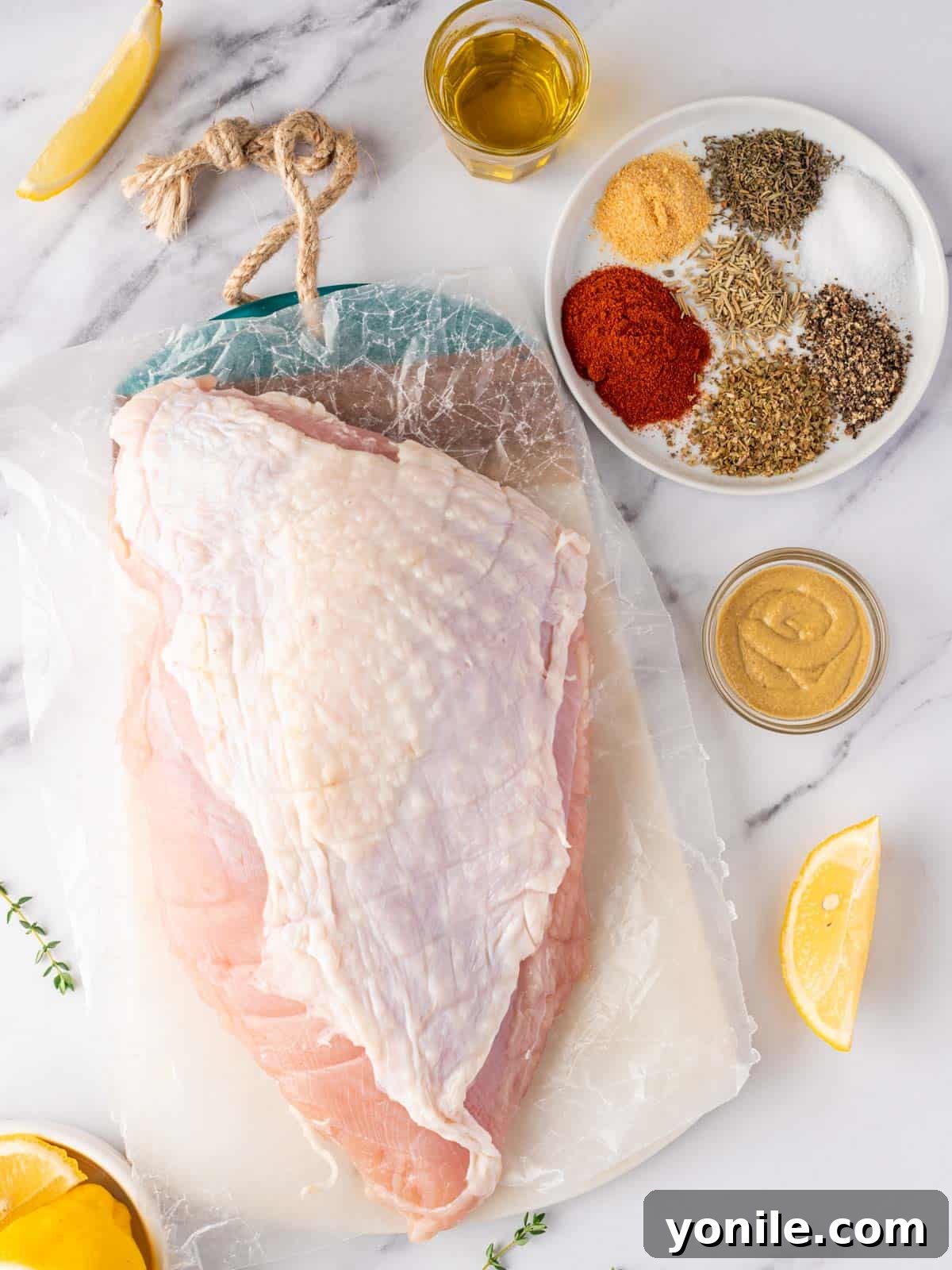
- Olive Oil: This serves as the base for our flavorful seasoning paste. Olive oil helps to bind the spices, ensuring they adhere beautifully to the turkey skin and penetrate the meat. It also contributes to the golden-brown crust and helps keep the turkey moist during roasting. Feel free to use your favorite extra virgin olive oil or any other neutral oil like avocado or grapeseed oil if preferred.
- Fresh Lemon Juice: A splash of fresh lemon juice adds a bright, acidic note that cuts through the richness of the turkey and enhances the overall flavor profile. It also helps to tenderize the meat slightly and creates a vibrant aroma as it roasts. Always opt for fresh lemon juice for the best results; bottled juice often contains preservatives and lacks the same fresh zest.
- Dijon Mustard: Dijon mustard acts as a fantastic emulsifier in the seasoning paste, helping all the ingredients meld together. Its subtle tanginess and sharp, savory notes complement the turkey wonderfully. If you don’t have Dijon, a good quality whole-grain mustard can be a great alternative, or in a pinch, yellow mustard can work, though the flavor will be milder.
- Aromatic Seasoning Blend: This carefully crafted blend is what truly makes the turkey breast shine.
- Paprika: Provides a beautiful reddish hue to the skin and a sweet, peppery flavor.
- Dried Oregano: Adds a classic Mediterranean herb note, earthy and slightly peppery.
- Salt: Essential for seasoning the meat from within, drawing out moisture and enhancing all other flavors.
- Black Pepper: Offers a subtle heat and pungent aroma that balances the savory elements.
- Garlic Powder: Delivers a consistent, savory garlic flavor throughout the roast without the risk of fresh garlic burning.
- Dried Thyme: A delicate, aromatic herb with earthy and slightly minty undertones that pairs exceptionally well with poultry.
- Dried Rosemary: Pungent and piney, rosemary infuses the turkey with a classic holiday aroma and taste.
- Boneless Turkey Breast with Skin On: The star of our show! Opting for a boneless turkey breast simplifies carving. The skin is crucial as it becomes wonderfully crispy in the oven, creating an irresistible texture, and acts as a natural protective layer, sealing in moisture and preventing the meat from drying out. A 2-3 pound breast is typically perfect for 4-6 servings.
- Fresh Herbs (for garnish): Sprigs of fresh rosemary or thyme not only add a beautiful visual appeal but also contribute a fresh, aromatic fragrance to the serving platter.
- Fresh Cranberries (for garnish): These vibrant berries provide a festive pop of color and a tart counterpoint to the rich turkey, perfect for holiday presentation.
- Pomegranate Arils (for garnish): For an extra touch of elegance and a burst of juicy sweetness, sprinkle fresh pomegranate arils over the finished roast.
Step-by-Step Guide: How to Make Boneless Turkey Breast in the Oven
Achieving a perfectly roasted boneless turkey breast is simpler than you might think. Follow these clear steps to ensure a flavorful and juicy result every time:
- 1. Prepare Your Equipment and Preheat the Oven: Begin by preheating your oven to 375°F (190°C). This ensures the oven is at the correct temperature when the turkey goes in, promoting even cooking and crispy skin. Line a sturdy baking tray with aluminum foil. The foil will make cleanup a breeze by catching any drippings and preventing them from baking onto the pan.
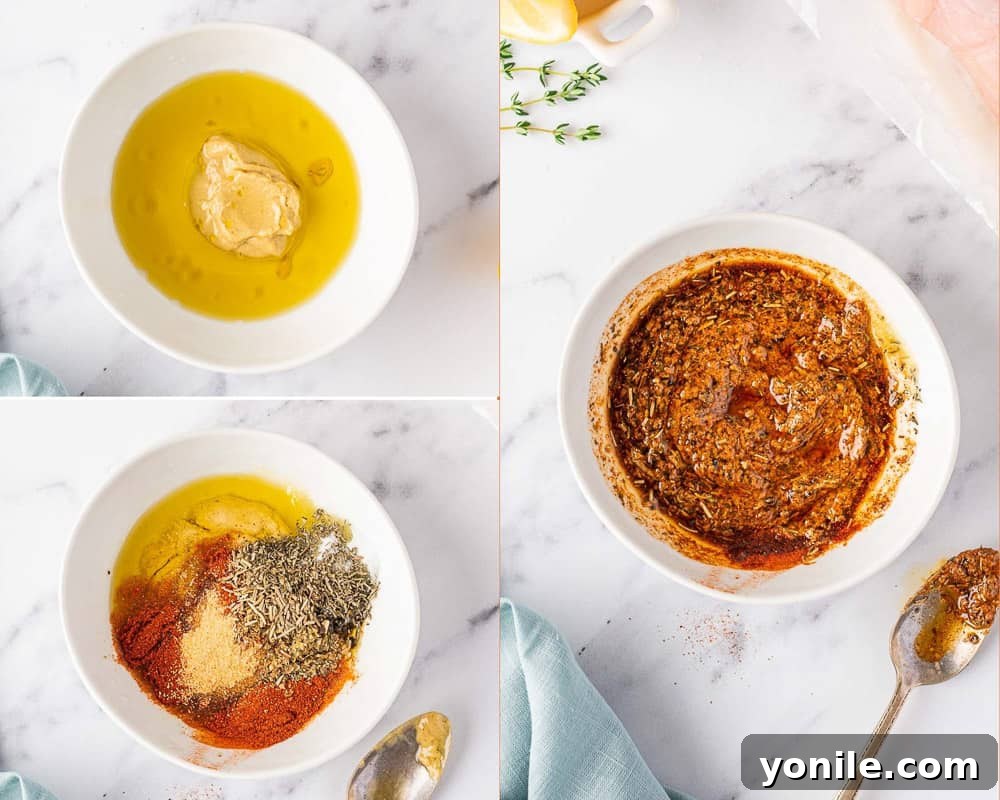
- 2. Craft the Aromatic Spice Mixture: In a medium-sized mixing bowl, combine the olive oil, fresh lemon juice, and Dijon mustard. Then, add all your dried spices: paprika, dried oregano, salt, black pepper, garlic powder, dried thyme, and dried rosemary. Whisk everything together thoroughly until it forms a thick, aromatic paste. This paste is the key to infusing your turkey with deep flavor.
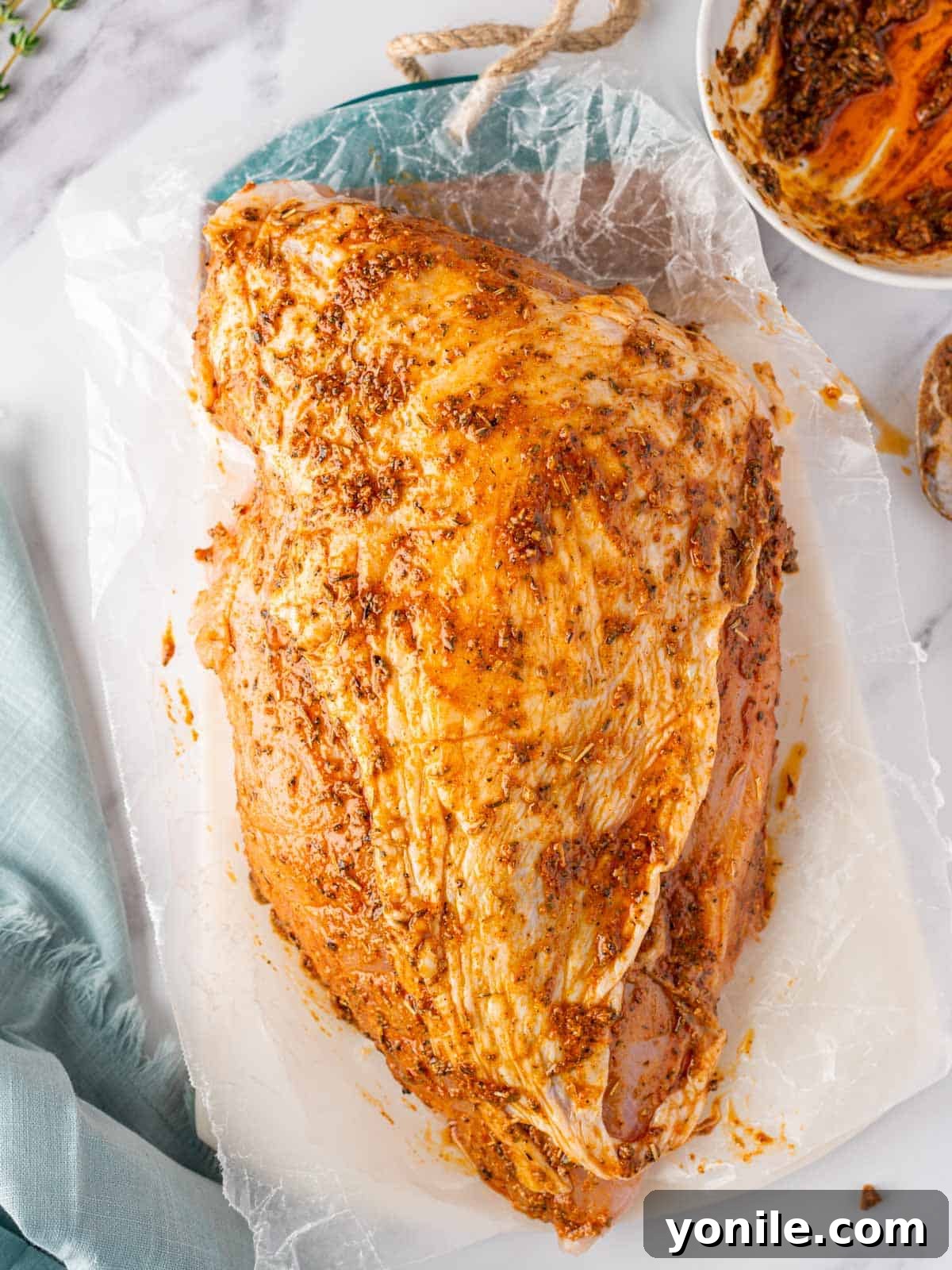
- 3. Generously Season the Turkey Breast: Before applying the seasoning, gently pat the turkey breast dry with paper towels. This crucial step helps achieve that coveted crispy skin. Carefully lift the skin of the turkey breast and spread a good portion of the spice mixture directly onto the meat underneath. This allows the flavors to penetrate deeply. Then, rub the remaining spice mixture evenly all over the exterior of the turkey skin, ensuring every part is coated.
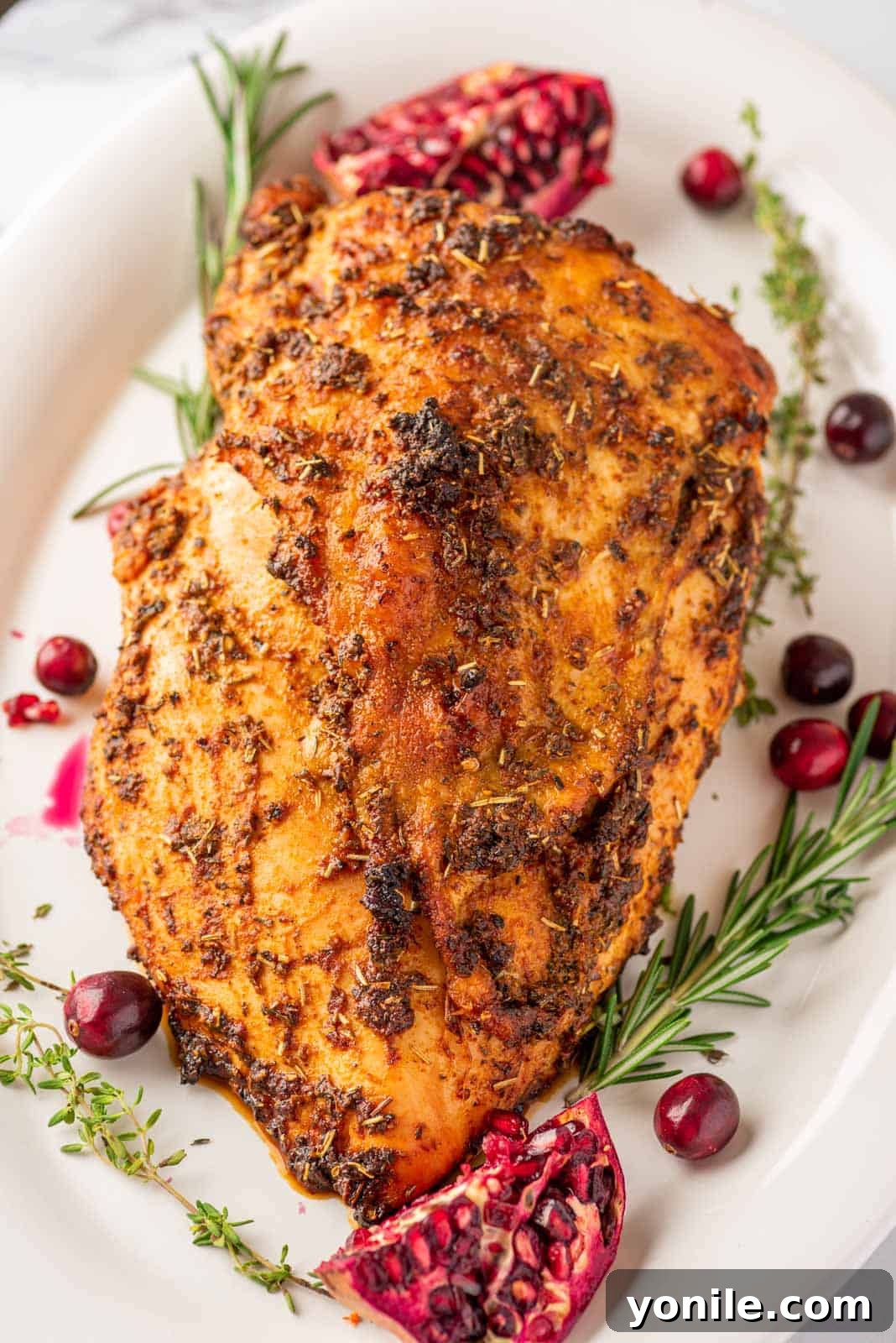
- 4. Roast to Golden-Brown Perfection: Place the seasoned turkey breast on the prepared baking tray. For best results and to encourage even cooking and crispier skin, you can place it on a wire rack set within the baking tray. Roast in the preheated oven for approximately 1 hour, or until the internal temperature of the thickest part of the turkey breast reaches 160°F (71°C) when checked with a meat thermometer. The turkey will continue to cook slightly as it rests, reaching the safe temperature of 165°F (74°C).
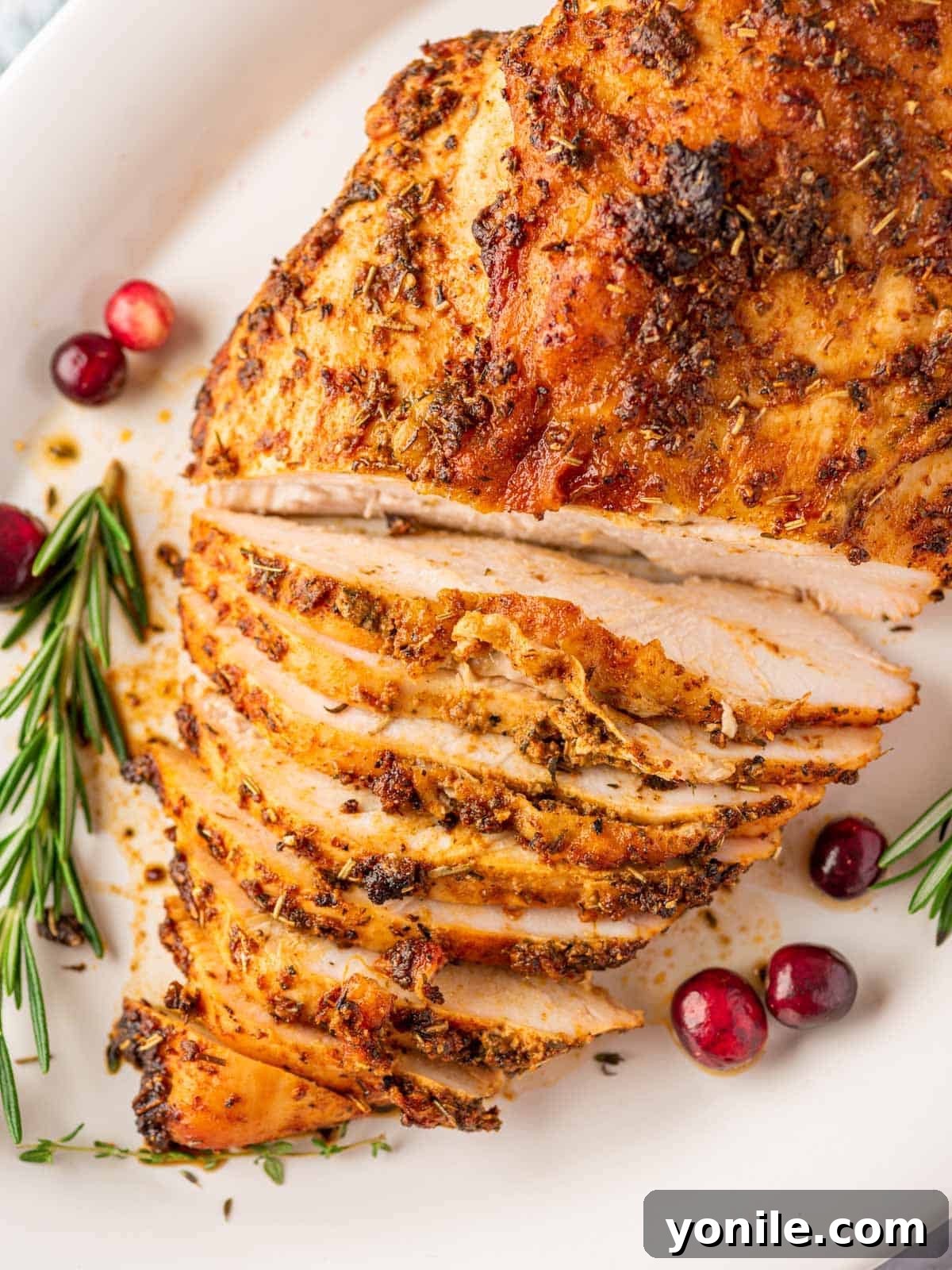
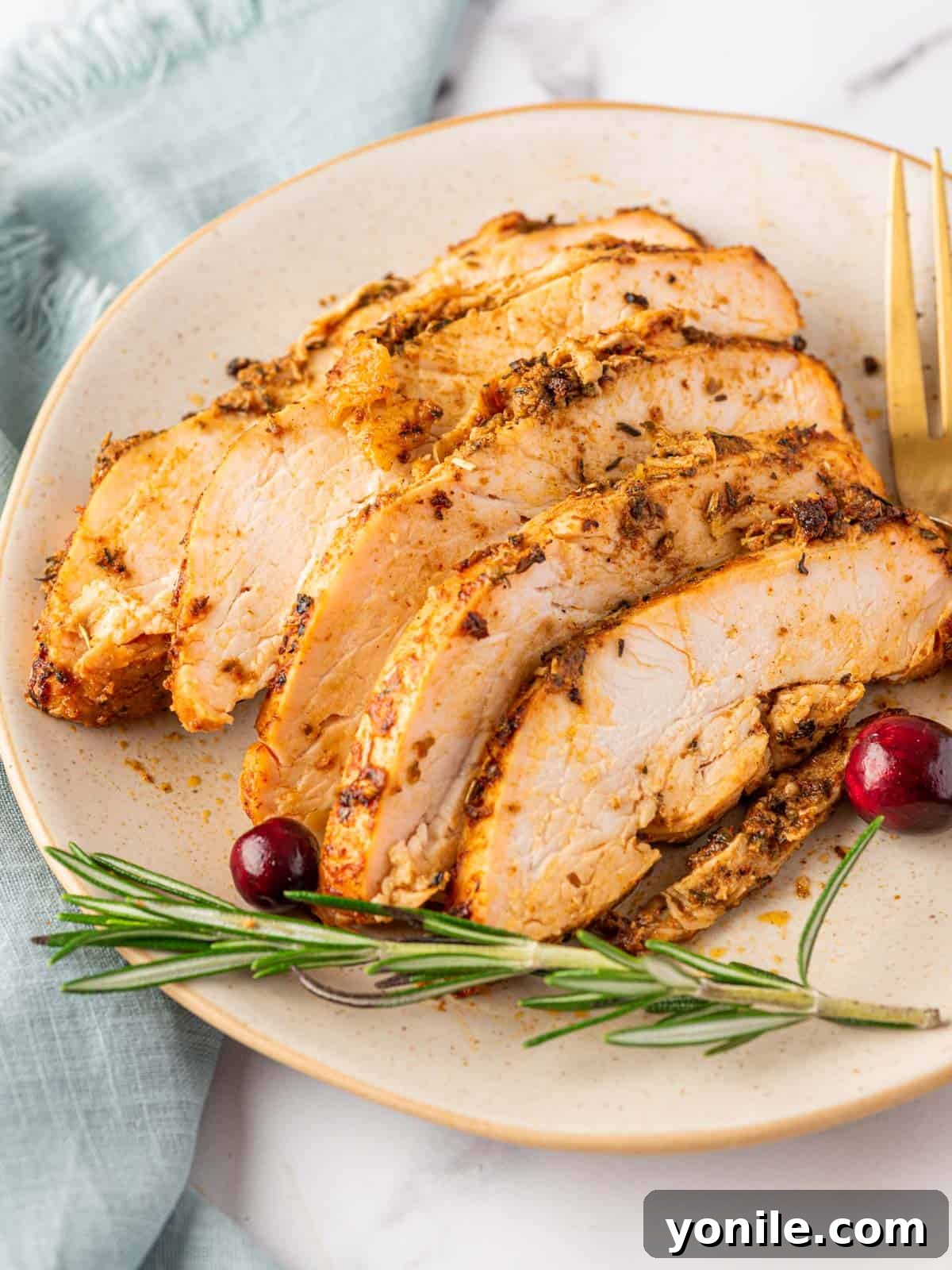
- 5. Rest, Slice, and Serve: Once the turkey breast reaches the target internal temperature, remove it from the oven. Tent it loosely with aluminum foil and allow it to rest for at least 10-15 minutes. This resting period is vital as it allows the juices to redistribute throughout the meat, ensuring a tender and moist final product. After resting, slice the turkey breast against the grain into desired portions and serve immediately, garnished with fresh herbs and cranberries for a festive touch.
Expert Tips for the Best Roasted Turkey Breast
Elevate your roasted turkey breast from good to extraordinary with these essential tips and tricks:
- Always Use a Meat Thermometer: The size and thickness of turkey breasts can vary, which directly impacts cooking time. Relying solely on a timer can lead to overcooked or undercooked meat. A reliable meat thermometer is your best friend here. Insert it into the thickest part of the breast, avoiding the bone if present (though this recipe is boneless). The turkey is perfectly cooked when it reaches an internal temperature of 160°F (71°C). It will continue to cook a few degrees as it rests, reaching the safe temperature of 165°F (74°C).
- Prevent Over-Browning of the Skin: While crispy, golden-brown skin is desirable, sometimes it can brown too quickly before the interior is fully cooked. If you notice the skin getting too dark, simply tent the turkey breast loosely with aluminum foil. This acts as a shield, preventing further browning while allowing the meat to cook through without drying out.
- Pat Your Turkey Dry: Before applying any seasoning, thoroughly pat the entire turkey breast dry with paper towels. Any surface moisture from refrigeration will create steam in the oven, hindering the skin from crisping up effectively. A dry surface promotes a beautifully crispy, crackling skin that’s irresistible.
- The Importance of Resting: This step is non-negotiable for a juicy turkey. Once removed from the oven, tent the turkey breast loosely with foil and let it rest for at least 10-15 minutes. During this time, the muscle fibers relax, allowing the internal juices to redistribute evenly throughout the meat. If you slice into the turkey too soon, those precious juices will simply run out onto your cutting board, leaving you with dry meat.
- Ensure Complete Thawing: For consistent and safe cooking, it is crucial that your turkey breast is completely thawed before you begin seasoning and roasting. A partially frozen turkey breast will cook unevenly, potentially leading to dry spots or unsafe internal temperatures. Plan ahead and allow ample time for thawing in the refrigerator (typically 24 hours for every 4-5 pounds of turkey).
- Consider a Wire Rack: For optimal circulation of hot air around the turkey, roast it on a wire rack set inside your baking tray. This helps the skin on the bottom of the breast get just as crispy as the top, and prevents it from sitting in its own juices, which can make it soggy.
- Don’t Be Afraid to Baste (Carefully): While not strictly necessary for a juicy boneless breast, you can baste the turkey with its own pan juices (if any accumulate) every 15-20 minutes during the last half of cooking. Be quick to avoid losing too much heat from the oven.
Frequently Asked Questions About Roasted Turkey Breast
Here are answers to some of the most common questions about roasting turkey breast, ensuring you have all the information you need for a successful and delicious meal:
A good rule of thumb is to calculate approximately one pound of raw turkey per person. This generally provides a generous serving without too much excess. However, if you’re hoping for ample leftovers to enjoy later in sandwiches or casseroles, or if you know your guests have hearty appetites and will want second helpings, it’s wise to aim for 1½ to 2 pounds of turkey per person. Remember, boneless turkey breast yields more edible meat per pound compared to a bone-in bird.
Proper storage is key to enjoying your leftovers. Once cooled, store any leftover turkey in an airtight container in the refrigerator for up to 3-4 days. To maintain maximum moisture and prevent drying when reheating, it’s best to store larger pieces of turkey breast uncut if possible. When ready to reheat, you can gently warm slices in the oven at a low temperature (around 300°F / 150°C) with a splash of broth to keep it moist and retain some crispiness on the skin. Alternatively, for a quick reheat, the microwave works well, though it may soften the skin.
No, it is highly recommended that you never cook a turkey breast directly from a frozen state, especially for this recipe. Always ensure the turkey breast is fully thawed before cooking. Cooking a frozen or partially frozen turkey breast will lead to extremely uneven cooking; the exterior will overcook and dry out long before the interior reaches a safe temperature. This results in a tough, dry, and potentially unsafe meal. Always plan ahead for proper thawing in the refrigerator.
For optimal results, especially when aiming for that delicious crispy skin, it’s best to roast a turkey breast uncovered for most of the cooking time. This exposure to direct heat allows the skin to brown beautifully and develop a desirable crunch. However, if you find that your turkey breast is browning too quickly, or if your oven has hot spots that cause the skin to darken excessively before the meat is cooked through, you can loosely tent it with aluminum foil. This will shield the skin from further direct heat while allowing the interior to continue cooking. Adjusting the oven rack to a lower position can also help if browning is an issue.
Keeping a turkey breast moist is key to a successful roast. Several strategies can help. Firstly, ensuring the turkey breast has its skin on is crucial, as the skin acts as a protective barrier, locking in moisture. Secondly, always pat the turkey dry before seasoning to encourage browning, but avoid overcooking by using a meat thermometer to pull it from the oven at precisely 160°F (71°C), knowing it will reach 165°F (74°C) with carryover cooking. Resting the turkey for 10-15 minutes after cooking allows the juices to redistribute, preventing them from escaping when sliced. You can also roast the turkey on a wire rack set over a pan containing a small amount of liquid (like chicken broth or water), which creates steam and adds moisture to the oven environment. Lastly, if the skin browns too quickly, tenting with foil can prevent the outer layers from drying out.
The cooking time for a turkey breast can vary significantly based on several factors, including its size, whether it’s boneless or bone-in (though this recipe focuses on boneless), and the exact temperature of your oven. A general guideline for a 2-3 pound boneless turkey breast at 375°F (190°C) is approximately 1 hour to 1 hour and 15 minutes. The most accurate way to determine doneness is by internal temperature. Always use a reliable meat thermometer inserted into the thickest part of the breast; it should register 160°F (71°C) when removed from the oven, as it will continue to cook to 165°F (74°C) while resting.
While this recipe doesn’t strictly require brining, it’s an excellent technique for ensuring an exceptionally moist and flavorful turkey breast, especially if you want an extra layer of protection against drying out. A simple salt brine or a flavorful wet brine can infuse the meat with moisture and seasoning. If you choose to brine, reduce the amount of salt in the seasoning rub to avoid over-salting. Ensure you thoroughly pat the brined turkey dry before roasting to still achieve crispy skin.
You can certainly do some prep work in advance to make cooking day even easier. The spice mixture can be prepared and stored in an airtight container at room temperature for up to a week. You can also pat the turkey breast dry and apply the seasoning rub up to 24 hours before roasting, keeping it covered in the refrigerator. This allows the flavors to truly meld with the meat. On cooking day, simply pull it out of the fridge about 30 minutes before roasting to let it come closer to room temperature for more even cooking.
More Delicious Holiday Dinner Ideas
- Oven Baked Turkey Breast
- Stuffed Turkey Rolls
- Oven Roasted Spatchcock Chicken
- Oven Baked Roasted Whole Chicken
- Garlic Butter Turkey Meatballs
- Air Fryer Boneless Turkey Breast
- Baked Turkey Drumsticks
I genuinely hope you find immense pleasure in all the recipes I share, especially this delightful Roasted Boneless Turkey Breast. It’s a dish designed for simplicity and incredible flavor. I encourage you to try it, savor every bite, and consider sharing your experience. Your feedback is greatly appreciated!
If you prepare this recipe and enjoy it, please consider leaving a star rating and a comment below. Your thoughts and experiences are valuable! For more culinary inspiration, follow Cookin’ With Mima on FACEBOOK | INSTAGRAM | PINTEREST for all the latest recipes and kitchen adventures.
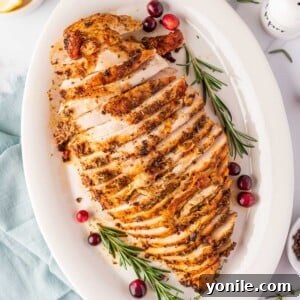
Roasted Boneless Turkey Breast
Ingredients
- 2 tablespoons olive oil
- 2 tablespoons lemon juice
- 1 tablespoon Dijon mustard
- 2 teaspoons paprika
- 2 teaspoons dried oregano
- 2 teaspoons salt
- 1 teaspoon black pepper
- 1 teaspoon garlic powder
- 1 teaspoon dried thyme
- 1 teaspoon dried rosemary
- 3 pound turkey breast with skin
- ½ cup fresh cranberries, to garnish
- 1 pomegranate, quartered, to serve
- Fresh herbs, to garnish
Instructions
- Preheat the oven to 375 degrees F (190°C). Cover a baking tray with aluminum foil and keep it ready for the turkey breast.
- In a medium bowl, combine olive oil, lemon juice, Dijon mustard, paprika, oregano, salt, black pepper, garlic powder, thyme, and rosemary. Mix well until a smooth paste forms.
- Gently lift the turkey skin and spread a portion of the spice mixture directly onto the meat underneath. Then, evenly spread the remaining spice mixture all over the exterior of the turkey skin.
- Place the seasoned turkey breast over the prepared baking tray (preferably on a wire rack) and cook for approximately 1 hour, or until the internal temperature reaches 160°F (71°C) when checked in the thickest part.
- Remove the turkey breast from the oven, tent it loosely with foil wrap, and set aside to rest for 10-15 minutes. After resting, slice against the grain and serve immediately.
Notes
- Cooking times may vary based on the exact size and thickness of your turkey breast. Always use a meat thermometer to confirm doneness; turkey is cooked through once it reaches 160°F (71°C) internally (it will rise to 165°F after resting).
- If the turkey skin begins to brown too quickly, loosely cover the breast with aluminum foil to prevent burning while ensuring the inside cooks thoroughly.
- Ensure the turkey breast is thoroughly patted dry before applying seasoning. Excess moisture on the skin prevents it from becoming crispy.
- Allowing the turkey to rest before carving is crucial. This step redistributes the juices throughout the breast, ensuring the meat remains tender and moist. Cutting too early will result in dry meat as the juices will escape.
- Always thaw your turkey breast completely in the refrigerator before cooking to ensure even cooking and food safety.
Nutrition
Carbohydrates: 3g |
Protein: 74g |
Fat: 13g |
Saturated Fat: 2g |
Polyunsaturated Fat: 2g |
Monounsaturated Fat: 7g |
Trans Fat: 1g |
Cholesterol: 184mg |
Sodium: 1908mg |
Potassium: 890mg |
Fiber: 1g |
Sugar: 1g |
Vitamin A: 594IU |
Vitamin C: 3mg |
Calcium: 77mg |
Iron: 3mg
Enjoyed this recipe? Please leave a rating and comment below!