

The Ultimate Guide to Cutting Watermelon: Wedges, Cubes, and Sticks for Easy Enjoyment
Watermelon, with its vibrant color and refreshing sweetness, is a quintessential summer fruit. Yet, the sheer size and round shape of a whole watermelon can sometimes make cutting it seem like a daunting task. Many people aren’t sure where to begin when faced with this delicious giant. However, with the right technique and a sharp knife, you can transform a whole watermelon into perfectly sized wedges, convenient cubes, or fun sticks in just minutes, making it incredibly easy to eat and share. This comprehensive guide will walk you through everything you need to know, from selecting the perfect melon to mastering various cutting styles and storing your juicy harvest.
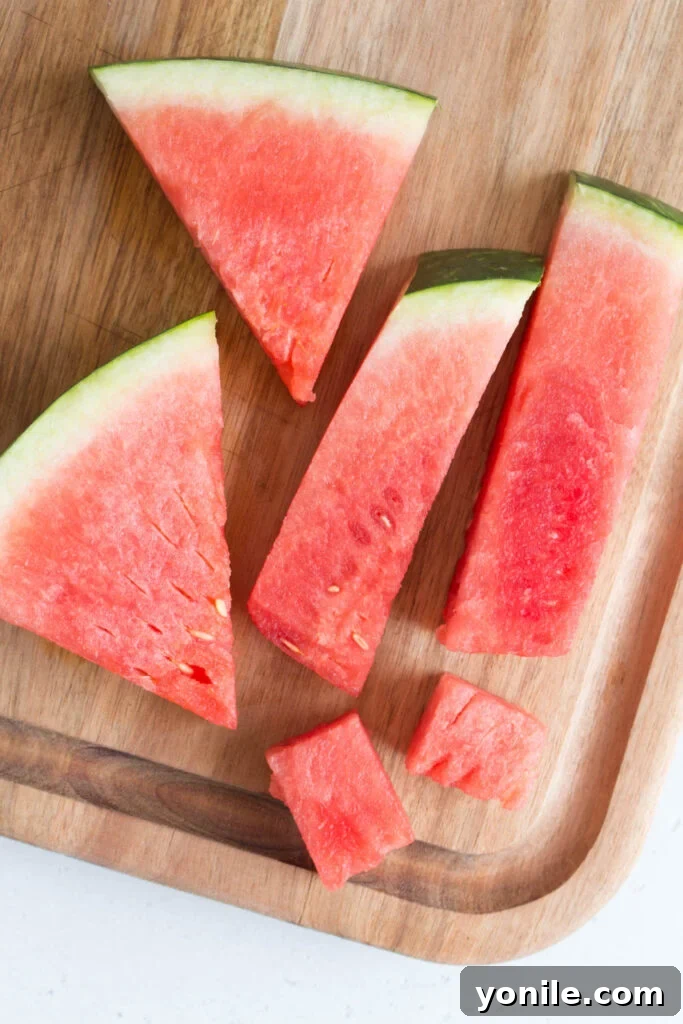
Watermelon 101: Understanding Your Fruit
While the prospect of cutting a large watermelon might initially feel intimidating, it’s far simpler than it appears. Once you understand a few basic principles and adopt a systematic approach, you’ll be slicing and dicing like a pro. Watermelons are not only delicious but also incredibly versatile, serving as a refreshing snack, a delightful ingredient in various dishes, or a healthy addition to any meal. Before we delve into the cutting techniques, let’s explore some fundamental facts about this amazing fruit, ensuring you get the most out out of your watermelon experience.
Is Watermelon Healthy? The Nutritional Powerhouse
Absolutely! Watermelon is renowned for its high water content, approximately 92%, making it an excellent choice for staying hydrated, especially during hot weather or after physical activity. But its benefits extend far beyond hydration. This sweet fruit is packed with an impressive array of essential vitamins, minerals, and antioxidants, contributing significantly to a healthy diet. Here’s a closer look at the nutritional bounty found in every juicy bite:
- Vitamin A: Crucial for vision, immune function, and skin health.
- Vitamin B6: Supports brain health and helps convert food into energy.
- Vitamin C: A powerful antioxidant that boosts the immune system and promotes collagen production for healthy skin.
- Lycopene: A potent antioxidant responsible for watermelon’s red color, linked to heart health, bone health, and protection against certain types of cancer.
- Antioxidants: Beyond lycopene, watermelons contain other compounds that help combat oxidative stress in the body.
- Amino Acids: Including citrulline, which is converted to arginine in the body, beneficial for heart health and exercise performance.
- Potassium: An important electrolyte that helps maintain fluid balance, nerve signals, and muscle contractions.
Beyond these key nutrients, watermelon is also low in calories and fat, making it a guilt-free pleasure that can satisfy your sweet cravings while providing substantial health benefits.
Exploring the Varieties: Types of Watermelon
Watermelons come in a delightful array of shapes, sizes, and even colors. Knowing the different types can help you choose the perfect melon for your needs, whether you’re feeding a crowd or looking for a single-serving snack.
Seeded Watermelon
These are the classic, traditional watermelons most people picture. They are typically large, round or oval, and can weigh anywhere from 15 to 45 pounds. Characterized by their dark, mature black seeds, these melons often boast an intensely sweet flavor and a crisp texture. While the seeds are edible, many prefer to remove them before eating.
Seedless Watermelon
Developed for convenience, seedless watermelons have become incredibly popular. They retain the same characteristic shape as their seeded counterparts but are generally smaller, usually around 10-15 pounds. These melons contain small, white, underdeveloped seeds that are soft and entirely edible, eliminating the need for spitting out seeds. They offer the same juicy, sweet flesh without the hassle.
Miniature Watermelon
Also known as “icebox” watermelons, miniature varieties like the Sugar Baby or Tiger Baby are perfectly sized for small families or individual servings. These small, round watermelons typically weigh between 6 and 10 pounds and fit easily into a refrigerator. They are known for their exceptionally sweet flavor and often have thin rinds, making them easy to handle and cut.
Regardless of the type, the method for selecting and cutting a ripe watermelon remains largely consistent, ensuring you get a delicious result every time.
How To Pick A Ripe Watermelon: The Secrets to Sweetness
Choosing a ripe watermelon is key to enjoying its full flavor and sweetness. There are several indicators that will help you select the best one from the bunch. Trust your senses – sight, touch, and even sound – to guide you.
- The Heavier the Better: Lift a few watermelons of similar size. A ripe watermelon should feel surprisingly heavy for its size. This density indicates a high water content, which translates to juiciness and flavor.
- Look for a Yellow Field Spot: The “field spot” or “ground spot” is where the watermelon rested on the ground as it ripened. A truly ripe watermelon will have a creamy yellow, buttery, or even orange-yellow spot. Avoid watermelons with a white or greenish spot, as this often means they were picked too early and are not fully ripe.
- Examine the Exterior: The rind should be firm, relatively smooth, and dull, not shiny. A shiny watermelon might be underripe. Also, avoid any melons with soft spots, bruises, gashes, or significant indentations, which could indicate internal damage or spoilage.
- Knock on It: Give the watermelon a good thud with your knuckles. A ripe watermelon will produce a deep, hollow sound, indicating that the fruit is full of water and perfectly mature. If it sounds dull, mushy, or completely solid, it might be overripe or underripe.
- Check for Bees Stings or Webbing: While not a hard rule, some seasoned watermelon pickers look for dark, rough patches, often referred to as “sugar spots” or “pollination scars.” These small brown spots or web-like patterns can sometimes indicate that bees visited the flower frequently, suggesting a sweeter fruit.
By following these simple tips, you significantly increase your chances of bringing home a perfectly sweet, juicy, and ripe watermelon.
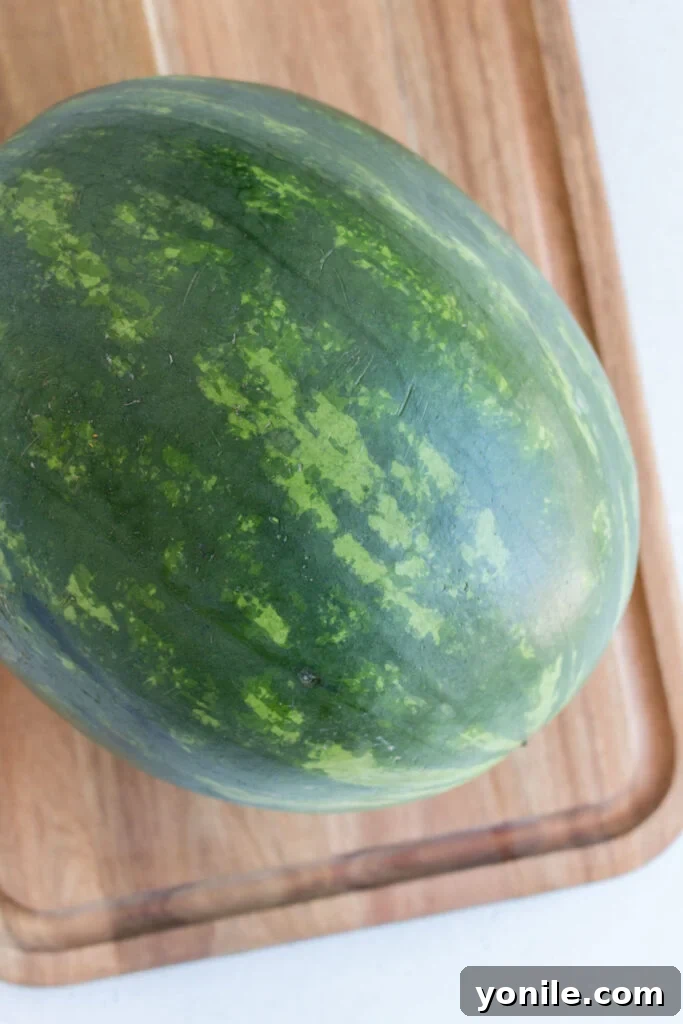
How To Cut A Watermelon: Essential Preparation and Safety Tips
Before you begin slicing, ensure you have a clean, stable cutting surface and a sharp, sturdy knife. A dull knife can be more dangerous than a sharp one, as it requires more force and is prone to slipping. For watermelons, a large chef’s knife (8-10 inches) or a serrated knife is ideal. Always wash the exterior of the watermelon thoroughly under running water, even if you don’t plan to eat the rind. This removes any dirt or bacteria that could be transferred to the flesh during cutting. Place the watermelon on a non-slip cutting board to prevent it from rolling.
Mastering Watermelon Triangle Wedges
Wedges are perhaps the most classic way to enjoy watermelon, perfect for picnics, barbecues, or simply eating out of hand. They offer a good grip and make for a satisfying bite.
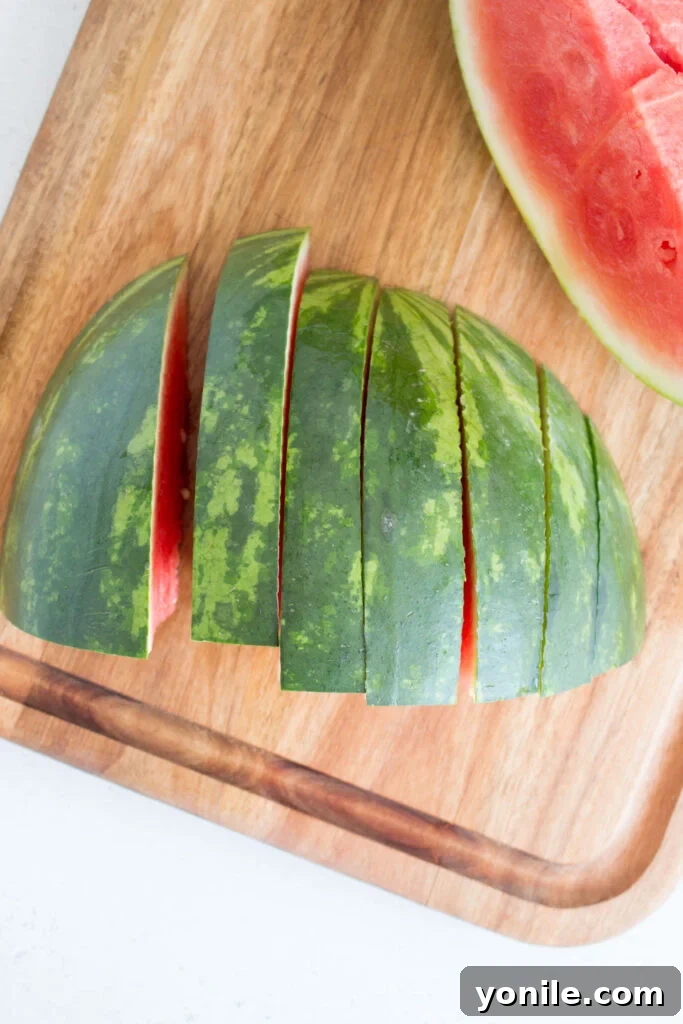
- Step 1: Slice in Half (Widthwise). Place the watermelon on your cutting board. Using your large chef’s knife, carefully cut the watermelon in half across its width (the shorter dimension). This will create two large, round halves.
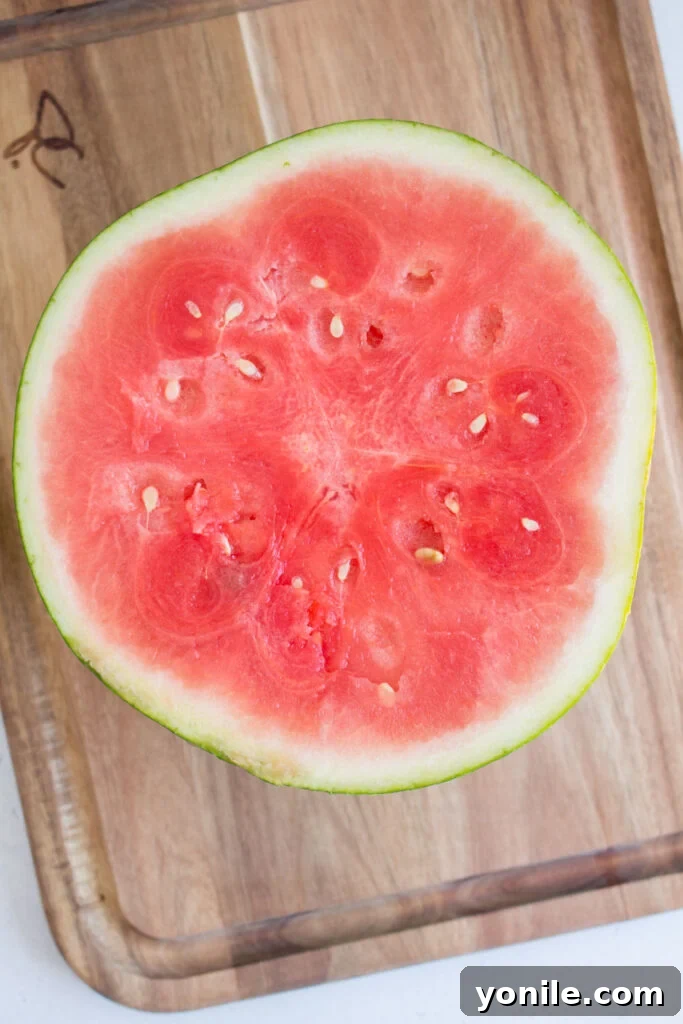
- Step 2: Halve Again (Lengthwise). Take one of the halves and place it cut-side down on the board for stability. Now, cut this half in half again, but this time lengthwise, from one end to the other. Repeat with the other half, so you end up with four quarter-sections of watermelon.
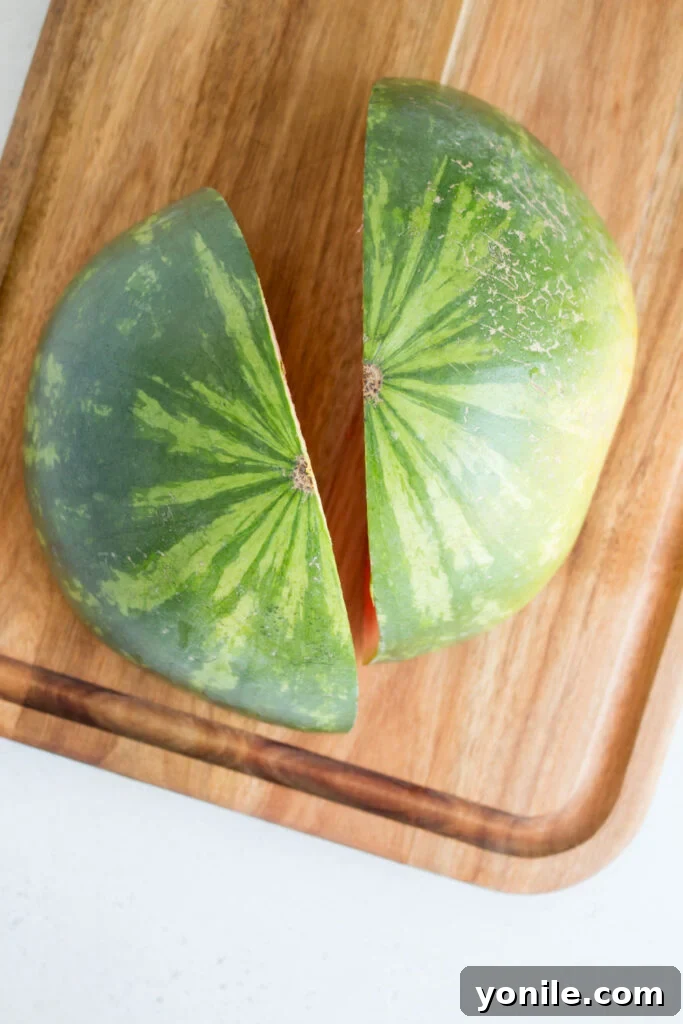
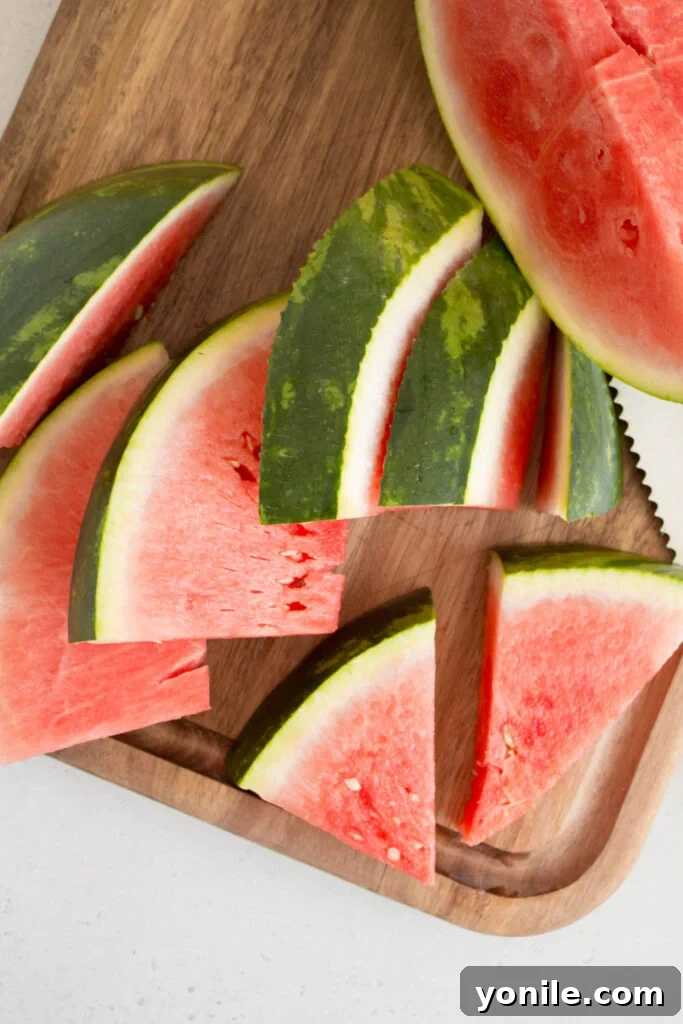
- Step 3: Cut into Wedges. Take one of the quarter-sections. With the rind facing down, slice it crosswise into wedges of your desired thickness. For traditional slices, aim for about 1-inch thick pieces. The rind acts as a natural handle, making these triangular wedges easy to pick up and enjoy.
Effortless Watermelon Sticks
Watermelon sticks are a fantastic option for kids, parties, or any time you want a less messy way to enjoy the fruit. They’re perfect for dipping or just grabbing a quick bite without getting juice all over your face.
- Step 1: Cut in Half (Widthwise). As with wedges, begin by cutting the whole watermelon in half across its width.
- Step 2: Create a Grid. Place one of the watermelon halves cut-side down on your stable cutting board. This creates a flat, secure base. Now, slice the watermelon horizontally into parallel strips, about 1-inch thick, cutting all the way down to the rind but not through it. Next, rotate the watermelon 90 degrees and repeat, slicing vertically into parallel strips of the same thickness. This will create a grid pattern within the watermelon’s flesh, still attached to the rind.
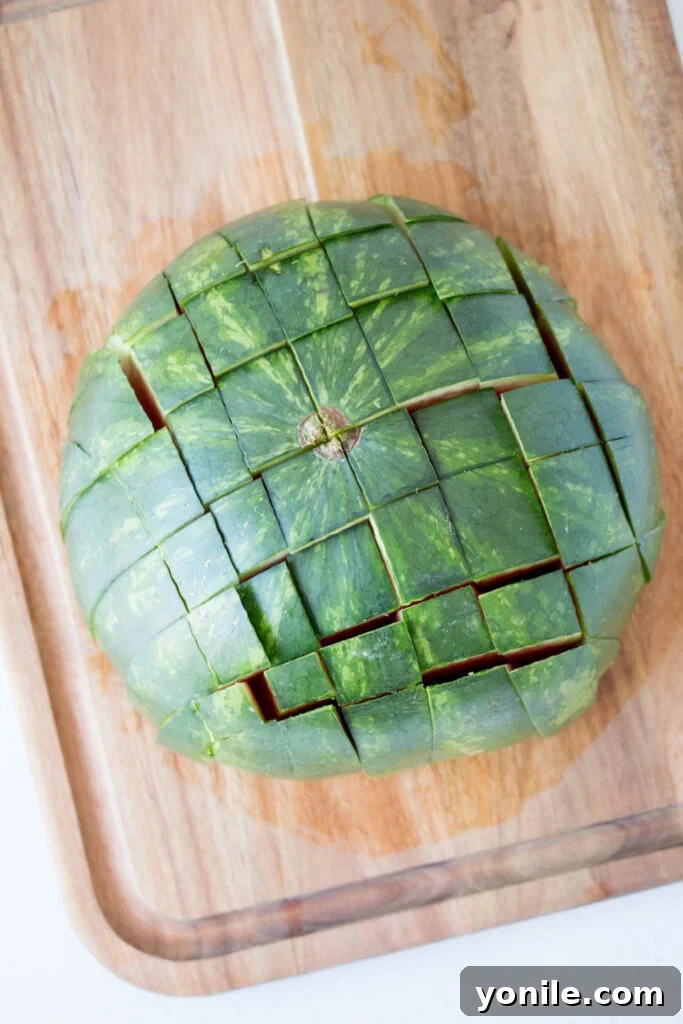
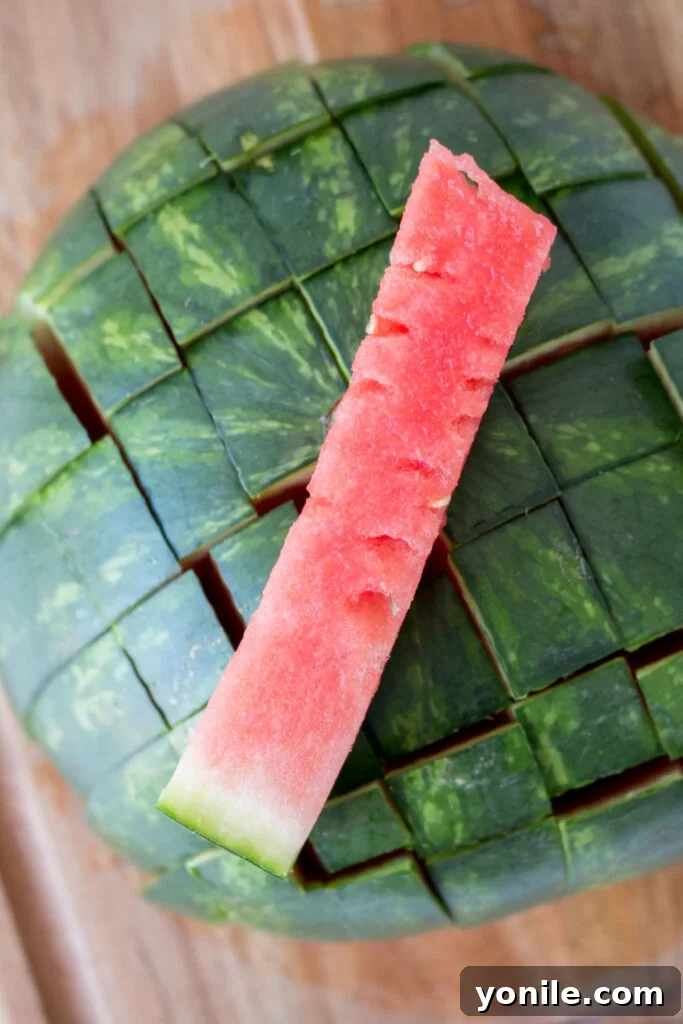
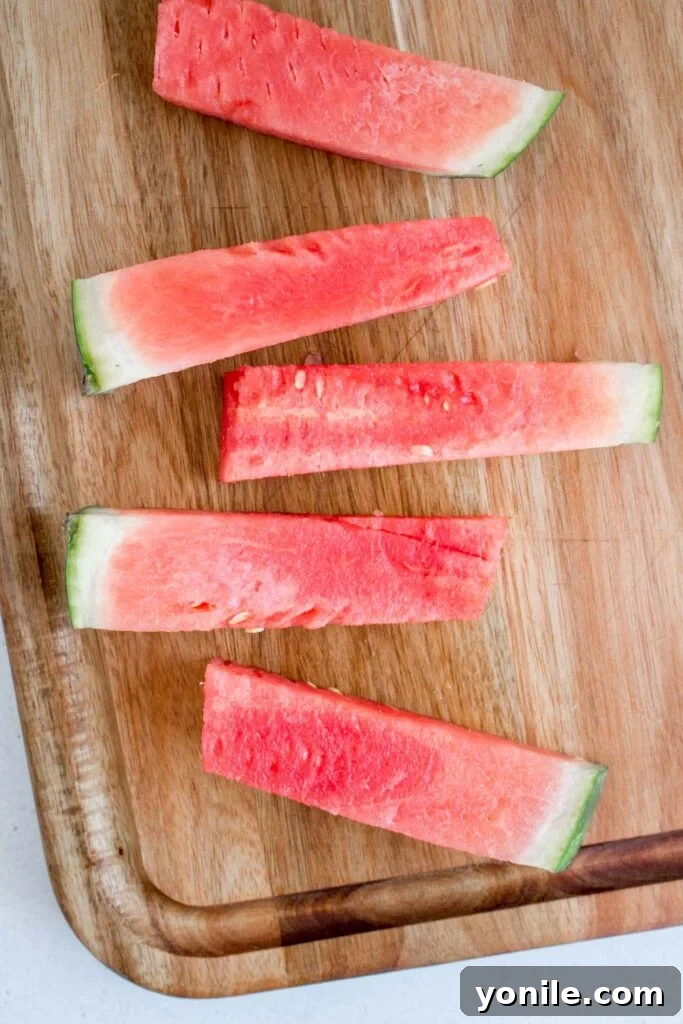
To serve, simply pick up the watermelon half, and the grid pattern allows you to easily pull out individual sticks from the rind.
Perfect Watermelon Cubes
Watermelon cubes are incredibly versatile, ideal for fruit salads, adding to drinks, or freezing for later use. This method allows you to easily remove the rind entirely.
- Step 1: Cut in Half (Widthwise). Start by cutting the whole watermelon in half across its width.
- Step 2: Create a Grid (In-Rind). Place one of the watermelon halves cut-side down. Carefully slice it horizontally into parallel strips, then rotate 90 degrees and slice vertically into parallel strips, forming a grid, just like for sticks. Ensure your slices go all the way to the rind but do not cut through it.
- Step 3: Remove Sticks and Cube. Once the grid is formed, gently scoop out the watermelon “sticks” from the rind using a large spoon or your hands. Lay these sticks flat on your cutting board. Then, simply cut them crosswise into uniform cubes of your desired size. This two-step process makes it easy to separate the flesh from the rind efficiently.
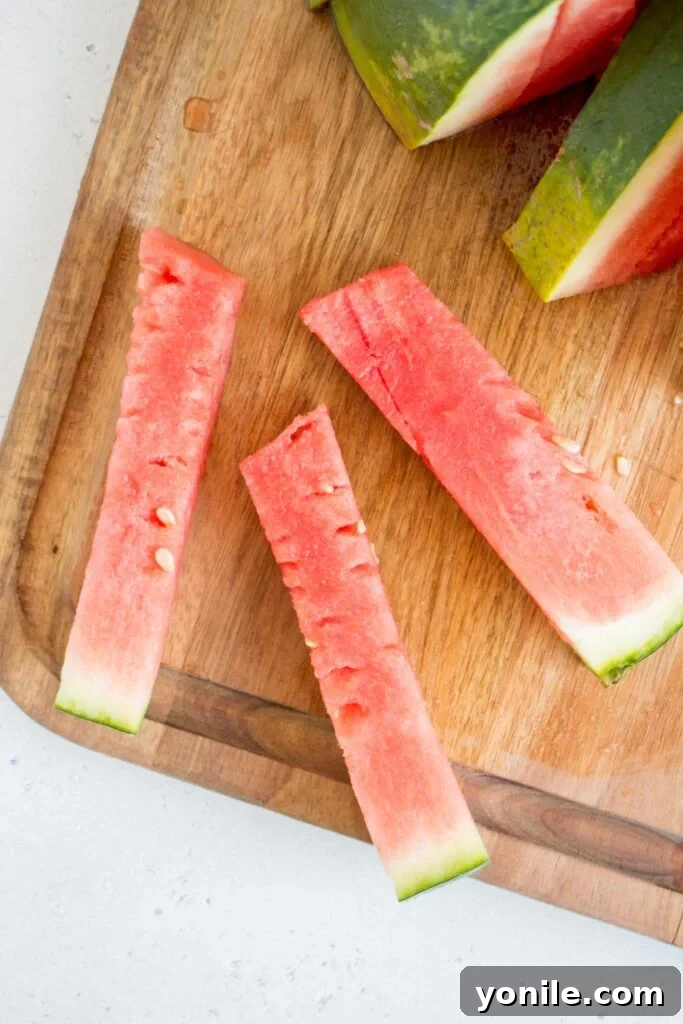
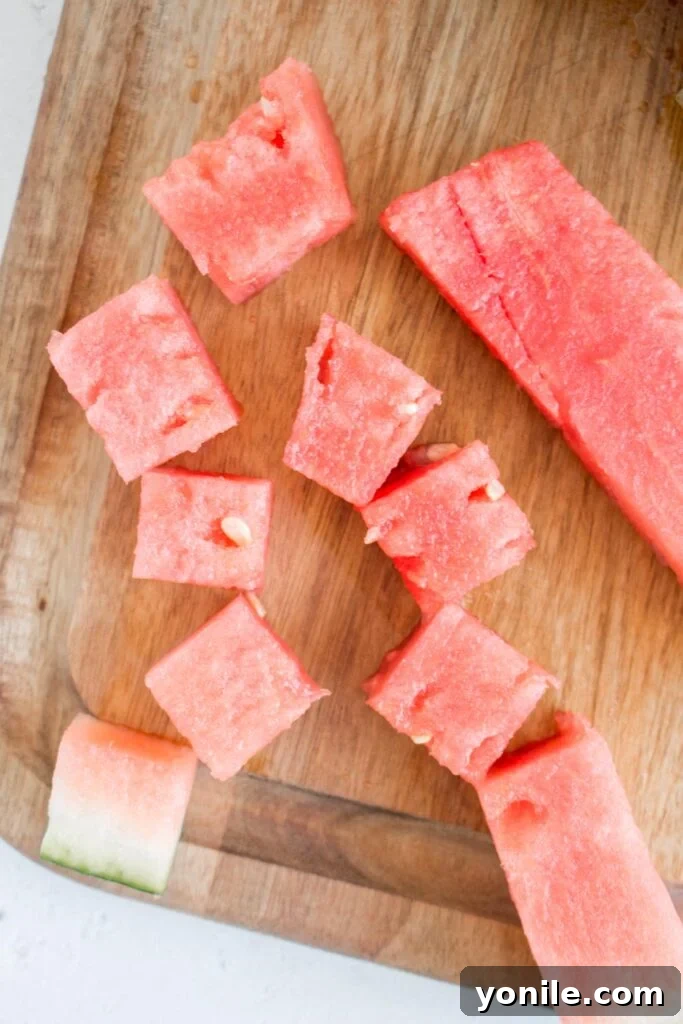
How to Store Cut Watermelon: Keeping It Fresh
Proper storage is essential to maintain the freshness, flavor, and juicy texture of your cut watermelon. Once you’ve sliced into it, the clock starts ticking, but with the right methods, you can extend its life for several days.
For any cut watermelon pieces – whether wedges, sticks, or cubes – transfer them into airtight containers immediately after cutting. These containers will protect the fruit from absorbing odors from other foods in your fridge and prevent dehydration. Store these containers in the refrigerator for up to 3-5 days. If you have a larger section of watermelon, such as a half or a quarter, wrap the cut surface tightly with plastic wrap or reusable food wrap before placing it in the fridge. This minimizes exposure to air and helps preserve its moisture. Always store cut watermelon in the coldest part of your refrigerator.
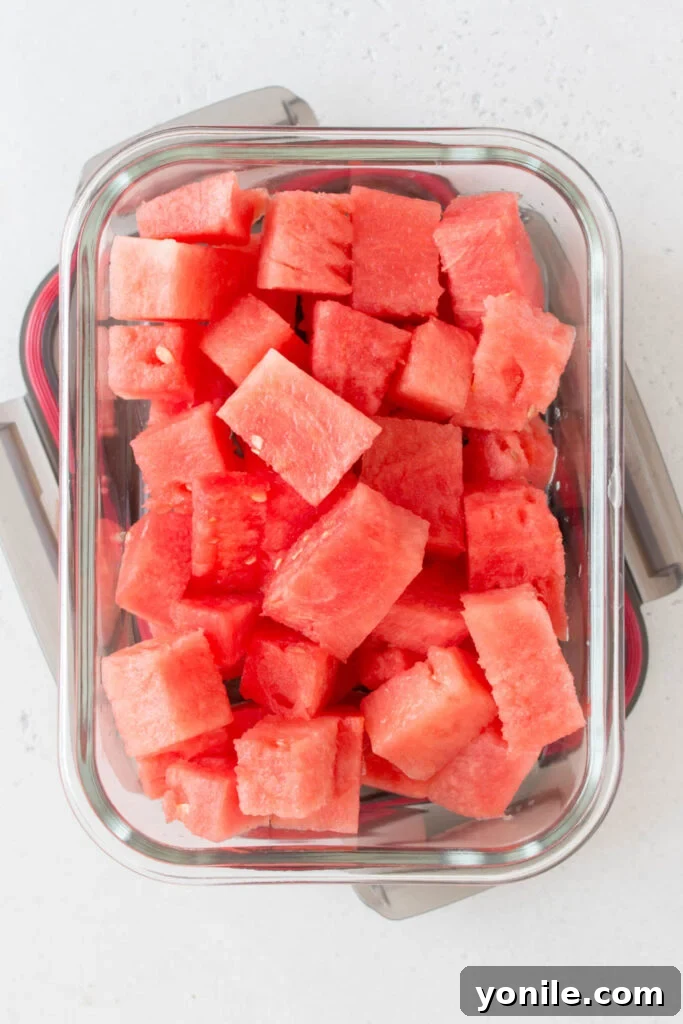
How to Store a Whole Watermelon: Counter or Fridge?
Storing an uncut, whole watermelon depends on its initial temperature and how quickly you plan to eat it. If you purchased your watermelon from a grocery store where it was stored at room temperature, it’s generally best to keep it on your kitchen counter for up to a week. Storing it in the refrigerator immediately can sometimes impact its ripening process and flavor development. However, once a watermelon has been chilled (either purchased refrigerated or after a few days on the counter), it’s best to store it in the fridge to maintain its freshness. A whole, uncut watermelon can last up to 2-3 weeks in the refrigerator, offering ample time to enjoy this delightful fruit.
Can You Freeze Watermelon? Yes, and Here’s How!
Absolutely! Freezing watermelon is a fantastic way to extend its shelf life and enjoy its refreshing taste beyond peak season. However, it’s important to note that frozen and thawed watermelon will have a different texture than fresh, becoming softer and slightly mushy due to its high water content. This makes it less ideal for eating plain, but perfect for blending into smoothies, sorbets, or using in agua frescas.
To freeze watermelon, first cut it into cubes. Lay the watermelon cubes in a single layer on a baking sheet lined with parchment paper. This prevents them from sticking together. Place the baking sheet in the freezer for 1-2 hours, or until the cubes are solid. Once frozen, transfer the individual cubes into a freezer-friendly airtight plastic bag (like a ziplock) or a rigid container. Label with the date and store in the freezer for up to 3-4 months. When ready to use, simply toss the frozen cubes directly into your blender for a frosty treat.
When is Watermelon in Season? Peak Freshness and Flavor
While watermelons can often be found year-round in many supermarkets, their peak season is typically from May through September in the Northern Hemisphere. During these summer months, watermelons are at their freshest, most flavorful, and often most affordable. This is when local farms and growers offer an abundance of perfectly ripened melons, making it the best time to indulge and experiment with different varieties and recipes.
How Many Cups of Watermelon are in a Pound? Understanding Yield
Understanding the yield of a watermelon can help you plan for recipes and servings. As a general rule of thumb, one pound of watermelon is roughly equivalent to about 1.5 cups of cubed, seedless watermelon. So, a typical 10-pound seedless watermelon would yield approximately 15 cups of delicious cubes, making it clear why a single melon can go a long way!

Creative Ways to Use Watermelon: Beyond the Slice
A single watermelon can yield a surprisingly large amount of fruit, often more than you can eat plain! While enjoying it by itself is always a treat, there are countless creative and delicious ways to incorporate watermelon into your culinary repertoire. Here are some refreshing ideas to help you use up every last juicy piece:
- Watermelon Salsa: A sweet and savory salsa made with diced watermelon, red onion, jalapeño, cilantro, and lime juice. Perfect with grilled chicken or fish, or as a dip with tortilla chips.
- Watermelon Slushie: Blend frozen watermelon cubes with a splash of lime juice for an incredibly refreshing, icy beverage.
- Watermelon Smoothie: Combine fresh or frozen watermelon with other fruits like berries, a banana, and a touch of yogurt or coconut water for a hydrating breakfast or snack.
- Watermelon Salad: Pair cubed watermelon with feta cheese, fresh mint leaves, and a drizzle of balsamic glaze for a sophisticated and refreshing salad.
- Fruit Trays: Watermelon cubes, sticks, and wedges are essential components for any vibrant fruit platter, adding color and sweetness.
- Watermelon Sorbet: Puree fresh watermelon and freeze it in an ice cream maker for a light, natural, and incredibly satisfying dessert.
- Watermelon Infused Water: Add cubes or slices of watermelon to a pitcher of water with mint or cucumber for a naturally flavored and hydrating drink.
- Watermelon Gazpacho: A unique twist on the classic cold soup, blending watermelon with tomatoes, cucumber, bell peppers, and a hint of spice.
These ideas prove that watermelon is much more than just a simple snack; it’s a versatile ingredient waiting to elevate your meals and drinks.
What’s The Best Knife to Cut a Watermelon With? Safety First!
Choosing the right knife is paramount for both efficiency and safety when cutting a large fruit like a watermelon. A large chef’s knife, typically 8 to 10 inches in length, is highly recommended. Its broad, heavy blade provides the necessary leverage and stability to cut through the thick rind and dense flesh cleanly. Alternatively, a serrated knife, similar to what you might use for bread, can also work exceptionally well. The serrations grip the slippery rind, making it easier to initiate cuts and saw through the melon with less effort and reduced risk of slipping. Regardless of the knife type, ensure it is sharp. A sharp knife requires less pressure, giving you more control and significantly reducing the chance of accidents. Always cut away from your body and keep your free hand clear of the blade’s path.
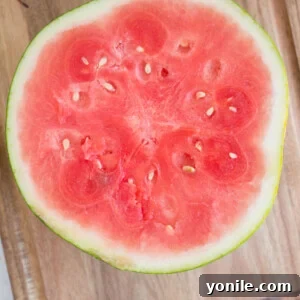
How to Cut a Watermelon
Mariam Ezzeddine
10 minutes
10 minutes
6 servings
Ingredients
- ½ watermelon, ripe
Instructions
-
How To Cut Watermelon Triangle Wedges: Cut the watermelon in half, widthwise then the watermelon in half again lengthwise. Next, cut each of those halves into wedges, as thick or as thin as you’d like.
-
How To Cut Watermelon Sticks: Cut the watermelon in half, widthwise then place the half cut-side down and cut a grid (horizontally and vertically).
-
How To Cut Watermelon Cubes: Cut the watermelon in half, widthwise then place the half cut-side down and cut a grid (horizontally and vertically). Take out the watermelon sticks and cut them into cubes.
Nutrition
Calories:
113kcal
|
Carbohydrates:
28g
|
Protein:
2g
|
Fat:
1g
|
Saturated Fat:
0.1g
|
Polyunsaturated Fat:
0.2g
|
Monounsaturated Fat:
0.1g
|
Sodium:
4mg
|
Potassium:
420mg
|
Fiber:
2g
|
Sugar:
23g
|
Vitamin A:
2134IU
|
Vitamin C:
30mg
|
Calcium:
26mg
|
Iron:
1mg
Like this recipe? Rate and comment below!