
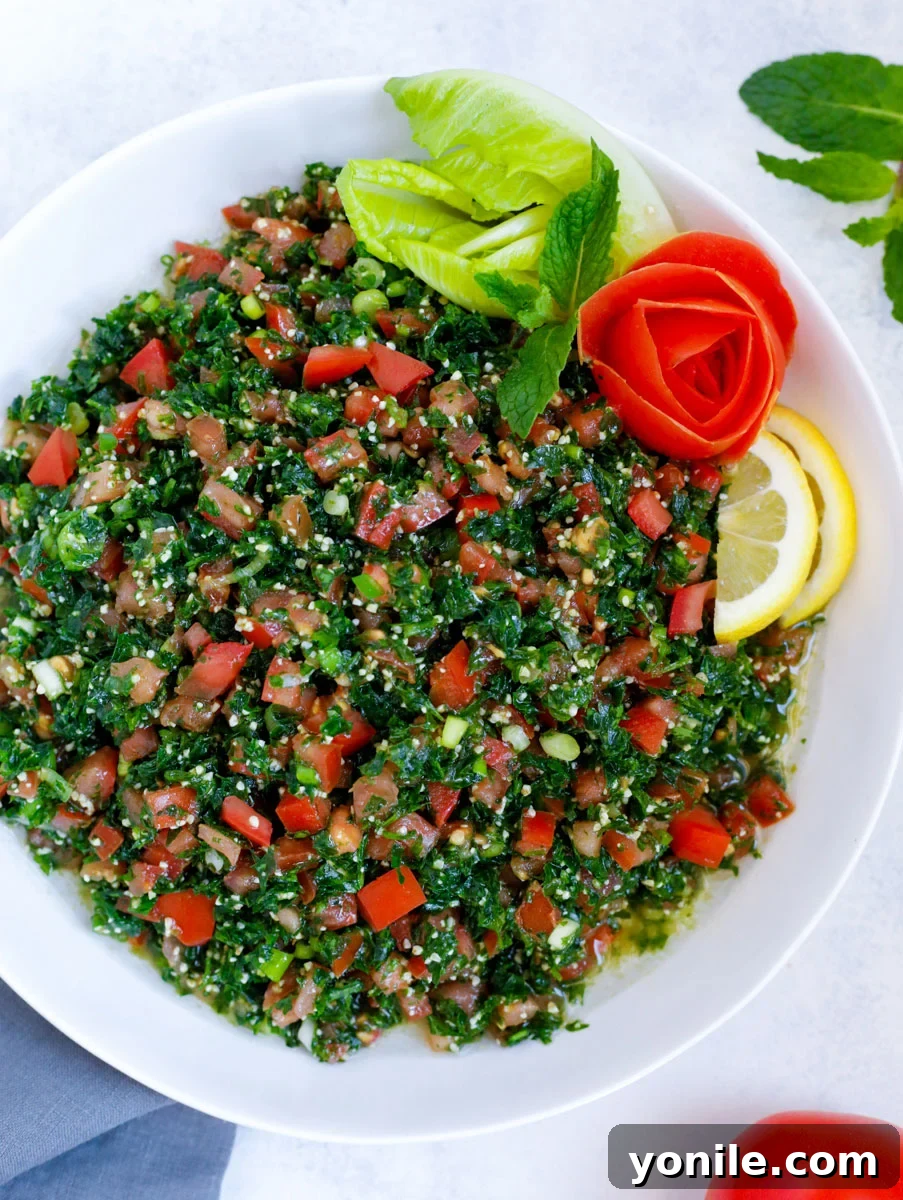
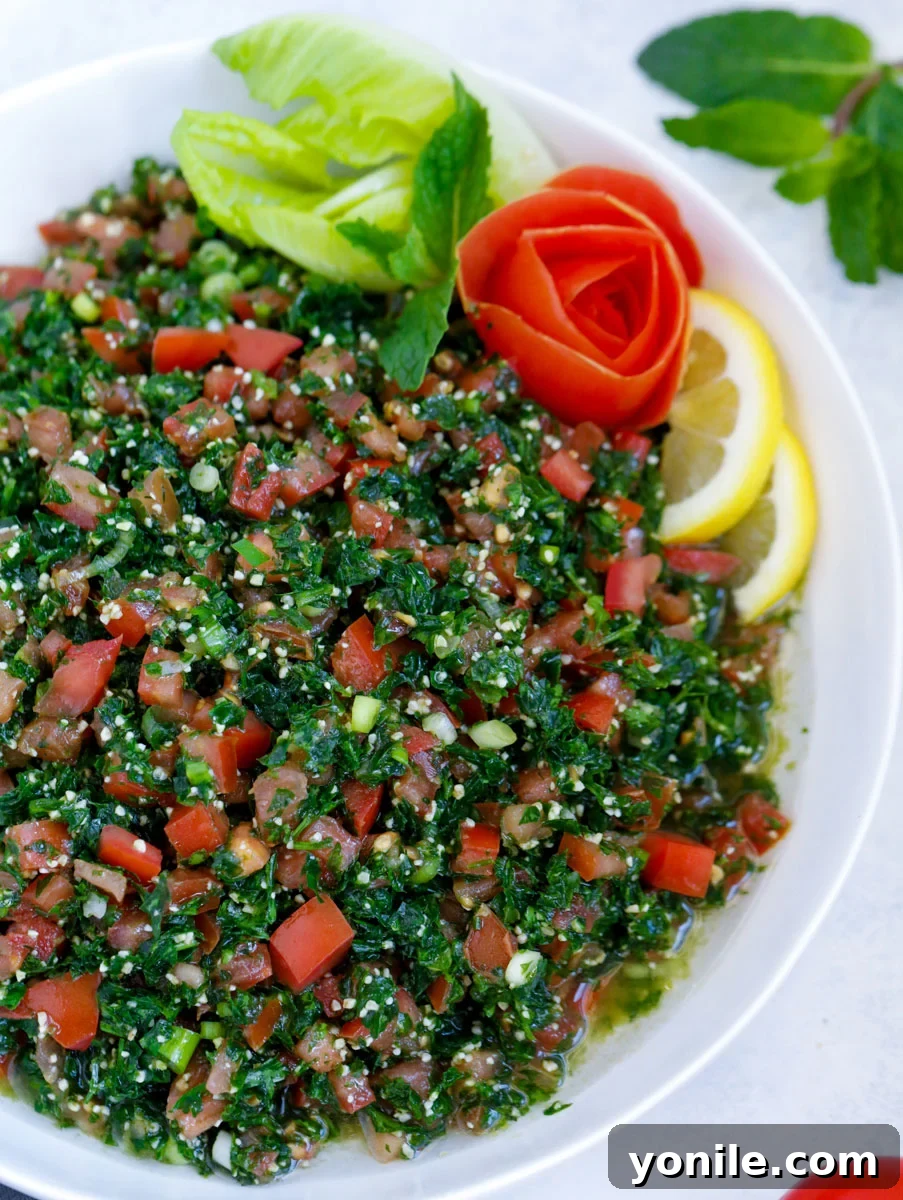
Embark on a culinary journey to the heart of the Middle East with this vibrant and refreshingly delicious Lebanese Tabbouleh Salad. A cornerstone of traditional Lebanese cuisine, tabbouleh is far more than just a salad; it’s a celebration of fresh, natural flavors and a staple at every mezze table. Renowned for its invigorating taste and healthful ingredients, this recipe offers an authentic experience that’s surprisingly easy to achieve, making it perfect for both seasoned cooks and culinary newcomers.
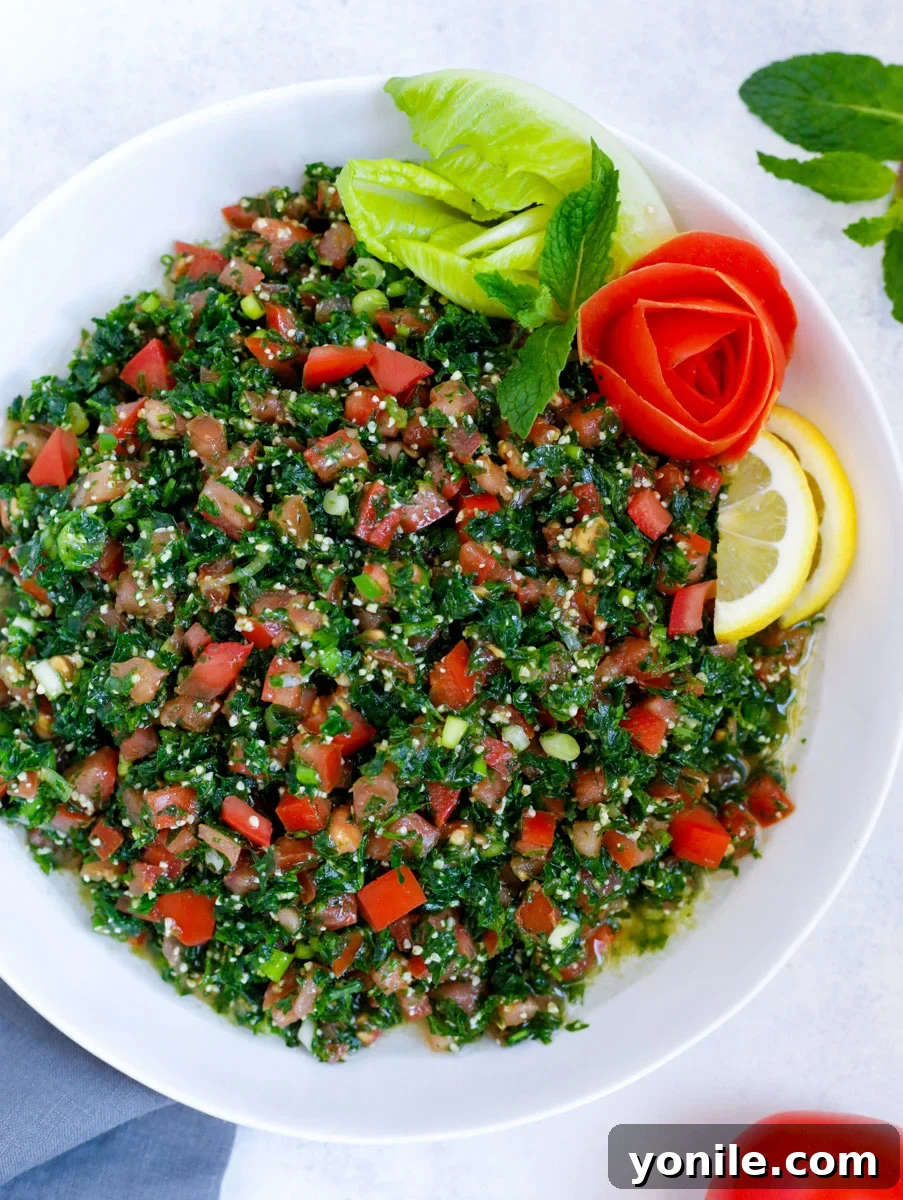
My childhood memories are deeply intertwined with the fresh aroma and taste of tabbouleh. It was, and still is, one of my absolute favorite salads. There’s something uniquely satisfying about scooping it up with a crisp lettuce leaf, a popular and traditional way of enjoying it in Lebanon. Dishes like tabbouleh and its equally famous cousin, fattoush salad, have graced tables for generations, embodying the rich culinary heritage of the region. I often serve them both as part of an elaborate mezze platter, beautifully complemented by savory Lebanese Spicy Potatoes (Batata Harra) and a generous portion of creamy Hummus, creating a feast for the senses.
What Exactly is Lebanese Tabbouleh Salad?
At its core, Lebanese tabbouleh (often spelled tabbouli) is a refreshing Middle Eastern salad, predominantly made from finely chopped fresh parsley, juicy tomatoes, crisp green onions, and rehydrated fine bulgur wheat, all dressed in a bright, zesty marinade of lemon juice and high-quality olive oil. Some variations include fresh mint or a hint of sour grape molasses, adding another layer of complexity to its already vibrant profile. Essentially, it is a parsley salad where the herbs take center stage, creating a dish that is inherently vegan, bursting with fresh flavors, and remarkably wholesome. Its simple yet powerful combination of ingredients makes it a healthy, light, and incredibly satisfying dish that can be enjoyed year-round.
A Brief History and Cultural Significance of Tabbouleh
Tabbouleh holds a cherished place in Lebanese and broader Middle Eastern culture. Its origins trace back centuries, with mentions of similar herb and grain salads appearing in ancient texts. Historically, it was a peasant dish, utilizing readily available ingredients from the garden. Over time, it evolved into the sophisticated, flavorful salad we know today, becoming a symbol of hospitality and an indispensable part of celebratory meals and everyday family gatherings. In Lebanon, preparing tabbouleh is often a communal activity, with families gathering to meticulously chop the ingredients, sharing stories and laughter, making it not just a dish but an experience steeped in tradition.
Essential Tabbouleh Ingredients for an Authentic Taste
The beauty of tabbouleh lies in the simplicity and quality of its components. Using the freshest ingredients is paramount to achieving that authentic, invigorating flavor profile. Each ingredient plays a crucial role in creating the perfect balance of taste and texture:
- Fresh Parsley: This is the undeniable star of the show. For an authentic tabbouleh, flat-leaf parsley (Italian parsley) is preferred for its robust flavor. It must be very finely chopped by hand to prevent it from becoming bruised, mushy, or overly wet, which can happen with a food processor. Aim for a light, fluffy texture, not a paste. Three cups of tightly packed, finely chopped parsley is typical for a generous batch.
- Tomatoes: Choose ripe, firm, vine-ripened or plum tomatoes. Their natural sweetness and acidity provide a perfect counterpoint to the fresh herbs. They should be diced into small, uniform pieces, ensuring each bite offers a burst of juicy flavor. Approximately two cups of petite diced tomatoes work wonderfully.
- Fine Bulgur Wheat: This essential grain adds a satisfying texture and mild, nutty flavor. It’s important to use *fine* bulgur, not coarse, as it rehydrates quickly and blends seamlessly with the other ingredients without needing to be cooked. Only two tablespoons are typically used, as tabbouleh is primarily a parsley salad, not a bulgur one.
- Green Onions (Scallions): Finely chopped green onions add a mild, pungent kick and a beautiful pop of color. They contribute to the salad’s overall freshness and vibrancy. About one cup, finely chopped, is usually sufficient.
- Fresh Lemon Juice: The bright, tangy flavor of freshly squeezed lemon juice is crucial for the dressing. It provides the essential acidity that brings all the flavors together. Avoid bottled lemon juice for the best results; half a cup is usually ideal.
- Extra Virgin Olive Oil: Use a high-quality, cold-pressed extra virgin olive oil. Its fruity, slightly peppery notes are integral to the authentic taste of tabbouleh. Do not substitute with less flavorful oils like canola or vegetable oil. Half a cup is commonly used.
- Salt: Essential for seasoning and enhancing the natural flavors of the vegetables. Add to taste, adjusting as needed after mixing. One teaspoon is a good starting point.
- Fresh or Dried Mint (Optional but Recommended): A touch of mint elevates the salad with its refreshing, cooling aroma and taste. While fresh mint (1/4 cup finely chopped) is often preferred for its vibrant essence, dried mint (1 tablespoon) can also be used, offering a more concentrated flavor.
Crafting the Perfect Lebanese Tabbouleh Salad: A Step-by-Step Guide
Making tabbouleh is a labor of love that rewards patience and attention to detail. Follow these steps for a truly authentic and delicious outcome:
- Prepare Your Vegetables: Begin by thoroughly washing and drying all your vegetables. This is a crucial step, especially for the parsley, as excess moisture can make the salad soggy.
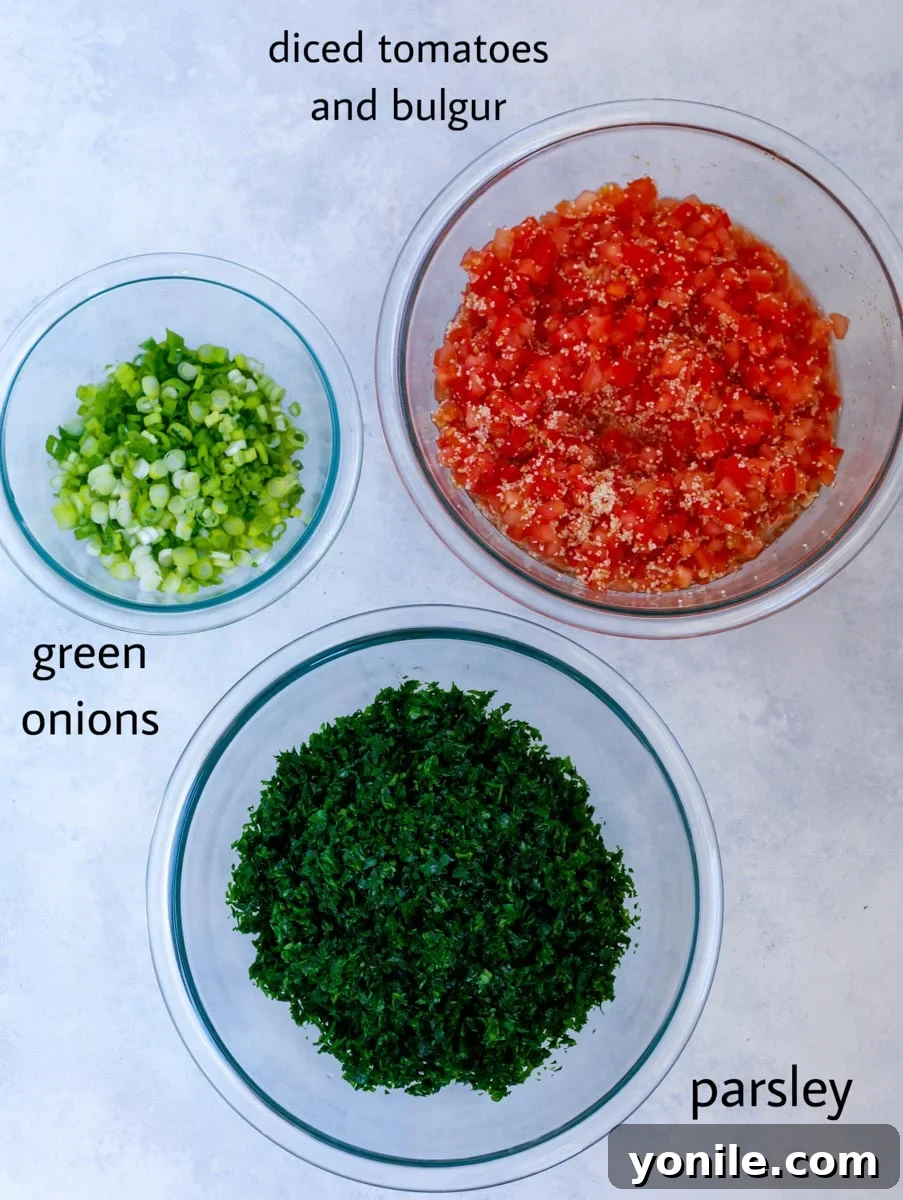
- Dice Tomatoes and Soak Bulgur: Using a very sharp knife, dice the tomatoes into small, consistent pieces. Place the diced tomatoes in a medium-sized bowl. Add the fine bulgur wheat to the tomatoes and gently mix them together. The bulgur will absorb moisture from the tomatoes as it rehydrates.
- Refrigerate and Rest: Cover the bowl with plastic wrap and let the tomato-bulgur mixture sit in the refrigerator for at least 10-15 minutes while you prepare the remaining ingredients. This resting period allows the bulgur to soften and absorb the tomato juices, contributing to a more tender texture and deeper flavor.
- Chop Parsley and Green Onions: While the bulgur is resting, meticulously prepare the parsley. Remove all thick stems and finely chop the parsley by hand. Remember, a food processor can over-process the parsley, turning it into a watery paste, so a sharp knife and patience are your best tools here. Finely chop the green onions (scallions) as well.
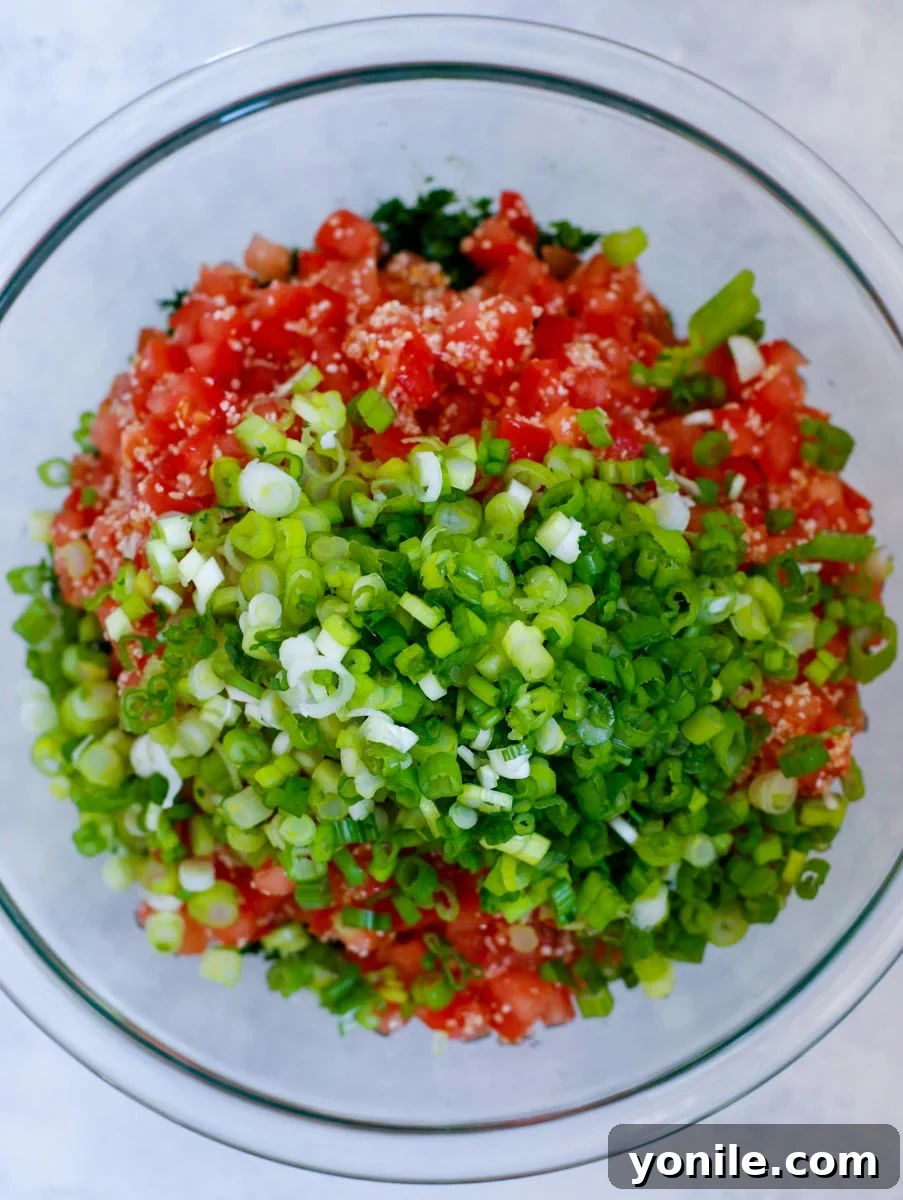
- Combine All Ingredients: Transfer the finely chopped parsley and green onions into a large mixing bowl. Retrieve the tomato and bulgur mixture from the fridge and add it to the bowl with the herbs.
- Dress the Salad: Add the fresh lemon juice, high-quality extra virgin olive oil, and salt (and dried mint if using) to the large bowl.
- Toss Gently but Thoroughly: Using a large spoon or your hands, gently toss all the ingredients together until everything is well combined and the parsley has absorbed the zesty dressing. Ensure the dressing is evenly distributed throughout the salad.
- Taste and Adjust: Taste a small portion of the tabbouleh and adjust the seasoning if necessary, adding more salt or lemon juice according to your preference.
Expert Tips for Crafting the Best Lebanese Tabbouleh
Achieving a truly exceptional tabbouleh involves a few key techniques and considerations:
- Prioritize Hand Chopping: This cannot be stressed enough. For an authentic texture, all ingredients, especially the parsley, must be finely chopped by hand. A food processor will over-mince the parsley, releasing too much moisture and resulting in a soggy, unappetizing salad.
- Thoroughly Dry Your Parsley: After washing, ensure the parsley is completely dry before chopping. Use a salad spinner or pat it dry with paper towels. Excess water dilutes the dressing and makes the salad less crisp.
- Allow Bulgur to Rehydrate Properly: Giving the bulgur enough time (at least 10 minutes) to soak with the diced tomatoes in the fridge is essential. This ensures it softens perfectly without needing any additional water.
- Invest in a Sharp Knife: A sharp knife makes the meticulous chopping process much easier and cleaner, preventing bruising of the herbs and vegetables.
- Select Fresh, Firm Vegetables: The quality of your produce directly impacts the flavor and texture. Choose firm, ripe tomatoes and crisp green onions for a vibrant, fresh-tasting salad.
- Don’t Skimp on Olive Oil and Lemon Juice: These two components form the heart of the dressing. Using high-quality extra virgin olive oil and fresh lemon juice will make a noticeable difference in the final taste.
- Let Flavors Meld: While tabbouleh can be enjoyed immediately, allowing it to sit for 30 minutes to an hour (or even overnight) in the refrigerator before serving can significantly enhance its flavors as the ingredients meld together.
Frequently Asked Questions About Lebanese Tabbouleh
How Long Does Tabbouleh Keep, and Can It Be Made Ahead?
Unlike some other delicate salads, tabbouleh actually holds up quite well in the refrigerator, with some connoisseurs arguing it tastes even better the next day once the flavors have had more time to meld. Store it in an airtight container in the fridge, and it will remain fresh and flavorful for up to 3 days. If you’re prepping the salad ahead for an event, consider storing the finely chopped ingredients separately and mixing them with the dressing just an hour or two before serving to maintain optimal freshness and texture. Alternatively, you can place the diced tomatoes and bulgur at the very bottom of the serving bowl and keep the bulk of the parsley and onions on top, only tossing everything with the dressing just before serving. This prevents the parsley from getting too soggy.
Is Tabbouleh Gluten-Free, and What are the Alternatives?
Traditional tabbouleh is not gluten-free, as bulgur wheat is a product of wheat. However, for those with gluten intolerance or celiac disease, or simply looking for an alternative, quinoa makes an excellent substitute. When cooked and cooled, quinoa has a similar size and a delightful, slightly chewy texture that mimics bulgur very well. To make gluten-free tabbouleh, simply cook fine-grain quinoa according to package instructions, let it cool completely, and then proceed with the recipe, swapping it in for the bulgur. Ensure you use certified gluten-free quinoa if gluten sensitivity is a concern.
How Do You Serve Lebanese Tabbouleh?
Tabbouleh is incredibly versatile and can be served in various ways. It’s perfect as a refreshing salad, a flavorful side dish, or an elegant appetizer. I love preparing a large bowl and placing it on the table for everyone to help themselves. Traditionally, it’s served with fresh lettuce leaves (like romaine or butter lettuce), which act as natural wraps for scooping up the salad. It also makes a fantastic filling for pita bread, wraps, or as a vibrant accompaniment to grilled proteins such as tender Chili Lime Shrimp, succulent Shish Kabobs, or any grilled chicken or fish. It also pairs wonderfully with falafel, shawarma, and other Mediterranean staples, enhancing any meal with its bright, herbaceous notes.
The Abundant Health Benefits of Lebanese Tabbouleh
Beyond its incredible taste, Lebanese tabbouleh is a powerhouse of nutrition, aligning perfectly with a healthy Mediterranean diet. It’s packed with vitamins, minerals, and antioxidants, primarily from its rich content of fresh parsley and tomatoes. Parsley is an excellent source of Vitamin K, Vitamin C, and Vitamin A, supporting bone health, immunity, and vision. Tomatoes contribute lycopene, a potent antioxidant, and Vitamin C. Green onions offer additional vitamins and beneficial compounds. The olive oil, a cornerstone of Mediterranean cuisine, provides healthy monounsaturated fats, while bulgur offers dietary fiber for digestive health. This combination makes tabbouleh a light yet satisfying dish that contributes significantly to overall well-being.
Explore More Easy and Delicious Salad Recipes
If you’ve enjoyed this delightful Lebanese Tabbouleh, you might also love exploring other fresh and flavorful salad options:
- Greek Orzo Salad
- Taco Ranch Pasta Salad
- Strawberry Spinach Salad
Authentic Lebanese Tabbouleh Recipe
This Lebanese Tabbouleh Salad is a very popular Middle Eastern salad recipe. Easy to make with simple ingredients, it is fresh and vibrant in flavor and it’s a great make-ahead dish. Perfect to serve as part of a mezze or as a side or light lunch.
Prep Time: 30 minutes
Cook Time: 0 minutes
Total Time: 30 minutes
Servings: 6 servings
Ingredients
- 3 cups fresh parsley, finely chopped
- 2 cups vine ripe tomatoes, petite diced
- 2 tbsp fine bulgur
- 1 cup green onion, finely chopped
- 1/2 cup fresh lemon juice
- 1/2 cup extra virgin olive oil
- 1 tsp salt
- 1 tbsp dried mint (optional, or 1/4 cup freshly chopped mint)
Instructions
- Wash and thoroughly dry all the vegetables.
- NOTE: Measure all ingredients after chopping.
- Using a sharp knife, dice the tomatoes into small pieces and place them in a bowl. Add the fine bulgur and mix gently.
- Cover the bowl and let it sit in the fridge for at least 10-15 minutes while you finish chopping the other ingredients. This allows the bulgur to absorb the tomato juices and soften.
- For the parsley, remove all thick stems and chop them very finely by hand. Place in a large mixing bowl.
- Finely chop the green onions (scallions) and add them to the bowl with the parsley.
- Retrieve the tomato-bulgur bowl from the fridge and add its contents to the large mixing bowl with the herbs.
- Add the fresh lemon juice, salt, and extra virgin olive oil (and dried mint, if using) to the tabbouleh bowl.
- Toss everything together very well to ensure all ingredients are combined and the parsley absorbs the dressing moisture.
- Serve immediately with fresh lettuce leaves, as a side dish, or as an appetizer. Enjoy!
Recipe Notes and Tips
- Soak Bulgur with Tomatoes: Allow the bulgur and diced tomatoes to sit together in the fridge for at least 10 minutes before adding other ingredients. This crucial step softens the bulgur perfectly.
- Hand-Chop Parsley: Never use a food processor for chopping parsley for tabbouleh. All ingredients should be finely chopped by hand to prevent them from becoming soggy and to maintain the desired texture.
- Dry Parsley Thoroughly: Ensure your parsley is completely dry after washing and before chopping. Remove all stems for a cleaner taste and texture.
- Use a Sharp Knife: A sharp knife makes the detailed chopping much easier, resulting in clean cuts rather than squashed ingredients.
- Fresh and Firm Vegetables: Opt for the freshest and firmest vegetables to ensure a wonderfully crispy and flavorful salad.
- Storage: The salad will keep well in an airtight container in the fridge for up to 3 days, often tasting even better as flavors develop.
Nutrition (per serving)
Calories: 206 kcal | Carbohydrates: 10g | Protein: 2g | Fat: 18g | Saturated Fat: 3g | Sodium: 412mg | Potassium: 371mg | Fiber: 3g | Sugar: 2g | Vitamin A: 3135IU | Vitamin C: 58mg | Calcium: 64mg | Iron: 3mg
I sincerely hope you enjoy creating and savoring this authentic Lebanese Tabbouleh Salad, along with all the other delightful recipes I share. Please do try it, enjoy it, and consider rating it and sharing it with your friends and family!
For more delicious recipes delivered straight to your inbox, don’t forget to sign up for my blog newsletter. And if you recreate this recipe, be sure to tag me on INSTAGRAM so I can see your wonderful creations. Until our next recipe, XoXo…
Like this recipe? We’d love for you to rate it and leave a comment below!