
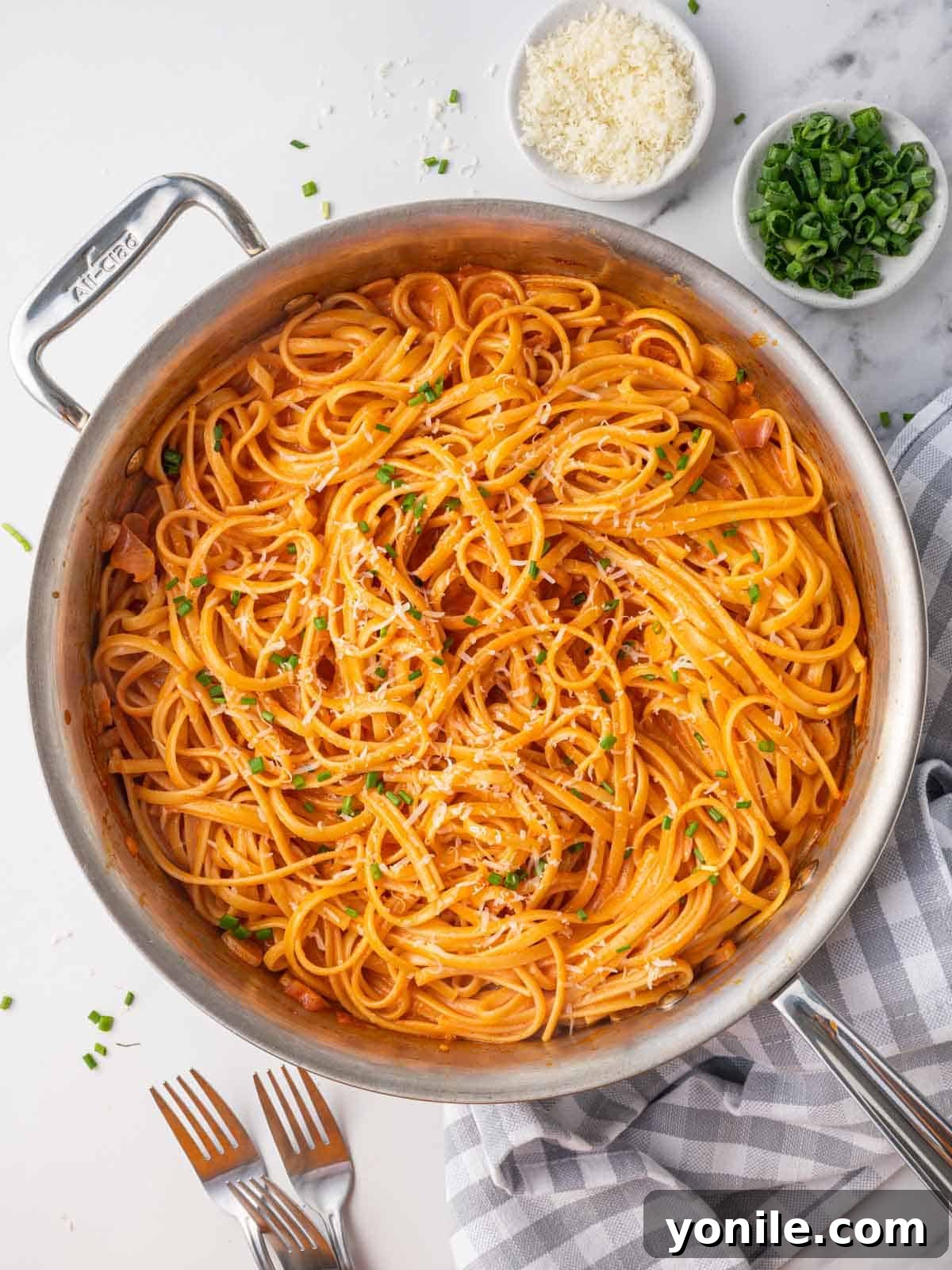
Craving a dish that’s both comforting and exciting? Look no further than this incredible Creamy Gochujang Pasta. It’s a culinary masterpiece that expertly blends the rich, spicy, and savory notes of Korean gochujang with the irresistible creaminess of Italian pasta. This isn’t just a meal; it’s an experience, delivering a perfectly balanced symphony of flavors that are sweet, salty, savory, and undeniably satisfying, all with a delightful kick of heat. Perfect for spice lovers and busy home cooks alike, this gochujang pasta recipe promises a restaurant-quality meal on your table in under 30 minutes, making it the ultimate weeknight dinner solution.
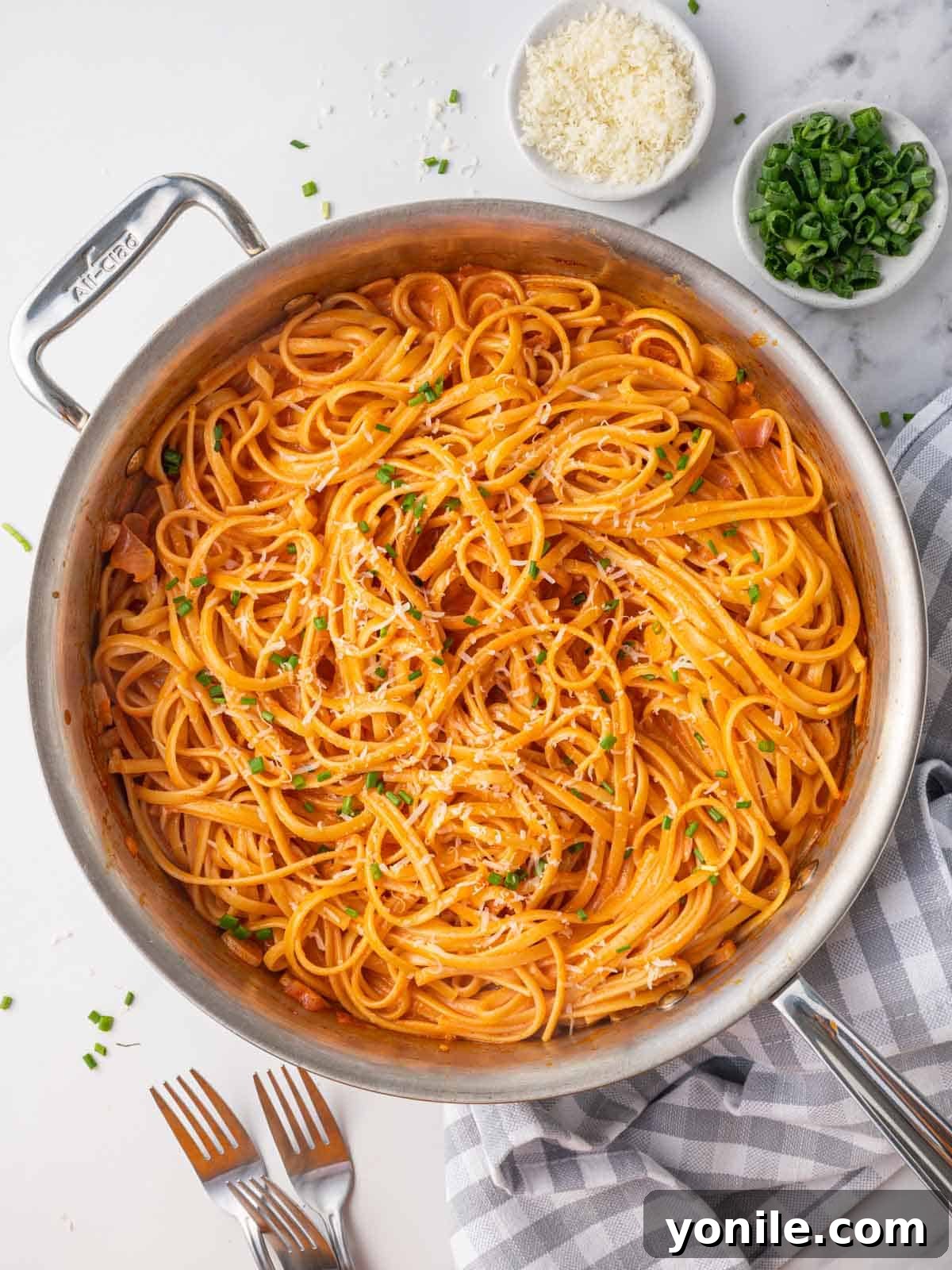
At the heart of this trending dish is gochujang, a traditional Korean fermented chili paste renowned for its complex flavor profile. It brings a unique depth – a harmonious blend of sweet, savory, and spicy notes with a subtle umami funk that elevates this pasta from simple to extraordinary. This particular gochujang cream pasta recipe has taken social media by storm, captivating food enthusiasts with its bold taste and effortless preparation. Imagine a sauce that feels gourmet but is surprisingly quick to whip up, transforming everyday ingredients into an exotic, mouth-watering feast. This dish isn’t just about speed; it’s about infusing your kitchen with the enticing aromas of garlic, shallots, and the distinctive allure of Korean gochujang, ensuring it will quickly become a cherished family favorite.
If you’re a fan of vibrant Korean cuisine, you’ll also adore my Korean Crispy Fried Chicken or Korean BBQ Chicken Skewers, offering more ways to explore these delightful flavors.
Why You’ll Fall in Love with This Creamy Gochujang Pasta Recipe
This spicy pasta recipe isn’t just another dish; it’s a testament to how simple ingredients can create profound flavors and effortless cooking can lead to gourmet results. Here’s why this Gochujang pasta will earn a permanent spot in your recipe rotation:
- Unbelievably Fast: Forget long hours in the kitchen! This entire creamy gochujang pasta dish comes together in under 30 minutes. It’s the perfect solution for those hectic weeknights when you crave something extraordinary without the fuss. Imagine having a hot, delicious, and deeply satisfying meal on the table almost as quickly as ordering takeout.
- Explosively Flavorful and Luxuriously Creamy: The star, gochujang sauce, delivers an unparalleled depth of flavor – a perfect balance of sweet, spicy, and umami. When combined with rich heavy cream and nutty Parmesan cheese, it transforms into a decadent, velvety sauce that clings beautifully to every strand of pasta, offering a truly luxurious mouthfeel. Each bite is a journey through layers of delightful taste.
- Made with Accessible Pantry Staples: You’ll be surprised how many of the ingredients for this Korean pasta are likely already in your kitchen. From your favorite pasta to essential aromatics and a jar of gochujang (which is becoming increasingly common in international aisles), this recipe relies on readily available items, making it an ideal last-minute dinner choice without needing a special grocery run.
- Versatile and Customizable: This recipe is a fantastic base for customization. Easily add your favorite proteins like chicken or shrimp, or boost the veggie content with spinach, broccoli, or mushrooms. It adapts beautifully to your dietary needs and preferences, making it a flexible option for any meal plan.
Essential Ingredients for Your Spicy Gochujang Pasta
Crafting the perfect creamy gochujang pasta begins with a thoughtful selection of fresh, high-quality ingredients. Each component plays a crucial role in building the robust flavor and luxurious texture that makes this dish so irresistible.
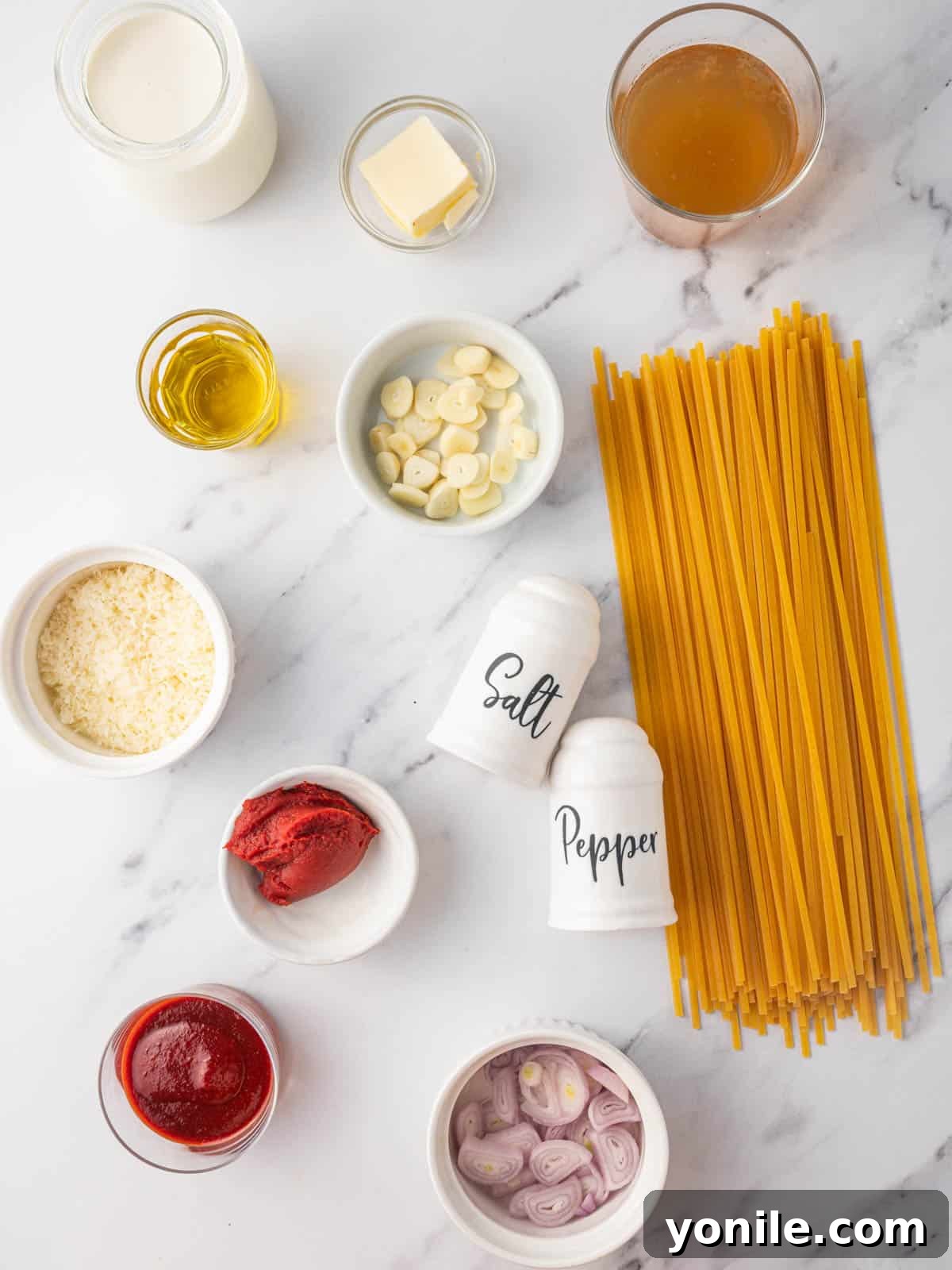
- Pasta: While linguine pasta offers a beautiful ribbon-like texture that truly holds the creamy sauce, feel free to experiment with other shapes. Spaghetti, fettuccine, rigatoni, or even penne would work wonderfully, ensuring maximum sauce adherence for the best experience of this Gochujang pasta.
- Olive Oil: A good quality light, neutral-flavored olive oil forms the base of our sauce, helping to sauté the aromatics and build foundational flavor. It’s important for preventing butter from burning and ensuring an even cook.
- Unsalted Butter: Using unsalted butter gives you precise control over the overall saltiness of your dish. If you only have salted butter on hand, remember to taste the sauce before adding additional salt to avoid over-seasoning. The richness of butter adds a lovely depth to the sauce.
- Aromatics (Fresh Garlic & Shallot): These are the backbone of any great sauce. Sliced fresh garlic and shallots provide an aromatic, pungent, and subtly sweet base that perfectly complements the robust gochujang. Don’t skimp on fresh aromatics for the best flavor!
- Tomato Paste: A small amount of concentrated tomato paste adds a touch of acidity, sweetness, and umami depth to the sauce, helping to balance the spice of the gochujang and create a richer, more complex profile. Opt for a squeeze tube if available to avoid opening an entire can for a small quantity.
- Gochujang: The star of the show! This vibrant Korean chili paste (or sauce) is easily found in the Asian aisle of most well-stocked grocery stores. Its unique blend of savory, sweet, and spicy flavors is what defines this Korean pasta dish. Adjust the amount to your preferred spice level.
- Chicken Broth: Using chicken broth instead of plain water enhances the savory depth of the sauce, providing a richer and more nuanced flavor. Vegetable broth is an excellent alternative for a vegetarian option, or water can be used in a pinch, though it will yield a slightly less flavorful result.
- Heavy Cream: Essential for that dreamy, velvety consistency in your creamy gochujang pasta. While half-and-half or whole milk can be substituted for a lighter version, be aware that the sauce will be less rich and thick. The full fat content of heavy cream is key to achieving true decadence.
- Salt and Pepper: Simple yet essential. Kosher salt and freshly ground black pepper are crucial for seasoning the sauce to perfection, enhancing all the other flavors. Always taste and adjust to your preference.
- Freshly Grated Parmesan Cheese: Adds a salty, umami, and slightly nutty finish, contributing to the creaminess and overall Italian-Korean fusion appeal. Freshly grated is always superior to pre-shredded for melting and flavor.
- Chopped Chives: A fresh, mild oniony garnish that adds a pop of color and a delicate flavor, cutting through the richness of the sauce. Other fresh herbs like cilantro or scallions can also be used.
How to Make Creamy Gochujang Pasta: A Step-by-Step Guide
Creating this irresistible Gochujang pasta is surprisingly straightforward. Follow these steps for a perfectly creamy, spicy, and satisfying meal that will impress everyone at your table.
- Step 1: Cook Your Pasta to Perfection. Begin by boiling your linguine pasta (or chosen pasta shape) in generously salted water according to the package instructions until it reaches al dente. This means it should be firm to the bite, as it will continue to cook slightly when tossed with the hot sauce. Once cooked, drain the pasta, reserving about ½ cup of the starchy pasta water. This reserved water is your secret weapon for adjusting sauce consistency later if needed. Set the cooked pasta aside while you prepare the glorious sauce.
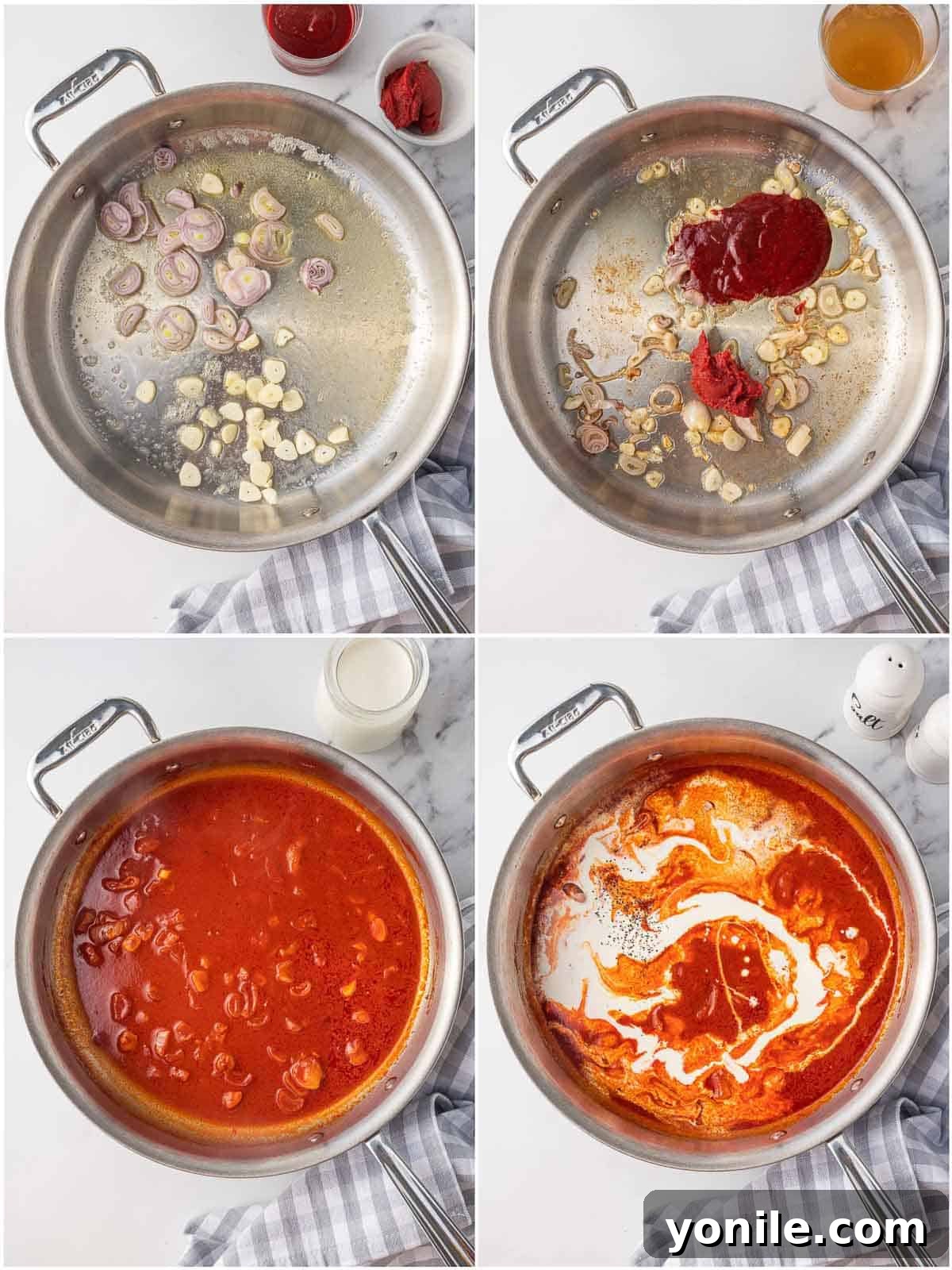
- Step 2: Craft the Flavorful Gochujang Sauce. In a large, deep skillet or Dutch oven, heat one tablespoon of olive oil and one tablespoon of unsalted butter over medium heat. Once the butter has melted and is shimmering, add your thinly sliced fresh garlic and shallots. Sauté these aromatics for 2-3 minutes, stirring frequently, until they become fragrant and softened but not browned. This gentle cooking extracts their sweet and savory notes.
- Step 3: Build the Sauce’s Core Flavor. To the skillet, add the tomato paste and the gochujang paste. Stir continuously and cook for another 2-3 minutes. This step is crucial for deepening the flavors of both the tomato paste (which caramelizes slightly) and the gochujang, making its profile more robust. Continue cooking until you see the oil start to ‘float’ or separate slightly from the paste, indicating the flavors have properly bloomed.
- Step 4: Create the Creamy Base. Pour in the chicken broth, stirring well to deglaze the pan and incorporate any flavorful bits stuck to the bottom. Let it simmer for a couple of minutes, allowing the liquid to reduce slightly and meld with the chili-tomato base. Next, slowly pour in the heavy cream, stirring constantly until the sauce is smooth and unified. Season generously with ½ teaspoon of salt and ½ teaspoon of freshly ground black pepper. Bring the sauce to a gentle simmer and let it cook for another 2-3 minutes, allowing it to thicken slightly and for all the flavors to fully marry.
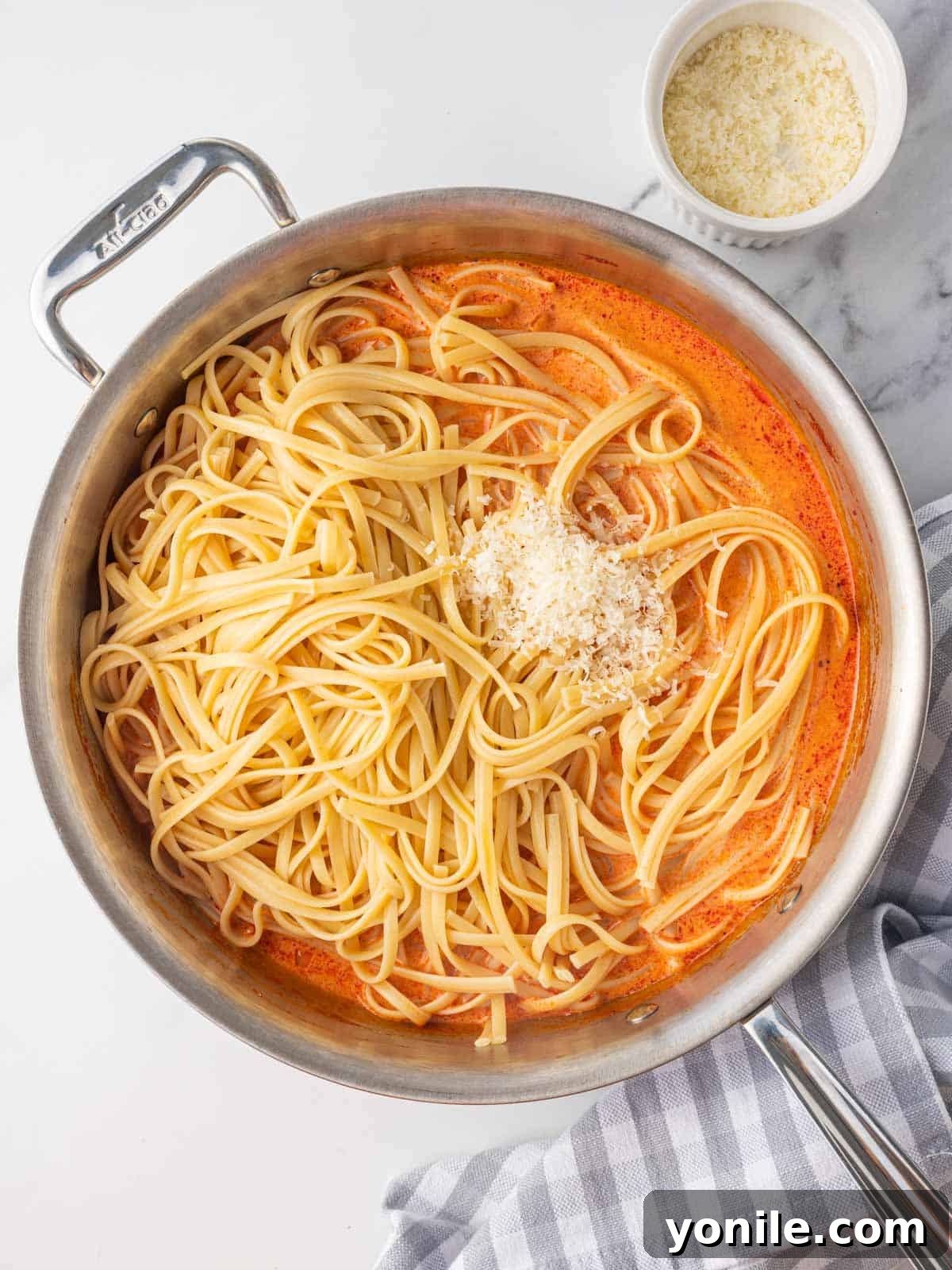
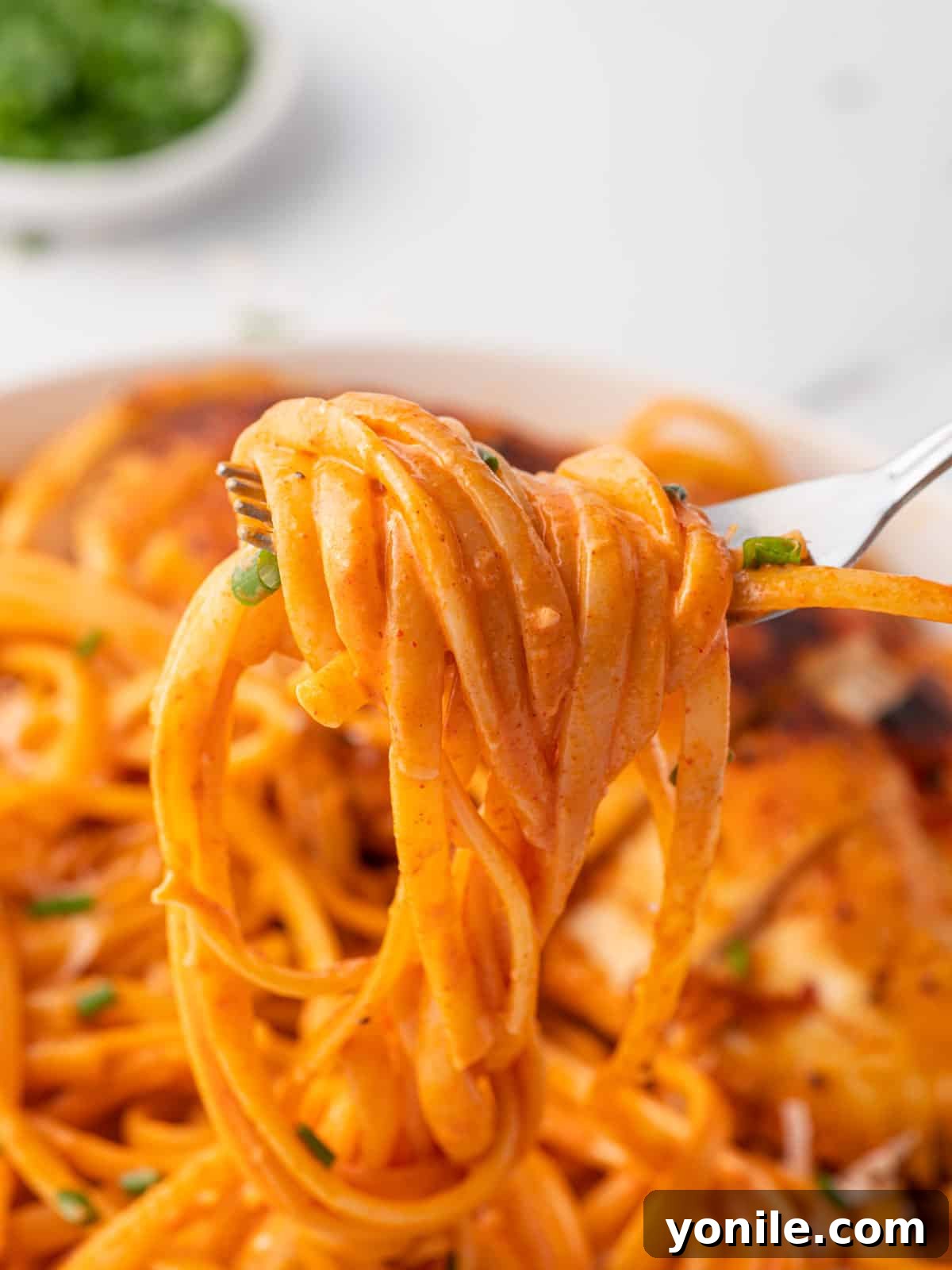
- Step 5: Combine Pasta and Sauce. Add the cooked al dente pasta directly into the skillet with the simmering spicy pasta sauce. Using tongs, toss the pasta vigorously until every strand is thoroughly coated in the rich, creamy gochujang goodness. If the sauce appears too thick, add a tablespoon or two of the reserved pasta water until it reaches your desired consistency. Stir in the freshly grated Parmesan cheese, allowing it to melt and contribute to the sauce’s creaminess.
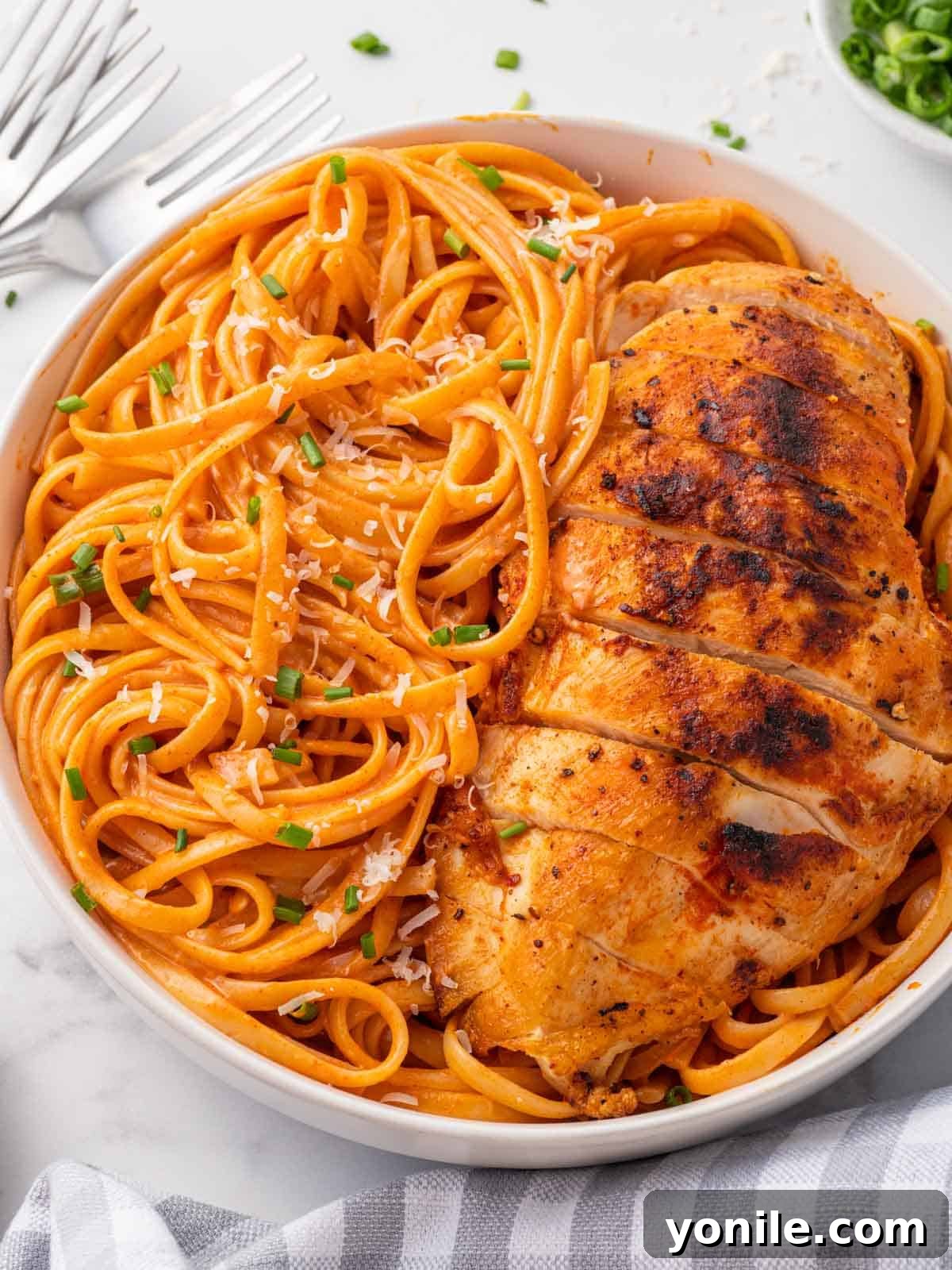
- Step 6: Garnish and Serve Immediately. Once the pasta is perfectly coated and the cheese is melted, transfer your delightful creamy gochujang pasta to serving plates. Garnish generously with fresh chopped chives for a touch of freshness and vibrant color. Serve warm as is, or alongside your favorite grilled chicken, pan-seared shrimp, or a crisp green salad for a complete and satisfying meal. Enjoy every fiery, cheesy, and garlicky bite!
Pro Tips for Making the Best Gochujang Pasta
Elevate your creamy gochujang pasta from great to extraordinary with these expert tips:
- Locating Gochujang: Don’t fret if you can’t immediately spot gochujang. It’s typically found in the Asian or international foods aisle of your local grocery store. It often comes in a distinctive red container. If your local store doesn’t carry it, Asian specialty markets or online retailers are reliable sources.
- Enhance Flavor with Smoked Paprika: For an extra layer of smoky depth that complements the gochujang beautifully, consider adding a pinch of smoked paprika to the sauce along with the tomato paste. It introduces a subtle warmth and complexity without overpowering the main flavors.
- Salt Your Pasta Water: This is a fundamental rule for delicious pasta. Generously salting the pasta water (it should taste like the ocean) infuses the pasta itself with flavor from the inside out, making the entire dish more palatable.
- Reserve Pasta Water: Always reserve a cup of the starchy pasta water before draining. This liquid is gold! If your sauce becomes too thick or needs a little more body to cling to the pasta, a splash of this starchy water will loosen it beautifully while helping the sauce emulsify.
- Choose the Right Pasta Shape: While linguine is excellent, select a pasta shape with ample surface area or nooks and crannies to truly capture and hold the rich gochujang sauce. Besides linguine, rigatoni, penne, orecchiette, or even a wide noodle like pappardelle would be fantastic choices, ensuring every bite is bursting with flavor.
- Cook Pasta to Al Dente: It’s crucial to cook your pasta to a firm al dente stage. Remember that the pasta will continue to cook slightly when it’s tossed into the hot sauce. Overcooked pasta can become mushy and lose its texture, so err on the side of slightly undercooked before combining.
- Maintain Medium Heat for Sauce: When simmering your sauce, keep the heat at a steady medium. High heat can cause dairy-based sauces to curdle, resulting in a grainy texture. A gentle simmer ensures a smooth, luscious, and perfectly emulsified sauce.
- Practice Mise en Place: This quick pasta recipe comes together rapidly, so having all your ingredients prepped, measured, and ready to go (known as “mise en place”) before you start cooking is key. This organized approach ensures a smooth, stress-free cooking experience.
- Don’t Be Afraid to Taste and Adjust: Throughout the cooking process, especially when adding salt and pepper, taste your sauce. Flavor preferences vary, so adjust the seasoning to your liking. You might want more spice, a touch more salt, or a hint of sweetness (a tiny pinch of sugar can brighten gochujang sometimes).
Frequently Asked Questions About Creamy Gochujang Pasta
Yes, gochujang pasta is inherently spicy, as gochujang paste is made from red chili peppers. It offers a moderate level of heat that is both flavorful and enjoyable. However, the beauty of this recipe is its adjustability! You can easily control the spice level by increasing or decreasing the amount of gochujang paste used. For a milder version, start with less; for an extra kick, add a bit more to your taste.
This pasta is incredibly delicious on its own, but it’s also a fantastic canvas for additions! To boost protein, consider stirring in cooked chicken (shredded or diced), pan-seared shrimp, sliced beef, or even crispy tofu. For an extra dose of vegetables and nutrients, try adding sautéed kale, fresh spinach, peas, broccoli florets, bell peppers, or sliced mushrooms during the last few minutes of cooking the sauce. These additions will not only make the meal heartier but also add more texture and flavor dimensions.
Absolutely! Transforming this into a delicious vegan spicy pasta is quite simple. Replace the chicken broth with vegetable broth or water. For the creamy element, use a rich plant-based alternative like full-fat coconut milk (for a slightly different flavor profile), cashew cream, or a high-quality vegan heavy cream alternative. Finally, swap the Parmesan cheese for your favorite brand of vegan Parmesan cheese. The gochujang itself is typically vegan-friendly, but always check the label to be sure.
Leftovers of this Gochujang cream pasta are fantastic! Store any remaining pasta in an airtight container in the refrigerator for up to 5 days. When reheating, the sauce might thicken slightly. To restore its creamy texture, reheat portions in the microwave for 1-2 minutes, stirring halfway through. For best results, add a tablespoon or two of water or a splash of broth before reheating to prevent the pasta from drying out and help the sauce re-emulsify.
Yes, you can freeze leftover spicy pasta for up to 3 months. For optimal quality, ensure it’s stored in a freezer-safe, airtight container. When you’re ready to enjoy it, defrost the pasta overnight in the refrigerator. Reheat gently on the stovetop with a splash of water or broth, or in the microwave, following the instructions for refrigerated leftovers.
This versatile pasta pairs wonderfully with a variety of sides. To make it a more substantial meal, consider adding grilled or pan-seared chicken, succulent shrimp, or thinly sliced steak directly to the pasta. For vegetable sides, try serving it with crisp Roasted Brussels Sprouts, a refreshing Spinach Chickpea Salad Recipe, or a simple mixed green salad. And, of course, a side of warm, crusty Homemade Roasted Garlic Bread is always a welcome accompaniment to soak up every last drop of that amazing sauce!
More Spicy Pasta Recipes to Explore
If you’ve fallen in love with the fiery kick and comforting warmth of this creamy gochujang pasta, you’re in for a treat! The world of spicy pasta is vast and wonderfully delicious. Here are some other incredible recipes that promise to tantalize your taste buds and add excitement to your dinner rotation. From creamy textures to bold flavors, these dishes are perfect for anyone who appreciates a little heat in their meal:
- Creamy Spicy Chicken Pasta: A classic combination of tender chicken in a rich, spicy cream sauce.
- Spicy Shrimp Pasta: Succulent shrimp tossed in a vibrant, zesty, and spicy sauce.
- Spicy Arrabbiata Pasta: A timeless Italian favorite, simple yet bursting with a robust, fiery tomato flavor.
- Spicy Chicken Chipotle Pasta: A smoky, spicy, and incredibly flavorful pasta dish featuring the distinct taste of chipotle peppers.
I genuinely hope you cherish every recipe I share, and this mouth-watering Gochujang Cream Pasta is no exception. It’s a dish born from a desire to combine bold flavors with comforting textures, designed to bring joy and excitement to your dinner table. I encourage you to try it, savor every spoonful, and share this delightful culinary adventure with your cherished friends and family. Your feedback means the world to me!
If you whip up this delectable recipe and it becomes a new favorite, please consider leaving a star rating and a comment below. Your thoughts and experiences are invaluable. Don’t forget to share your delicious creations with me on Instagram using my hashtag so I can see your culinary masterpieces! Also, make sure to follow Cookin’ With Mima on FACEBOOK |INSTAGRAM |PINTEREST for my latest posts, recipes, and behind-the-scenes glimpses!
Creamy Gochujang Pasta
Ingredients
- 8- ounce linguine pasta
- 1 tablespoon olive oil
- 1 tablespoon unsalted butter
- 4 garlic cloves, sliced
- 1 medium shallot, sliced
- 1 tablespoon tomato paste
- 3 tablespoons gochujang paste/sauce
- ½ cup chicken broth
- ¾ cup heavy cream
- ½ teaspoon salt
- ½ teaspoon ground pepper
- ¼ cup parmesan cheese
- Chopped chives, to garnish
Instructions
- Cook the linguine pasta according to the pasta instructions. Drain the water and set it aside.
- Heat a large skillet with oil on a medium flame. Add oil and butter. Once the butter is melted, add the sliced garlic and shallots, and cook for 2-3 minutes.
- Add tomato paste and gochujang and cook until the oil starts floating.
- Stir in the broth and cook for a couple of minutes. Pour the heavy cream and season it with salt and pepper. Allow the sauce to simmer for 2-3 minutes.
- Add the pasta to the skillet and toss it until everything combines well. Add in the parmesan cheese.
- Once done, garnish the creamy gochujang pasta with chopped chives and serve it warm with your favorite protein on the side.
Notes
- Gochujang is usually found in the Asian aisle of your local grocery store.
- Add a little bit of smoked paprika for an extra layer of flavor.
- Salt the pasta water for the best flavor.
- Reserve a little of the pasta water to loosen the sauce if it’s too thick.
- Use pasta that has enough surface area to really collect the sauce. We used linguine, but you could use rigatoni, penne, spaghetti or any similar pasta shape.
- Cook the pasta to al dente, as it will continue to cook when mixed with the sauce.
- Cook the sauce over medium heat so the sauce doesn’t curdle.
- Prep all your sauce ingredients in advance, as it comes together very quickly.
Nutrition
Carbohydrates: 50g |
Protein: 11g |
Fat: 25g |
Saturated Fat: 14g |
Polyunsaturated Fat: 2g |
Monounsaturated Fat: 8g |
Trans Fat: 0.1g |
Cholesterol: 63mg |
Sodium: 446mg |
Potassium: 324mg |
Fiber: 2g |
Sugar: 5g |
Vitamin A: 868IU |
Vitamin C: 4mg |
Calcium: 126mg |
Iron: 1mg