
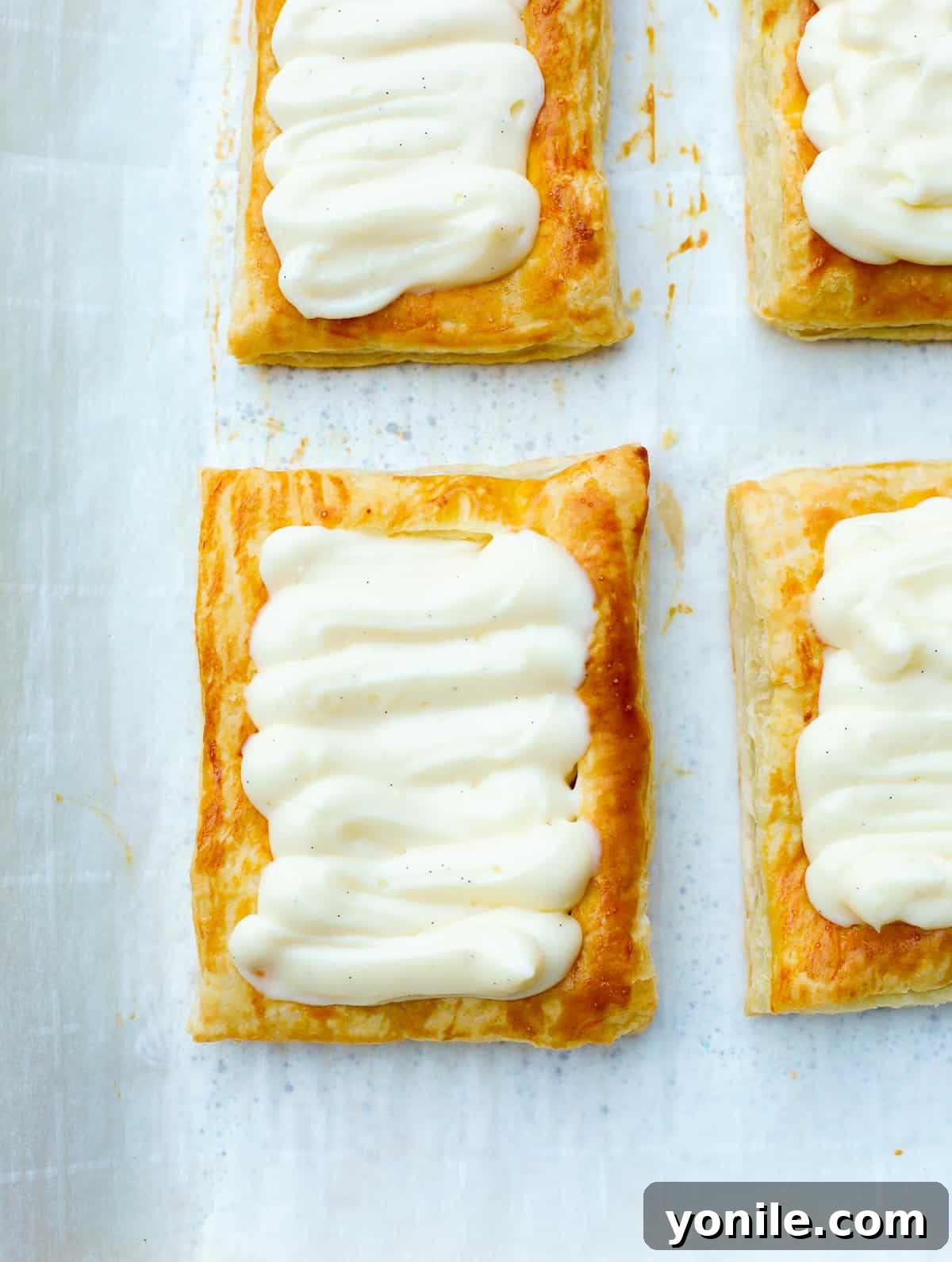
Pastry Cream, often referred to by its elegant French name, Crème Pâtissière, stands as a fundamental cornerstone in the world of desserts. This rich, smooth, and utterly delicious custard filling is a global sensation, finding its way into countless beloved sweet treats from delicate French pastries to vibrant fruit tarts and creamy donuts. Its versatility is matched only by its surprising simplicity to prepare. Whether you’re a seasoned baker or just starting your culinary journey, mastering crème pâtissière is an incredibly rewarding step that unlocks a universe of dessert possibilities. Best of all, it can be made well in advance, streamlining your baking process and significantly cutting down on prep time when those special occasions or weekend cravings strike.
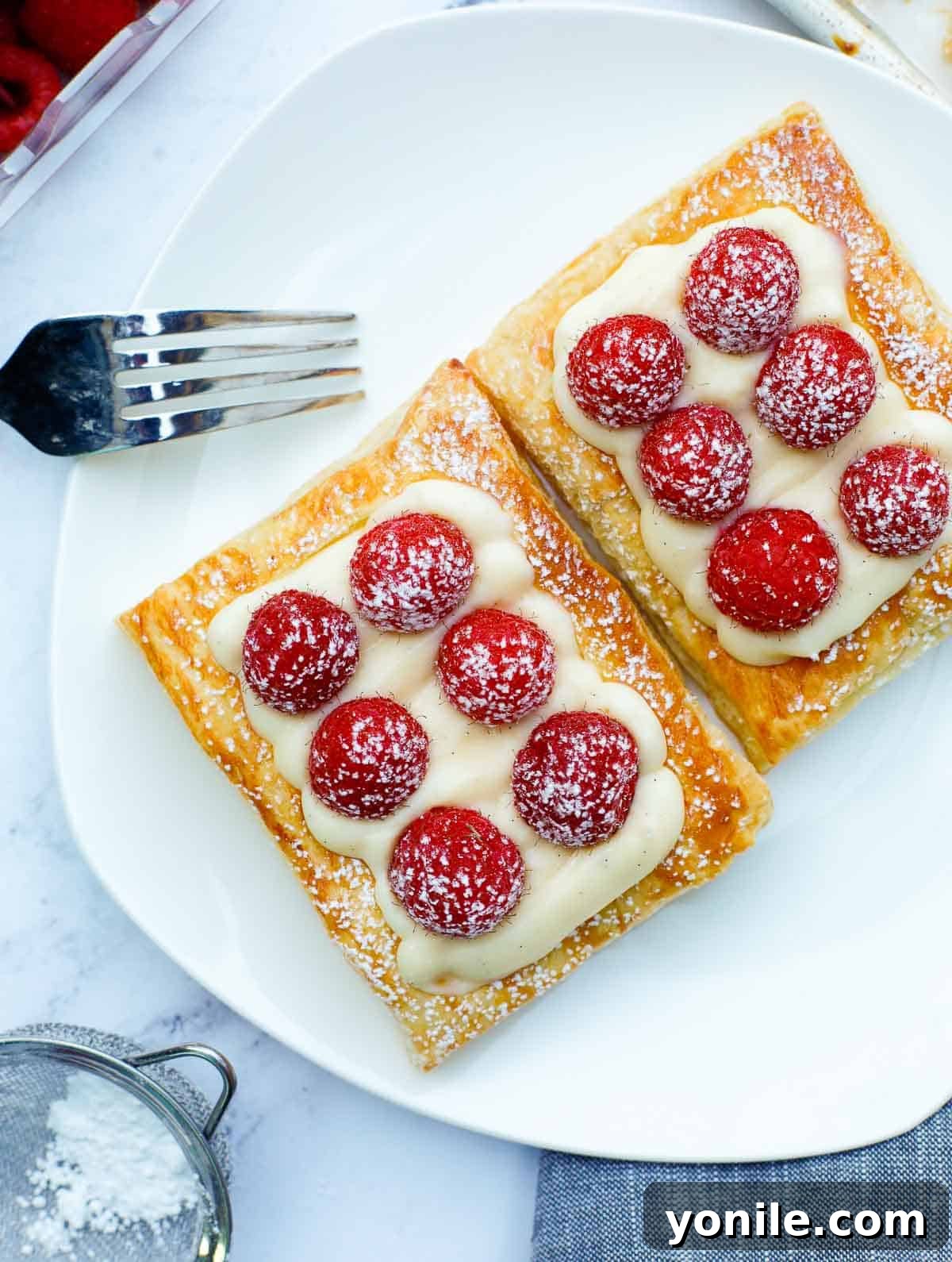
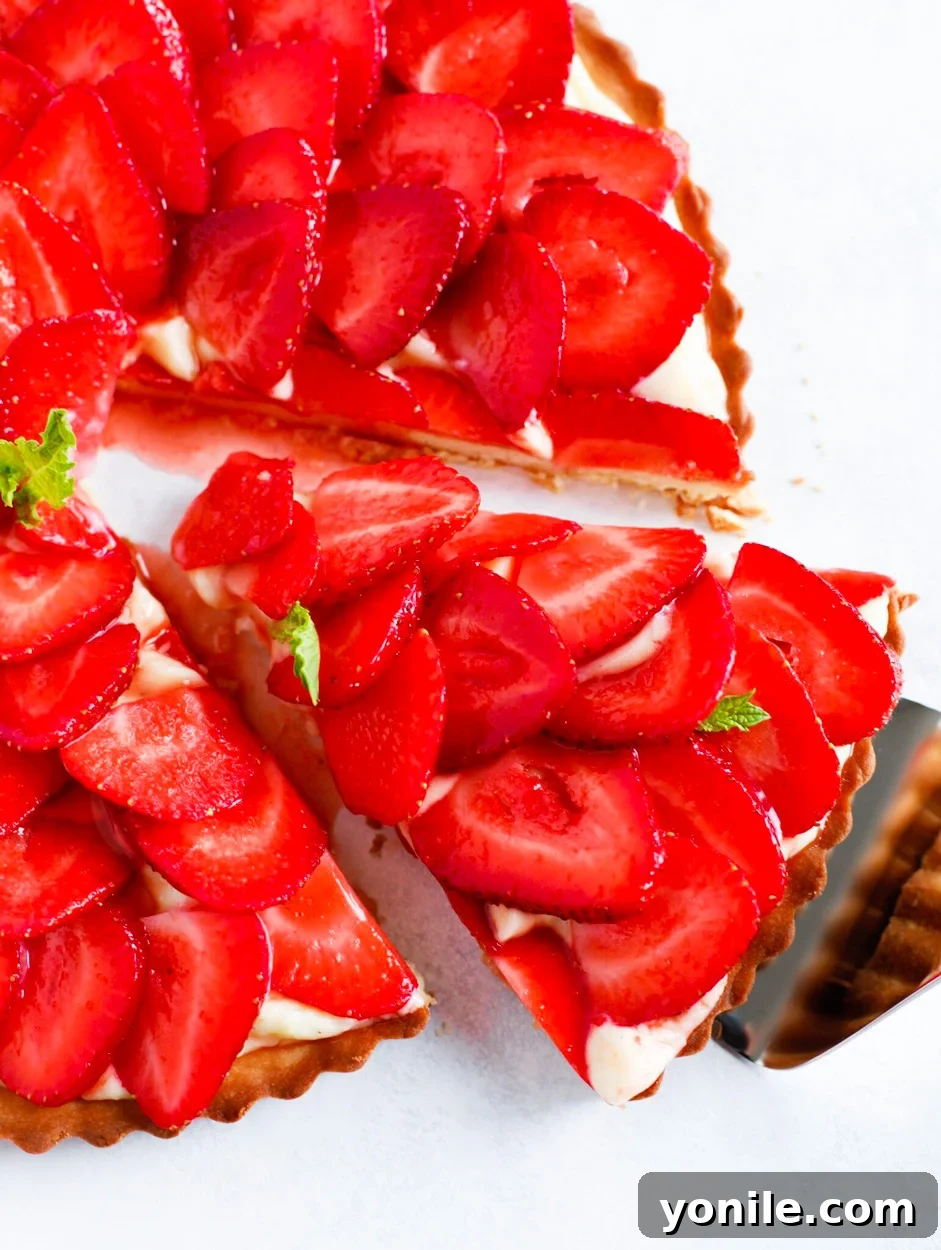
Once you’ve experienced the satisfaction of making your own luscious pastry cream, you’ll be eager to incorporate it into a myriad of delightful recipes. We have several exquisite dessert creations that rely on the perfection of homemade Crème Pâtissière. These recipes are ideal for entertaining or simply treating yourself to something truly special. Since you’ll be whipping up a batch of this magnificent cream anyway, why not consider doubling the quantity? A larger batch means you can effortlessly prepare several show-stopping desserts, making your weekend baking both productive and incredibly delicious. Don’t miss out on trying our highly recommended Pain Aux Raisins, the refreshing Strawberry French Tart, and the delightful Raspberry Puff Pastry Tart. Each one promises to be a testament to the magic of homemade pastry cream.
What is Pastry Cream? Understanding Crème Pâtissière
At its heart, Pastry Cream, or Crème Pâtissière, is a classic, thick, vanilla-infused custard filling, akin to a rich, decadent pudding. It’s a staple in French pâtisserie, but its creamy texture and sublime flavor have made it a beloved component in desserts across the globe. From filling delicate éclairs and cream puffs to layering in elaborate cakes, tarts, and even donuts, its uses are incredibly diverse. Unlike simpler custards, pastry cream is cooked on the stovetop until it reaches a thick, luxurious consistency, capable of holding its shape when piped or spread.
The core ingredients for this versatile cream are simple yet essential: **whole milk, egg yolks, granulated sugar, a starch (most commonly cornstarch), and pure vanilla**. The choice of vanilla profoundly impacts the final flavor; authentic vanilla bean pods lend an incomparable depth and aromatic sweetness, evident in tiny speckled seeds throughout the cream. However, high-quality vanilla extract or vanilla bean paste are excellent and convenient alternatives. While vanilla is the traditional and most popular flavoring, some variations include subtle notes of lemon or orange zest, which can add a bright, fragrant twist. It’s worth noting that citrus zests can slightly alter the classic vanilla profile, so purists often prefer to let the rich vanilla shine on its own. The starch component is crucial for stabilizing the custard and achieving its characteristic thick, pipeable texture, preventing it from weeping or becoming too runny. This combination of ingredients and careful cooking results in a smooth, velvety cream that is both rich and surprisingly light on the palate.
Why This Homemade Pastry Cream Recipe Will Become Your Favorite
Creating your own pastry cream might sound intimidating, but this recipe is designed to be incredibly approachable, offering several compelling reasons why it will quickly become a go-to in your culinary repertoire:
- No Special Kitchen Equipment Needed: Forget about fancy stand mixers, immersion blenders, or complex pastry tools. This recipe truly champions simplicity. All you genuinely require is a reliable saucepan, a sturdy whisk, and a heat-resistant bowl. These are items typically found in every home kitchen, making this gourmet-level pastry cream accessible to everyone, regardless of their gadget collection.
- Made with Everyday Staple Ingredients: You won’t need to hunt for obscure or expensive ingredients. The beauty of this crème pâtissière lies in its reliance on common pantry items. Whole milk, eggs, sugar, cornstarch, and vanilla are likely already waiting in your refrigerator and cupboard. This means you can decide to whip up a batch on a whim, without a last-minute trip to the grocery store, making spontaneous baking a delightful reality.
- Achieve Fancy, Restaurant-Quality Results with Ease: The name “Crème Pâtissière” itself evokes images of sophisticated French bakeries and intricate desserts. While its name might sound complex, the process for making it is surprisingly straightforward and forgiving. This recipe guides you step-by-step to achieve a velvety-smooth, rich, and perfectly set pastry cream that tastes as if it came straight from a high-end patisserie. Impress your friends and family with truly gourmet desserts, all crafted with convenience and confidence from the comfort of your own home kitchen.
Essential Ingredients for Perfect Vanilla Pastry Cream
Crafting exceptional vanilla pastry cream begins with selecting the right ingredients. Each component plays a crucial role in achieving the desired rich flavor and smooth, luxurious texture. Here’s a breakdown of what you’ll need and why:
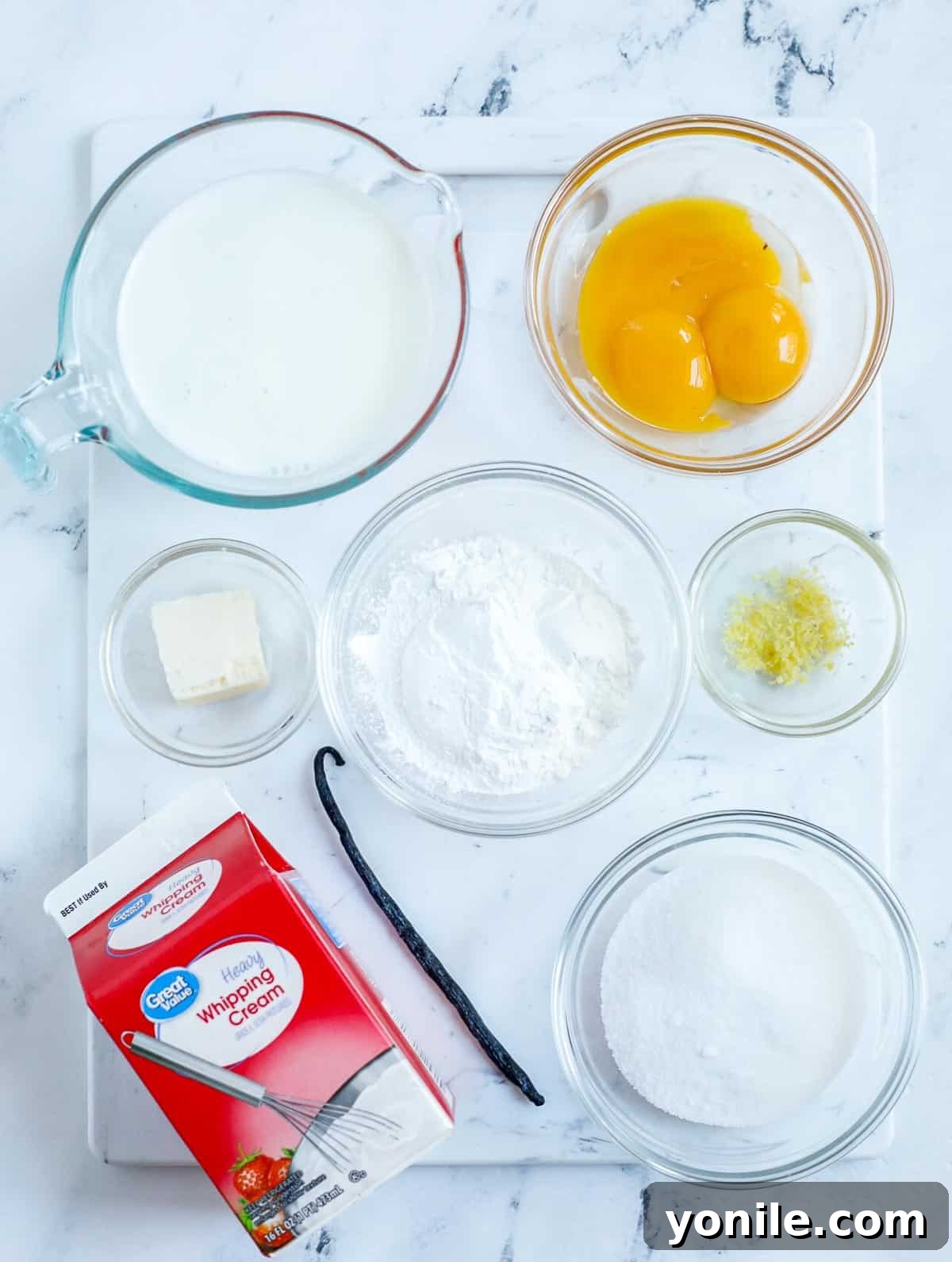
- Whole Milk: This is not the time to reach for skim or low-fat milk. Full-fat, whole milk is absolutely essential for this recipe. Its higher fat content contributes significantly to the creamy mouthfeel and decadent richness that defines authentic pastry cream. It also helps in carrying the vanilla flavor throughout the custard.
- Vanilla Bean or Pure Vanilla Extract: The soul of vanilla pastry cream lies in its vanilla flavor. For the most profound and aromatic experience, a vanilla bean pod is highly recommended. You can scrape out the seeds and infuse the milk with both the seeds and the pod for maximum flavor. Alternatively, high-quality vanilla bean paste or pure vanilla extract can be used. Opt for a pure extract rather than artificial vanilla flavoring for a superior taste that truly elevates the custard.
- Granulated Sugar: Beyond simply adding sweetness, sugar plays a vital role in the structure and texture of the pastry cream. It helps to tenderize the egg yolks and contributes to a smoother final product. You can slightly adjust the amount of sugar to suit your personal preference for sweetness, making it a truly customizable treat.
- Egg Yolks: These are the core thickening agent and the primary source of richness and color in crème pâtissière. Egg yolks contribute to the custard’s luxurious texture, emulsifying the ingredients and adding a beautiful pale yellow hue. Using only yolks (rather than whole eggs) ensures a denser, creamier, and more stable custard, perfect for holding its shape.
- Cornstarch: This is our chosen thickening agent, and for good reason. Cornstarch creates a smooth, glossy, and stable pastry cream without imparting any floury taste. It’s preferred over flour because it results in a clearer, more translucent custard and is less prone to clumping, ensuring a consistently silky texture.
- Unsalted Butter: Added at the very end of the cooking process, unsalted butter is a game-changer for pastry cream. It melts into the warm custard, lending an incredible sheen, enhancing its richness, and contributing to an even silkier, more refined texture. It also helps to prevent a skin from forming as the cream cools.
How To Make Velvety Pastry Cream (Crème Pâtissière): A Step-by-Step Guide
Making homemade pastry cream is a rewarding process that, with a few careful steps, yields a truly impressive result. Follow these instructions to create a perfectly smooth and rich Crème Pâtissière:
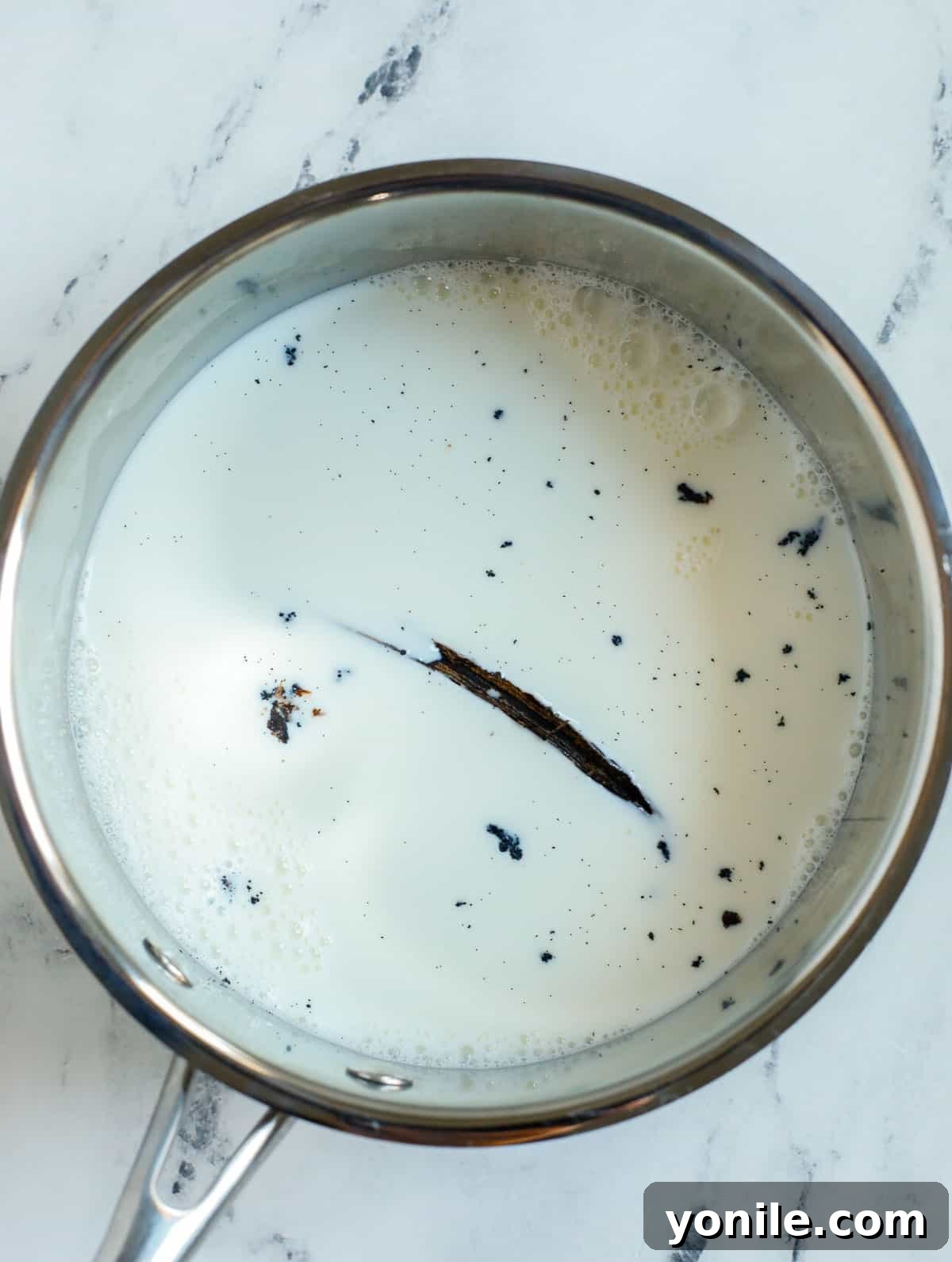
- Prepare the Milk and Vanilla Infusion: Begin by pouring 2 cups of whole milk into a medium saucepan. Crucially, remove 1 tablespoon of this milk and set it aside in a small bowl – this will be used later to loosen our egg mixture. Now, place the saucepan with the remaining milk over low-medium heat. If you are using a vanilla bean pod, split it lengthwise, scrape out the fragrant seeds, and add both the seeds and the empty pod to the milk. Bring the milk to a gentle simmer, just until small bubbles appear around the edges. Do not let it boil vigorously. If using vanilla extract, hold off on adding it until a later step.
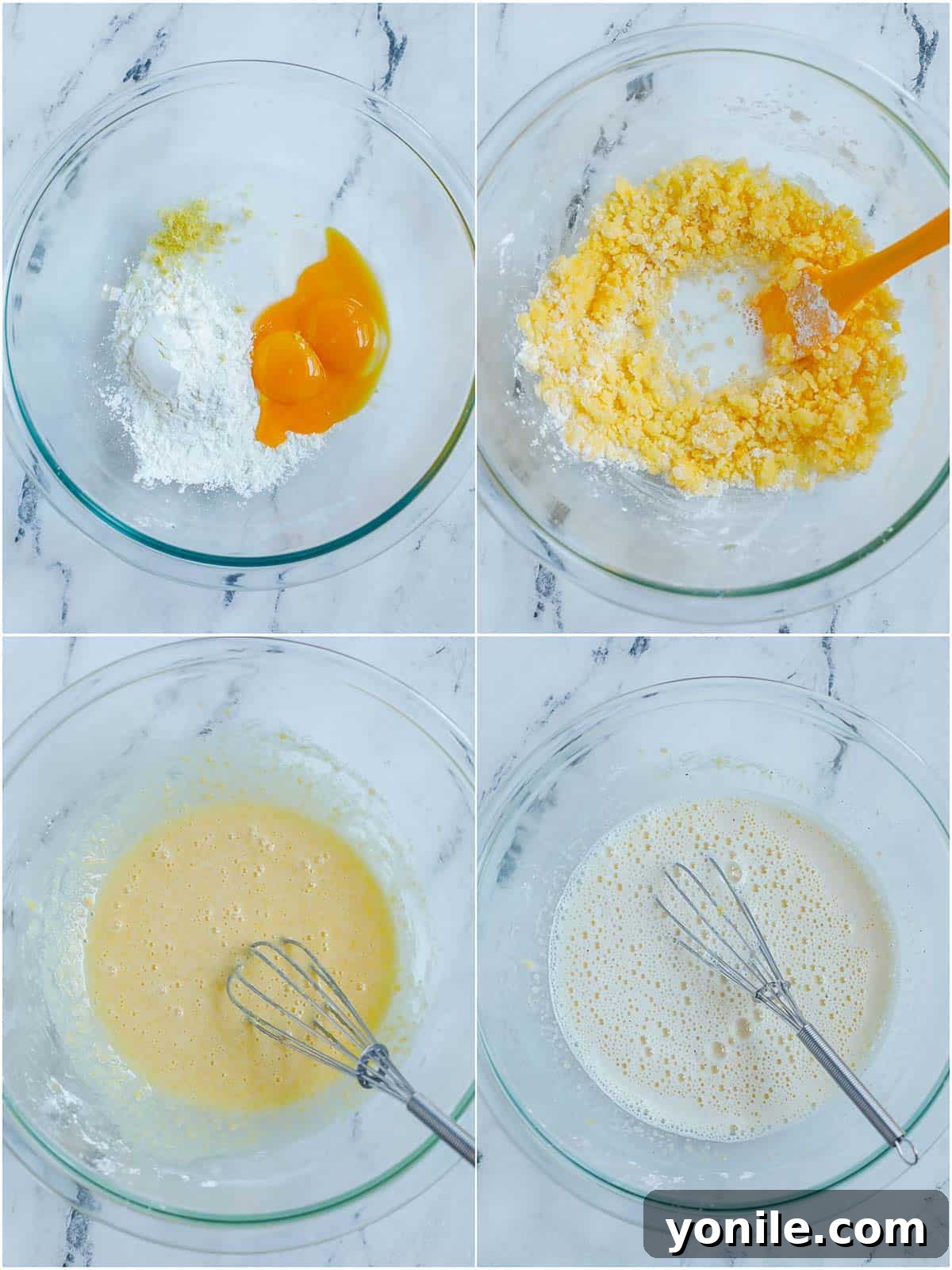
- Whisk the Egg Yolk Mixture: While your milk is gently simmering, take a separate medium-sized bowl and add the egg yolks, granulated sugar, and cornstarch. If you’re incorporating lemon or orange zest for an added flavor dimension, add it now. Vigorously whisk these ingredients together until they form a thick, pasty, and somewhat clumpy mixture. At this point, add the reserved 1 tablespoon of cold milk to the egg mixture. Continue whisking energetically until the mixture becomes smooth, pale yellow, and lightly fluffy. If you’re using vanilla extract instead of a bean, stir it into this egg mixture now.
- Temper the Egg Mixture: This is a critical step to prevent your eggs from scrambling. Once the milk has reached a simmer, carefully ladle about half a cup of the hot milk into the egg yolk mixture, whisking continuously and vigorously as you pour. This gradual addition slowly raises the temperature of the egg yolks without cooking them. Repeat this process, adding another half cup of hot milk and whisking constantly until the egg mixture is warm to the touch and fully incorporated.
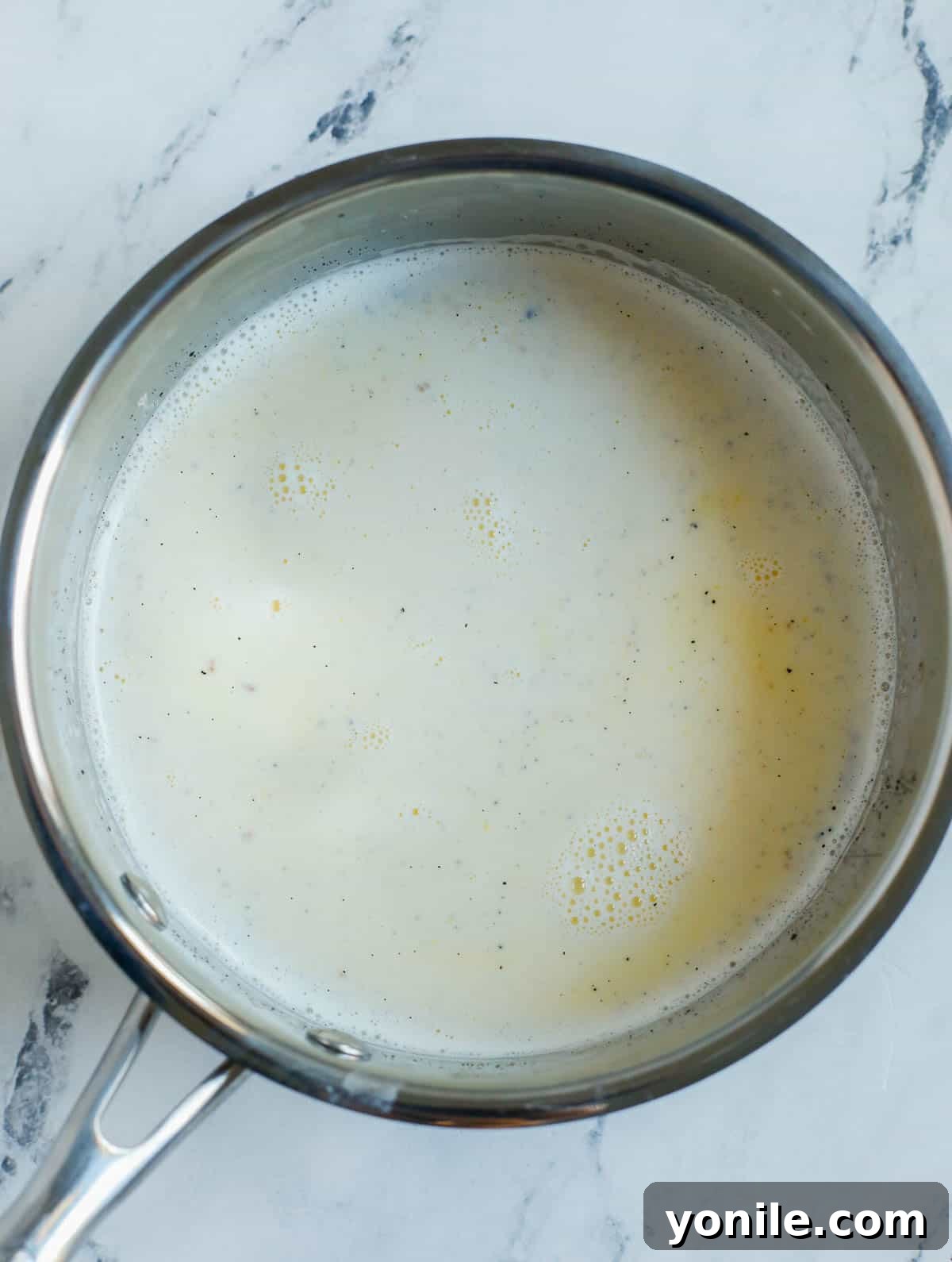
- Strain and Thicken the Cream: Place a fine-mesh strainer over the empty saucepan. Pour the tempered milk and egg mixture through the strainer back into the pot. This step is essential for removing any potential cooked egg bits or vanilla bean particles, ensuring a perfectly smooth and luxurious pastry cream. Discard any solids caught in the strainer. Return the saucepan to low-medium heat and cook, whisking continuously and vigorously. It’s crucial to keep whisking to prevent the mixture from sticking to the bottom, burning, or forming lumps. The cream will gradually thicken over several minutes. Continue cooking and whisking until it reaches a thick, pudding-like consistency that coats the back of a spoon.
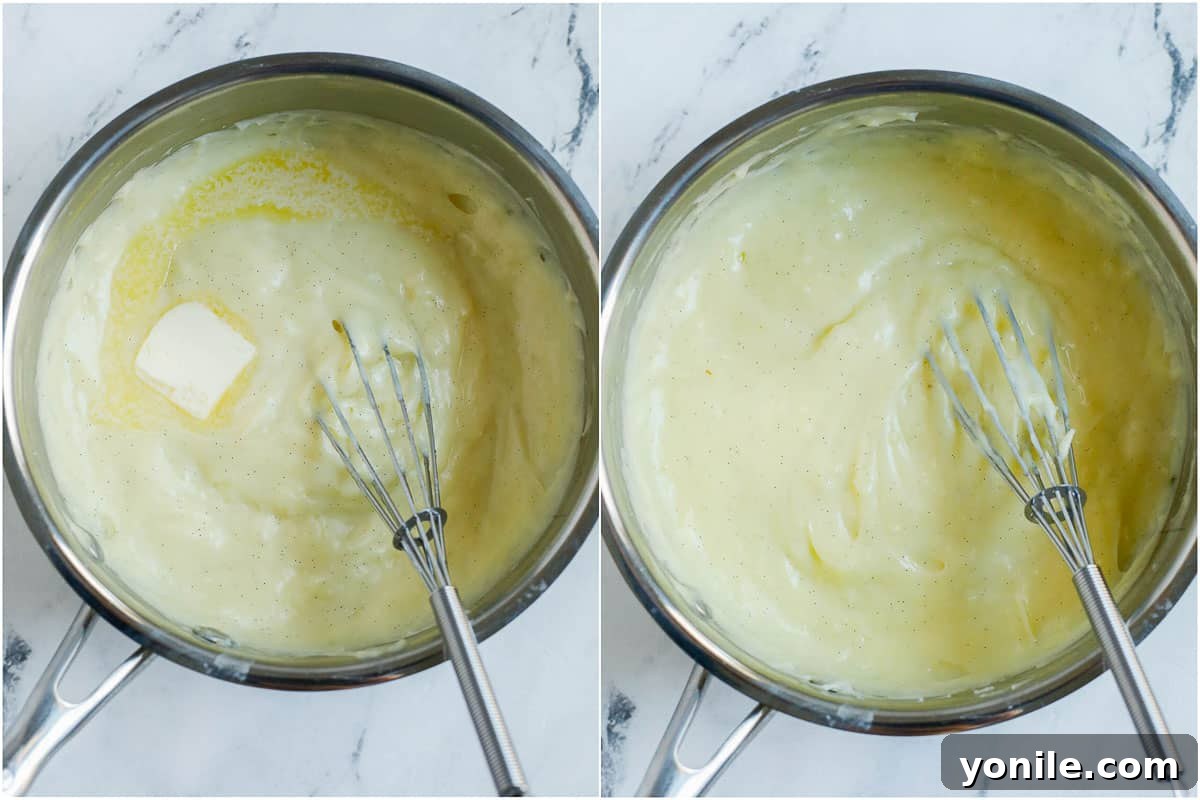
- Finish with Butter: Once the custard has reached its optimal thick consistency, immediately remove the pot from the heat. Add the unsalted butter and whisk it in until it’s fully melted and incorporated. The butter will lend a beautiful sheen to the pastry cream and contribute to its silky-smooth finish.
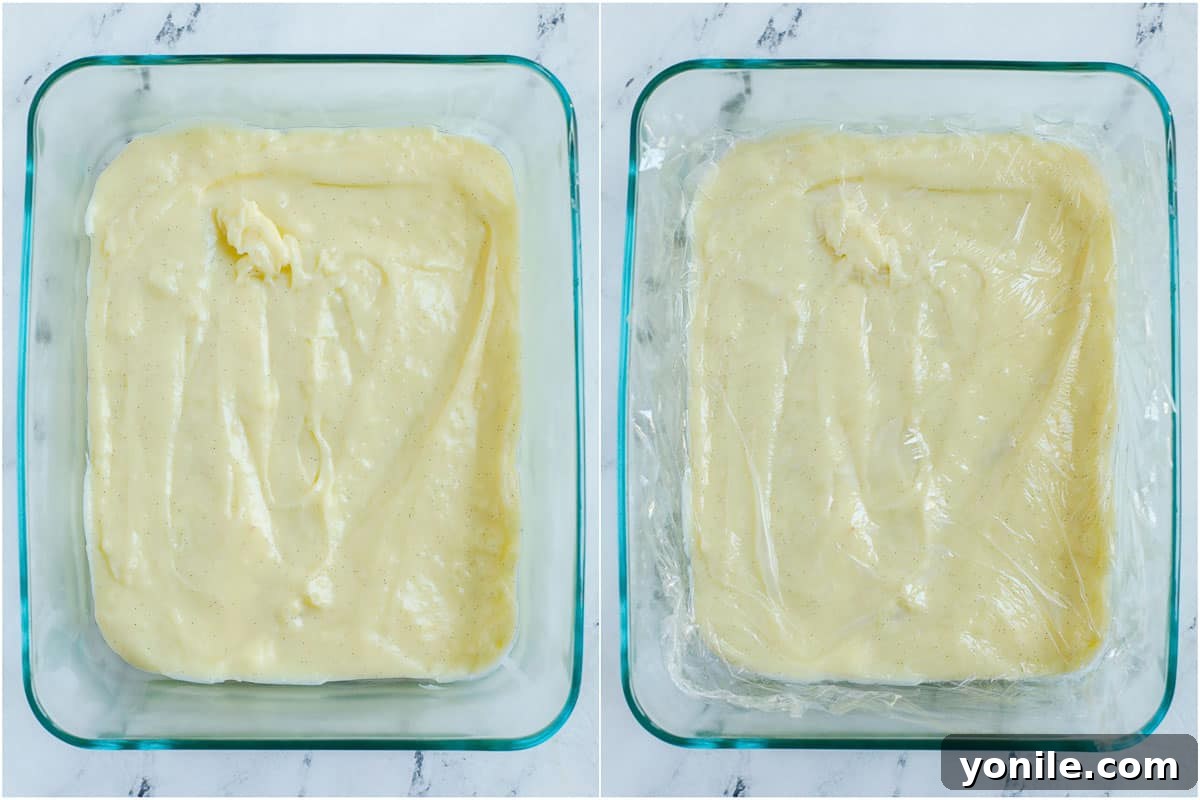
- Cool Properly: Transfer the hot pastry cream to a clean glass bowl or shallow dish. To prevent a skin from forming on the surface (which can lead to lumps later), press a piece of plastic wrap directly onto the surface of the cream, ensuring there are no air pockets. Allow it to cool completely at room temperature before transferring it to the refrigerator to chill thoroughly for at least 2-3 hours, or until firm.
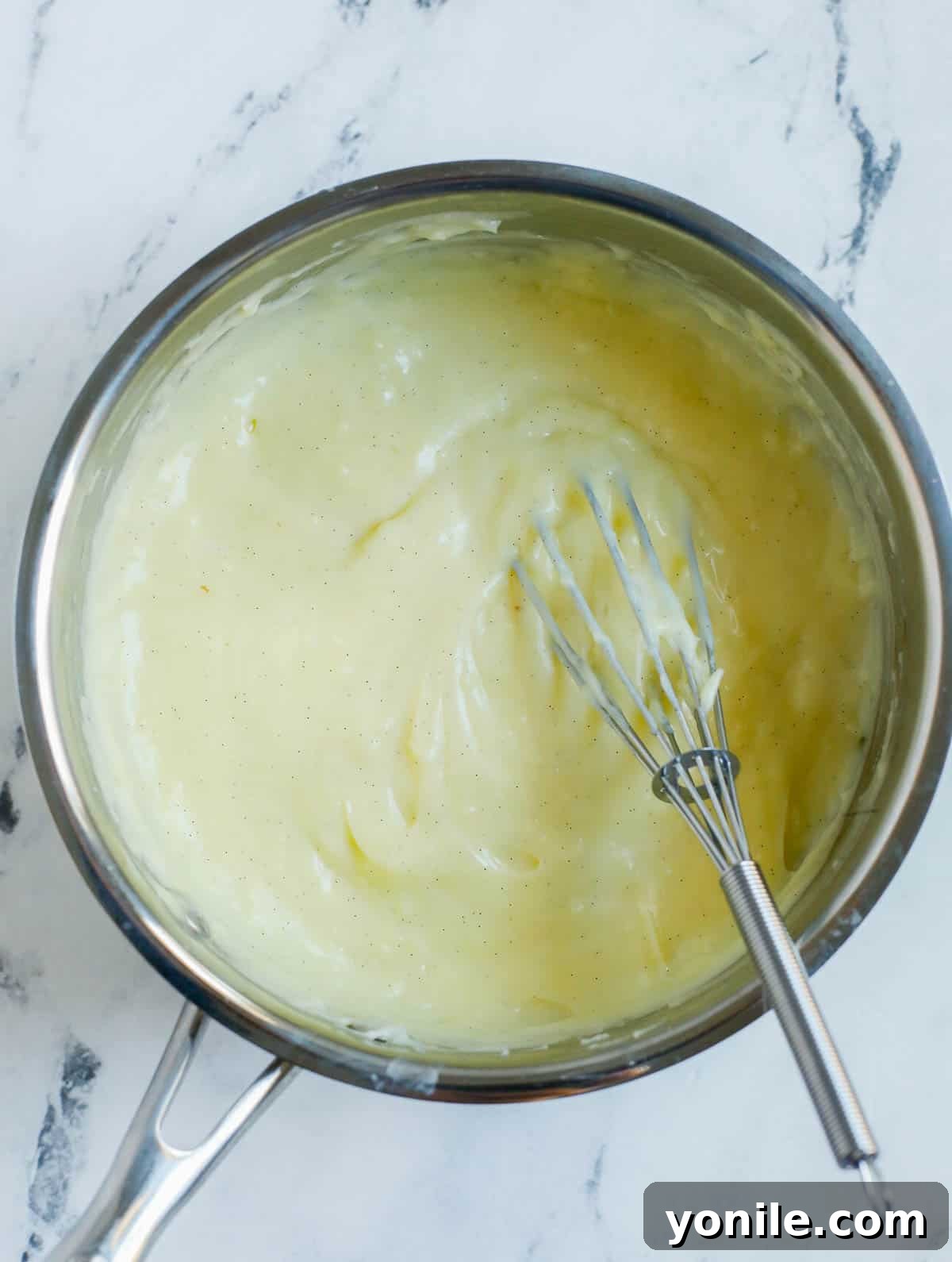
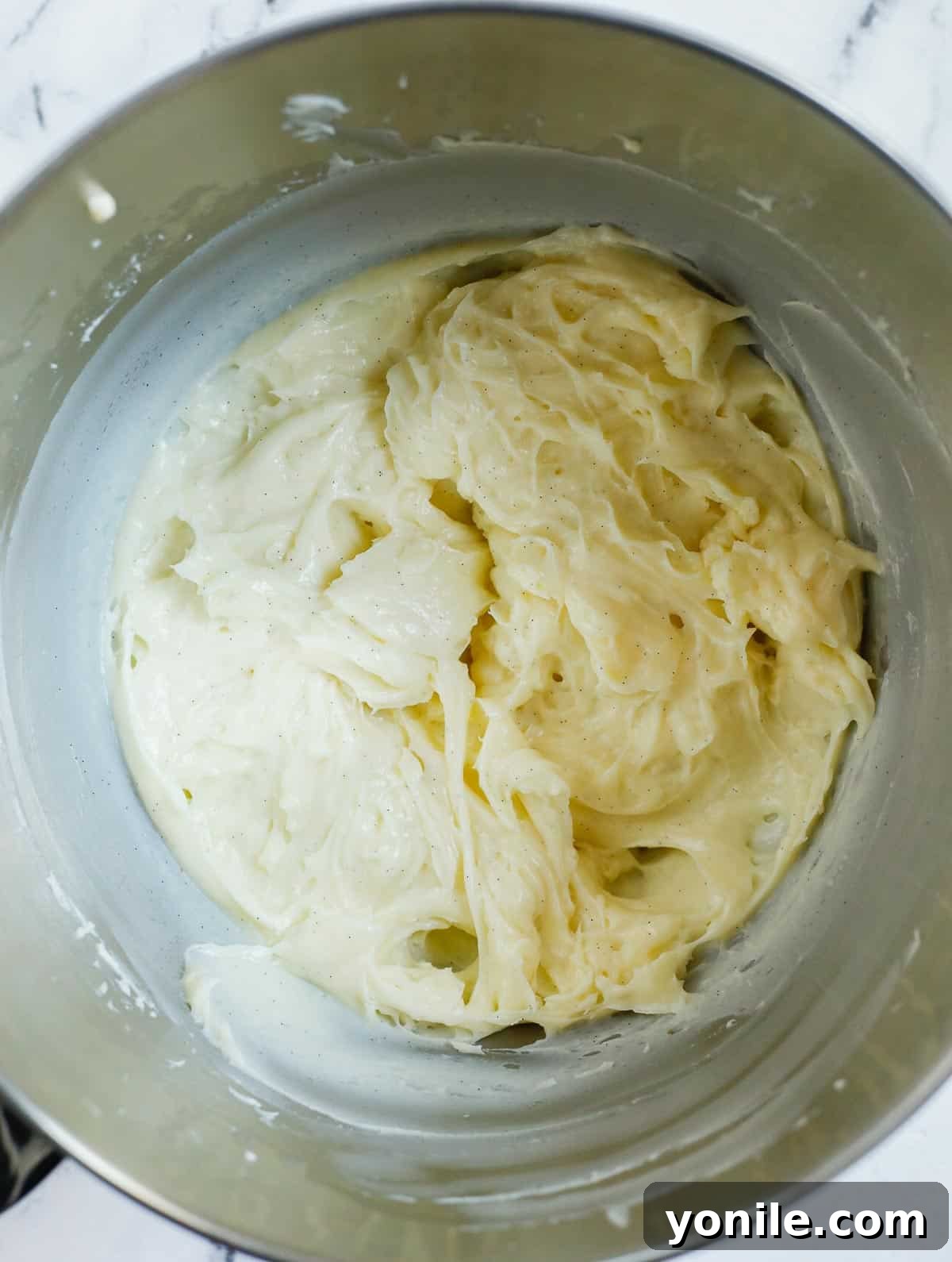
- Achieve Ultimate Smoothness: Once the vanilla pastry cream is completely cool and firm, it’s highly recommended to give it a quick whip. Transfer the chilled custard back to a clean bowl and whisk it vigorously with a hand whisk or electric mixer for about a minute. This breaks up any firmness that occurred during chilling, yielding an incredibly smooth, creamy, and spreadable texture, as showcased in the photo below. This step is crucial for achieving that professional, silken consistency.
- NOTE: For a Lighter, Fluffier Filling (Crème Légère): If your intention is to use the pastry cream as a light, airy filling for cakes, eclairs, donuts, tarts, or mille-feuille (and not for baking directly within pastries), consider transforming it into a crème légère. Once your pastry cream is completely cooled and whipped until smooth, gently fold in 1 cup of freshly whipped cream (measured after whipping it with a touch of confectioners’ sugar). This creates a magnificent, cloud-like cream that’s less dense and even more delightful.
Pro Tips for Making the Best Vanilla Pastry Cream
While the recipe is straightforward, a few expert tips can elevate your homemade pastry cream from good to absolutely phenomenal:
- Don’t Skip the Straining: After tempering and before returning the mixture to the pot, always strain it through a fine-mesh sieve. This simple step is a secret weapon against lumps, ensuring your pastry cream is flawlessly smooth and free of any cooked egg bits or vanilla pod fragments.
- Embrace Full-Fat Milk: For a truly rich and decadent crème pâtissière, always use full-fat, whole milk. The higher fat content is crucial for achieving that luxurious, velvety texture and contributes significantly to the overall flavor. Skim or low-fat milk will result in a thinner, less satisfying cream.
- Thoroughly Whisk Egg Yolks and Sugar: When combining the egg yolks and sugar, whisk them vigorously until the mixture becomes pale yellow, thick, and slightly fluffy (this is known as making a “sabayon”). This process not only dissolves the sugar but also creates a stable base for the custard.
- Quality Vanilla Makes a Difference: Since vanilla is the star flavor, invest in good quality. Whether it’s a whole vanilla bean, a high-quality vanilla bean paste, or pure vanilla extract, the better the vanilla, the more exceptional your pastry cream will taste. Artificial vanilla simply won’t yield the same depth of flavor.
- Temper with Care: When adding the hot milk to the egg yolk mixture, do so slowly and gradually, whisking continuously. This tempering process is essential to gently bring the egg yolks up to temperature, preventing them from scrambling. Pouring too quickly can result in cooked egg bits in your custard.
- Whisk Constantly During Cooking: Once the strained mixture is back on the heat, do not stop whisking. Constant agitation prevents the cream from sticking to the bottom of the pan, burning, and forming lumps. Whisking ensures an even cook and a smooth, consistent thickness.
- Chill Thoroughly and Whip Again: Pastry cream needs ample time to chill and firm up in the refrigerator. Once completely cold, it will be quite firm. Before using, transfer it to a bowl and whisk it vigorously for a minute or two until it becomes smooth, creamy, and light again. This step eliminates any stiffness from chilling.
- For a Lighter Texture, Add Whipped Cream: If your recipe calls for a lighter, airier filling (like for eclairs, cream puffs, or layered cakes), fold in about 1 cup of freshly whipped cream (whipped with a touch of confectioner’s sugar) into the fully cooled and re-whisked pastry cream. This creates a delightful “crème légère” which is less dense and incredibly fluffy.
- Proper Storage: Store leftover pastry cream in an airtight container in the refrigerator for up to 3-4 days. Always ensure plastic wrap is pressed directly onto the surface to prevent a skin from forming and to keep it fresh.
Discover More Essential Baking & Cooking Tutorials
Expand your culinary skills with these helpful guides:
- How to Melt Chocolate Perfectly
- How to Make Ghee (Clarified Butter)
- How to Make Rich Chocolate Ganache
- How to Make Authentic Garlic Sauce (Toum)
- How to Make The Perfect Soft Boiled Egg
We hope you thoroughly enjoy exploring all the delicious recipes shared here, including this fundamental and incredibly versatile homemade Pastry Cream. We encourage you to try this recipe, savor its delightful results, give it a star rating, and share it with your friends and family! Your feedback helps us continue to create and share more amazing content.
If you’ve tried this recipe and loved it, please take a moment to leave a star rating and a comment below. We appreciate your support! For all our latest social posts, culinary inspiration, and new recipes, be sure to follow Cookin’ With Mima on FACEBOOK | INSTAGRAM | PINTEREST.
How to Make Pastry Cream (Crème Pâtissière)
Ingredients
- 2 cups whole milk, reserve 1 tbsp
- 1 tbsp. Vanilla Extract, or ½ tsp Vanilla Bean paste/seeds from 1 bean
- ⅓ cup cornstarch
- ½ cup granulated sugar
- 3 large egg yolks
- 2 tbsps. unsalted butter, cold, cut into cubes
- ¼ tsp. lemon zest, optional
For Crème Légère (Whipped Cream Option)
- ½ cup heavy whipping cream, yields approx. 1 cup whipped
- 2 tbsps. confectioners’ sugar
- 1 tsp pure vanilla extract
Instructions
To Prepare the Custard
-
In a medium saucepan, combine 2 cups of whole milk. Remove and set aside 1 tablespoon of this milk. If using a vanilla bean, split it, scrape the seeds, and add both seeds and pod to the milk in the saucepan. Gently heat the milk over low-medium heat until it reaches a bare simmer (small bubbles around the edge).
-
While the milk is heating, whisk together the egg yolks, granulated sugar, cornstarch, and optional lemon zest in a separate bowl until the mixture is thick and pasty. Add the reserved 1 tablespoon of milk and continue to whisk until smooth and slightly fluffy. If using vanilla extract, stir it into this egg mixture now.
-
Once the milk is simmering, slowly and gradually add about half of the hot milk into the egg yolk mixture while continuously whisking to temper the eggs. Once well combined, pour the tempered egg mixture back into the saucepan with the remaining hot milk.
-
Place a fine-mesh strainer over the saucepan. Pour the milk and egg mixture through the strainer back into the pot, discarding any solids. Return the pot to low-medium heat and whisk continuously until the mixture thickens into a rich custard. Do not stop whisking to prevent lumps and burning.
-
Once the custard has thickened significantly, remove it from the heat. Add the cold, cubed unsalted butter and whisk until it is completely melted and incorporated, creating a smooth, glossy finish.
-
Transfer the hot pastry cream to a clean glass bowl. Immediately cover the surface directly with plastic wrap to prevent a skin from forming. Allow it to cool to room temperature, then refrigerate for at least 2-3 hours until thoroughly chilled and firm.
-
Once fully cooled, whisk the custard vigorously for about a minute to achieve a smooth, creamy, and spreadable texture, breaking up any firmness from chilling.
-
NOTE: For a lighter, airier Crème Légère (for fillings in cakes, eclairs, etc. where no further baking is involved), gently fold 1 cup of freshly whipped cream (whipped with confectioners’ sugar) into the smoothed pastry cream after step 6.
Making Whipped Cream (for Crème Légère)
-
Using an electric mixer, whisk the heavy whipping cream, confectioners’ sugar, and vanilla extract on high speed until stiff peaks form. Set aside until ready to fold into the pastry cream.
Notes
- I highly recommend straining the cream mixture before returning it back to the pot to cook. This will eliminate any clumps or pieces from the vanilla pods or cooked egg, ensuring a silky smooth custard.
- Use full-fat, whole milk for the richest and creamiest crème pâtissière. Lower fat milks will result in a thinner, less satisfying texture.
- Whisk the egg yolks and sugar together thoroughly until pale and slightly fluffy and smooth. This helps dissolve the sugar and creates a stable base.
- Always use good quality vanilla, whether it’s a bean, paste, or pure extract. The flavor makes a significant difference, especially with eggs involved.
- Add the hot milk to the egg yolk mixture slowly, in a thin stream, and whisk continuously to temper the eggs and prevent scrambling.
- Always whisk the cream filling one more time after it cools and chills to regain a smooth, creamy texture and remove any stiffness.
- If you are not using the cream for baking pastries (e.g., as a filling for already baked items), always add 1 cup of whipped cream (measured after whipping it up with some confectioners’ sugar) and gently fold it together with the cooled, re-whisked crème pâtissière for a lighter, fluffier cream you can use for stuffing in cakes, eclairs, donuts, tarts, mille-feuille, etc. This is called Crème Légère.
Nutrition
Enjoyed this recipe? Please rate and leave a comment below!