
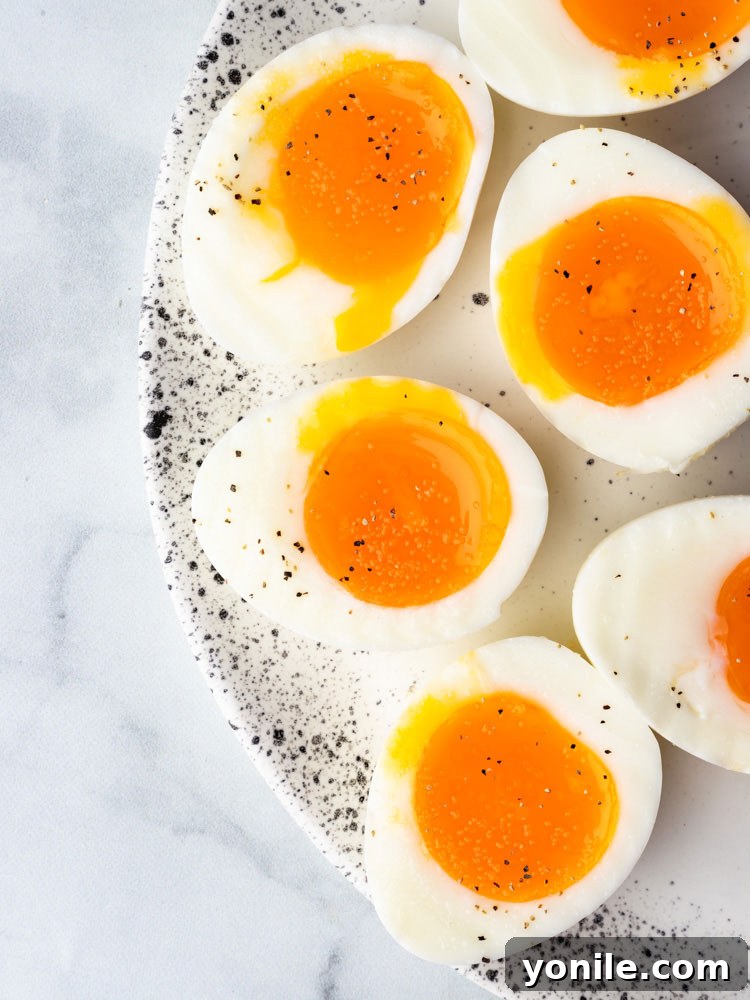
Unlock the secret to a perfectly luscious, silky, and creamy egg yolk with this simple guide to making the ultimate soft-boiled egg. Elevate any meal from ordinary to extraordinary with this versatile topping. Forget complicated methods; this foolproof technique guarantees consistent results every time, even if you’re a beginner. If you’ve mastered the art of hard-boiling eggs, you’ll find this an absolute breeze to perfect. Prepare to impress yourself and your family with this delightful addition to your culinary repertoire.
Looking for delicious bread recipes to pair with your freshly made soft-boiled eggs? Enhance your breakfast or brunch experience by trying my No Knead Artisan Bread for a rustic touch, or my Easy Sandwich Bread for a classic companion. These homemade bread options are perfect for dipping into those glorious runny yolks.
What Exactly Are Soft-Boiled Eggs?
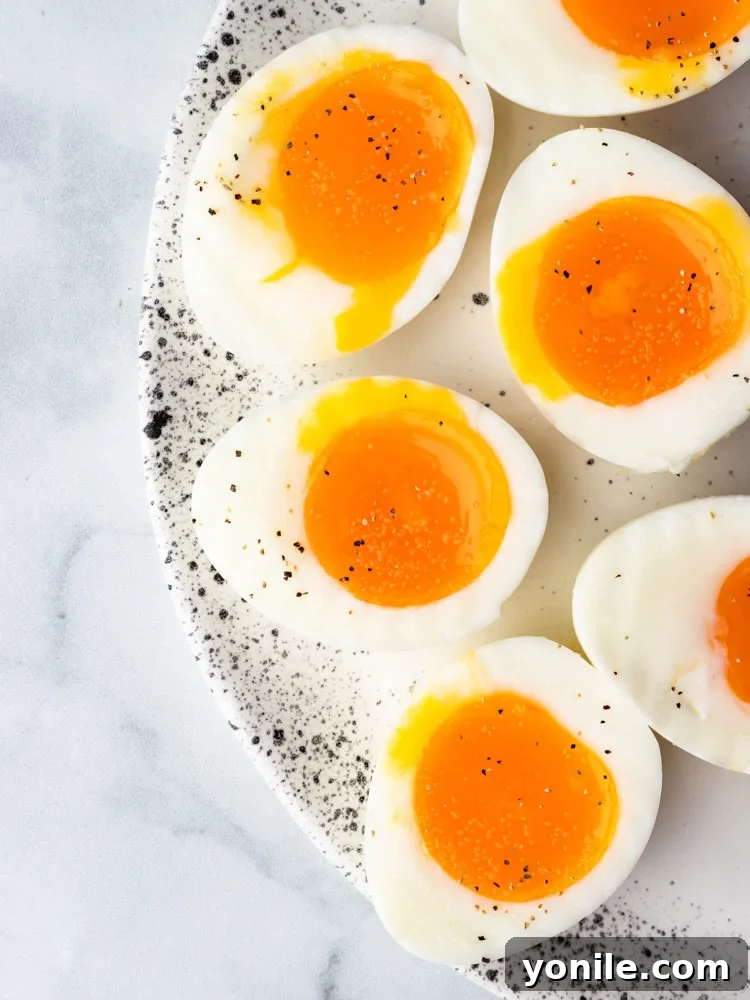
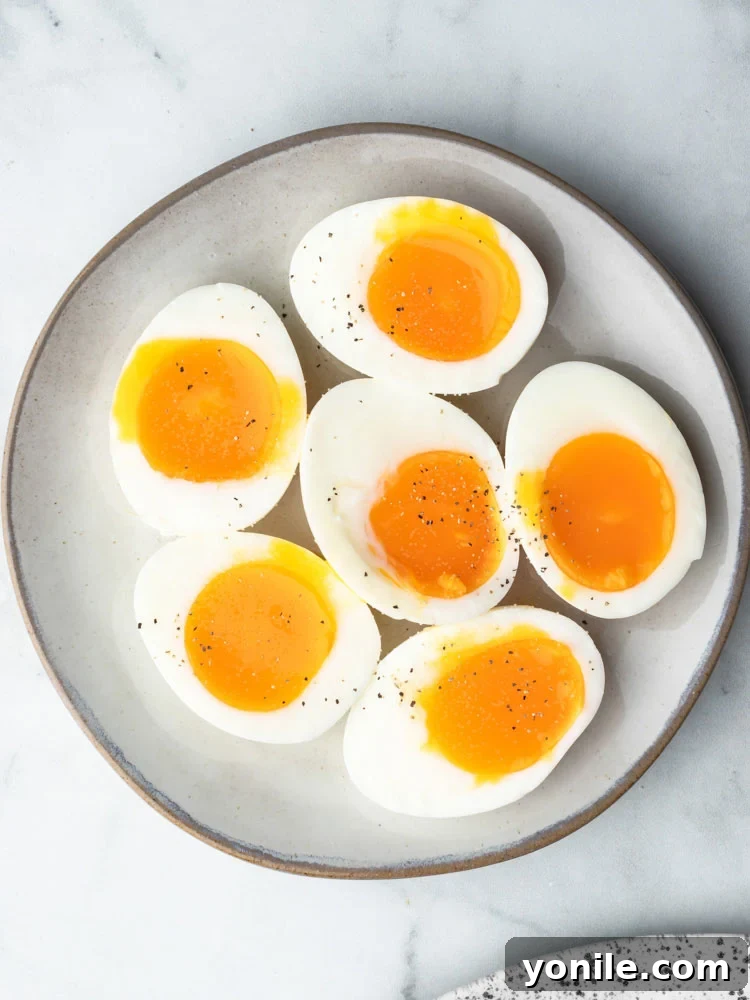
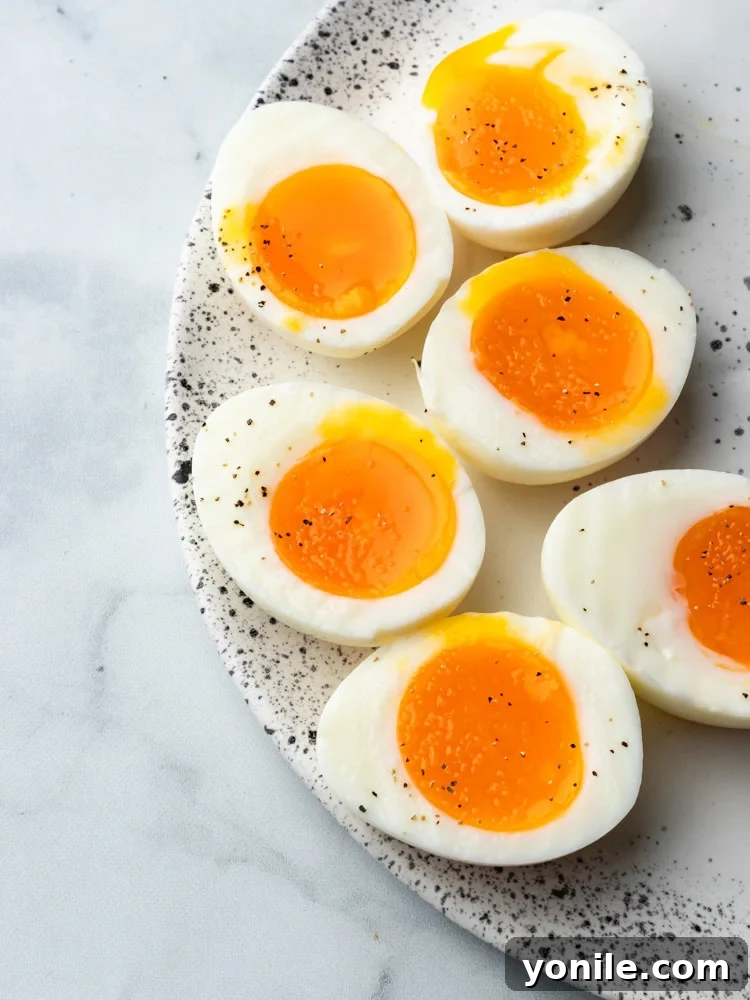
Soft-boiled eggs are a culinary delight characterized by their perfectly firm, yet tender, egg whites and a warm, velvety, and irresistibly runny yolk. Unlike hard-boiled eggs where the yolk is solid, the magic of a soft-boiled egg lies in its liquid center, which offers a rich, creamy texture that coats and enhances anything it touches. It’s a delicate balance of cooking time and temperature, resulting in an egg that’s cooked just enough to set the whites but leaves the yolk in a luscious, pourable state. This creates a luxurious mouthfeel and a visually appealing golden flow, making them a favorite for many discerning palates.
Elevate Your Meals: Versatile Uses for Soft-Boiled Eggs
Soft-boiled eggs are incredibly versatile and can transform a simple dish into a gourmet experience. Their creamy yolks and tender whites add richness, protein, and a touch of elegance to a wide variety of meals throughout the day. Here are some of the most popular and delicious ways to enjoy them:
- Enhanced Salad Bowls: Slice them in half and nestle them atop vibrant green salads, grain bowls, or even potato salads. The rich, runny yolk acts as a natural dressing, adding a creamy texture and a boost of protein that transforms a light meal into a satisfying feast.
- Ramen & Noodle Bowls: A halved soft-boiled egg is a quintessential topping for ramen and other noodle soups. The warm yolk slowly mingles with the savory broth, creating a more complex and comforting flavor profile.
- Gourmet Avocado Toast: Elevate your avocado toast by crowning it with a perfectly soft-boiled egg. The creamy avocado pairs beautifully with the runny yolk, offering a luxurious texture and a burst of savory flavor that makes for an exquisite breakfast or brunch.
- Classic Dipping with Toast Soldiers: This traditional method involves gently cracking open the top of the egg and using strips of toasted bread (toast soldiers) to dip directly into the warm, gooey yolk. It’s a comforting and interactive breakfast experience cherished by many.
- Hearty Porridge & Grain Bowls: For a nutritious and fulfilling breakfast, add a soft-boiled egg to your bowl of warm porridge or any breakfast grain. The richness of the yolk complements the earthy flavors of grains like quinoa, farro, or oatmeal, providing essential protein to kickstart your day.
- Soups and Stews: Drop a soft-boiled egg into a warm bowl of soup or stew just before serving. It adds a delicious layer of flavor and makes the dish more substantial and visually appealing.
- Sandwiches and Wraps: While typically not a whole egg, sliced soft-boiled eggs can add incredible texture and richness to sandwiches, particularly those with strong flavors like smoked salmon or fresh herbs.
Gather Your Essentials: What You Need To Make Soft-Boiled Eggs
Making the perfect soft-boiled egg requires just a few basic ingredients and pieces of equipment. Having these on hand will ensure a smooth and successful cooking process, leading to that coveted silky yolk every time.
The Ingredients
- Eggs: You can use medium or large-sized eggs, whether white or brown. The key is to start with eggs that are not straight from the fridge; allowing them to come closer to room temperature can help prevent cracking when they hit the hot water and also contributes to more even cooking. Older eggs, typically a week or two old, also tend to peel more easily than very fresh ones due to changes in their pH level.
The Essential Equipment
Saucepan with Lid
You will need a saucepan that is appropriately sized for the number of eggs you plan to cook. It should be large enough to hold all the eggs in a single layer at the bottom, without them being overly crowded. A lid is crucial for maintaining a consistent temperature and ensuring even cooking, allowing the steam to cook the tops of the eggs slightly.
Large Slotted Spoon or Tongs
This tool is indispensable for safely adding the eggs into the hot water and then carefully removing them once they are cooked. The slotted design allows water to drain away quickly, while a large spoon or tongs provide a gentle grip, minimizing the risk of dropping and cracking the delicate eggshells.
Bowl of Ice Water
This is perhaps one of the most critical pieces of “equipment” for perfect soft-boiled eggs. Immediately transferring the cooked eggs into a bowl filled with ice water serves two vital purposes: it instantly halts the cooking process, preventing the yolks from overcooking, and it helps the egg whites separate from the shell more easily, leading to a much cleaner peel.
Mastering the Method: How To Make Perfect Soft-Boiled Eggs
Achieving that ideal runny yolk and tender white is simpler than you might think. Follow these steps for a consistently perfect soft-boiled egg:
- Prepare Your Water: Begin by filling your saucepan about three-quarters full with cold water. Place it on the stove and bring the water to a full, rolling boil over high heat. Once it reaches a vigorous boil, reduce the heat significantly until it settles into a gentle, rolling simmer. This ensures that when you add the eggs, they are cooked gently and evenly without being jostled aggressively, which can lead to cracks.
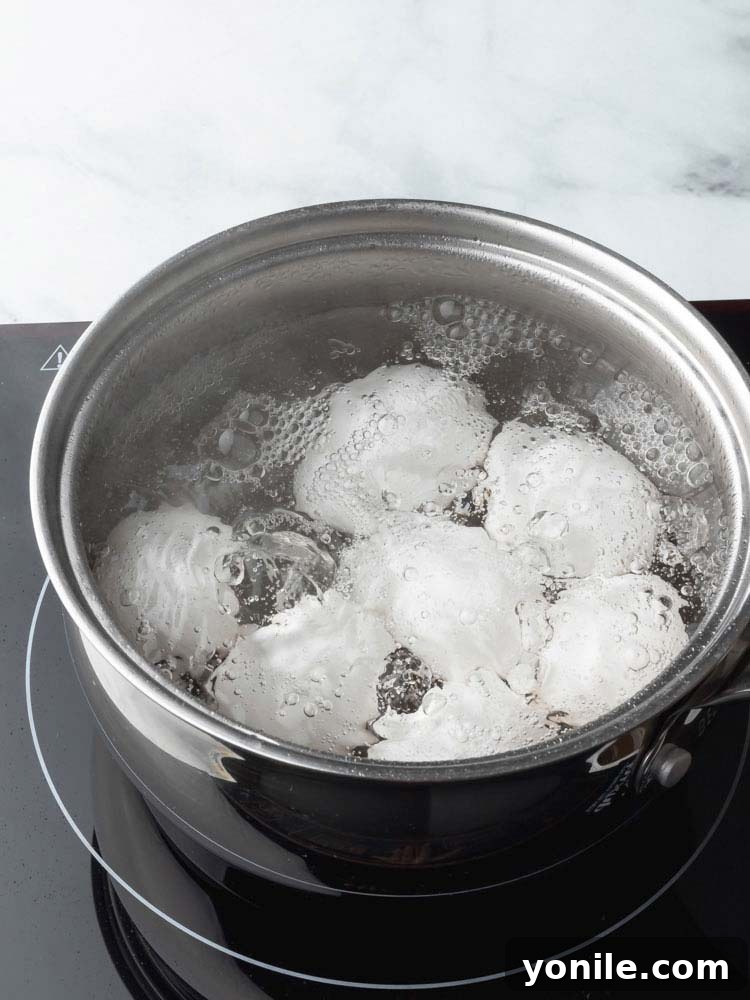
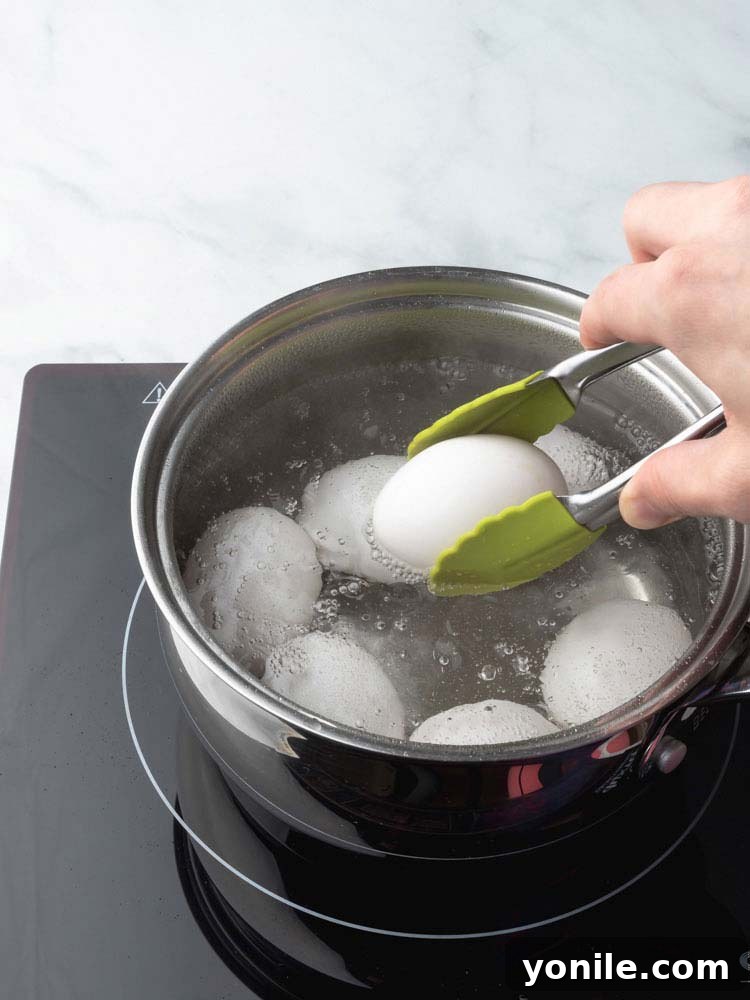
- Gently Add the Eggs: Using your large slotted spoon or tongs, carefully lower each egg into the simmering water one by one. Take your time with this step to avoid cracking the shells. Place the lid back on the saucepan to maintain a consistent temperature.
- Precise Simmering Time: Allow the eggs to simmer for precisely 6 to 7 minutes.
- For a very runny, custard-like yolk with barely set whites, aim for 5 minutes.
- For the classic soft-boiled egg with fully set whites and a delightfully gooey, runny yolk, 6 minutes is typically perfect.
- If you prefer a slightly firmer, still creamy but less liquid yolk (ideal for salads where you want a richer texture but not fully set), cook for 7 minutes.
Consistency is key, so keep an eye on your timer!
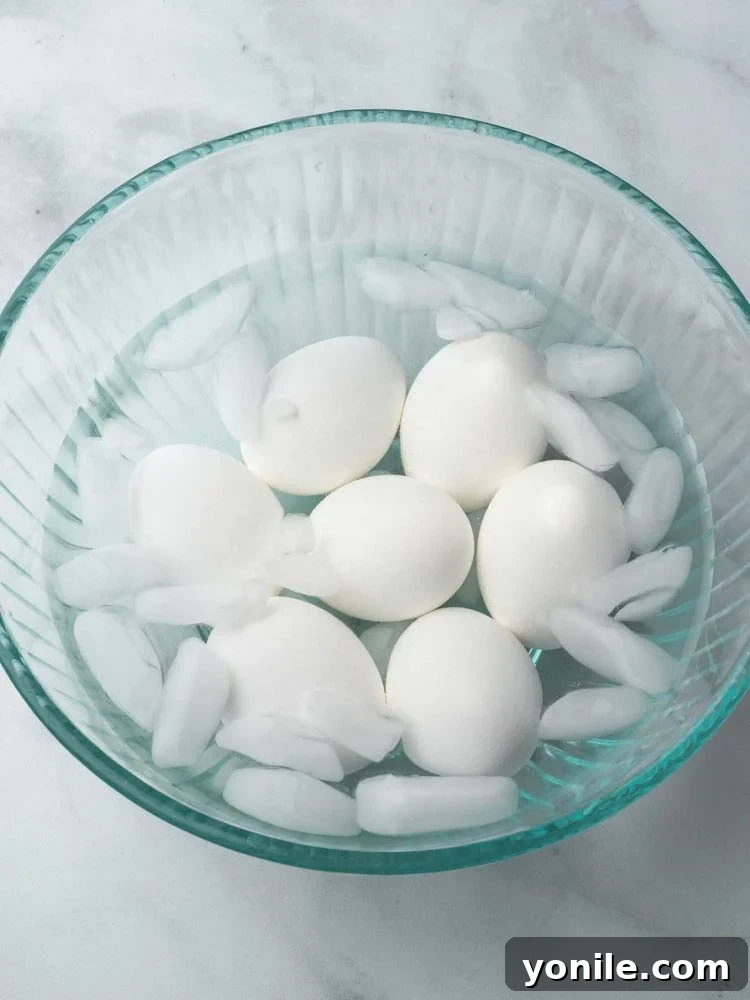
- The Crucial Ice Bath: As soon as the cooking time is up, swiftly remove the eggs from the hot water using your slotted spoon or tongs. Immediately transfer them into the prepared bowl of ice water. This rapid cooling stops the cooking process dead in its tracks, preventing the yolks from firming up further and also making the eggs significantly easier to peel.
- Cool Before Peeling: Let the eggs cool in the ice bath for at least 2 minutes. This ensures they are cool enough to handle comfortably and gives the membranes underneath the shell time to contract, which aids in a cleaner peel.
Effortless Peeling: Techniques for Soft-Boiled Eggs
Peeling soft-boiled eggs can sometimes be tricky due to their delicate nature. However, with the right technique, you can minimize breakage and enjoy your perfectly cooked egg. Here are two common methods:
Method 1 – Peeling the Whole Egg for General Use
- Once the egg has cooled sufficiently in the ice bath, gently tap the egg on a hard surface to create tiny cracks all over the shell. Start by tapping the wider, bottom end of the egg, as this is where the air bubble is typically located, making it easier to begin. Carefully work your way around the egg, peeling off small pieces of the shell. If you encounter difficulty, you can peel the egg under a gentle stream of running water; the water helps to get under the membrane and loosen the shell, making the process smoother and preventing tiny bits of shell from clinging to the delicate white.
Method 2 – Peeling for Dipping with Toast Soldiers
- For the classic breakfast experience, place the soft-boiled egg upright in an egg cup. Using a knife or the back of a spoon, gently tap or slice horizontally around the top quarter of the eggshell. Carefully lift and remove this top portion of the shell, exposing the runny yolk underneath. If you own an egg cutter, it makes this process even more precise and effortless, creating a clean opening for dipping your toast soldiers.
Expert Tips To Make Soft-Boiled Eggs Easier to Peel
Peeling soft-boiled eggs can be frustrating if the shell sticks to the delicate whites. However, a few simple tricks can make this task much easier, ensuring a smooth and satisfying peeling experience:
- Room Temperature Eggs: Always try to use eggs that have warmed up closer to room temperature before cooking. Eggs taken straight from the refrigerator are prone to thermal shock when plunged into hot water, which can cause them to crack. Additionally, the rapid temperature change can make the inner membrane cling more stubbornly to the egg white. Letting them sit out for 20-30 minutes beforehand helps reduce this issue.
- Older Eggs are Better: Counterintuitively, older eggs (about 1-2 weeks old, but still well within their expiry date) peel significantly easier than super fresh eggs. The reason lies in their pH level. As an egg ages, its pH level increases, making the egg white less acidic. This slight alkalinity causes the egg white to separate more readily from the inner membrane, allowing for a cleaner peel.
- Add Baking Soda to the Water: A teaspoon of baking soda added to the boiling water can work wonders. Baking soda is alkaline, and adding it to the cooking water helps to raise the pH level of the water itself. This slightly alkaline environment helps to loosen the bond between the egg white and the shell membrane, making the eggs much easier to peel after they’ve been cooked and chilled.
- Peel Under Running Water: If you’re still struggling, try peeling the egg under a gentle stream of cold running water. The water helps to wash away small shell fragments and lubricate the egg, making it easier to slip the shell off without tearing the delicate egg white.
Soft-Boiled Egg FAQ
For optimal freshness and safety, soft-boiled eggs in their shells can be stored in the refrigerator for up to 3 days. However, it is always recommended to consume them as soon as possible for the best taste and texture. If the eggs have been peeled or cut open, they should be stored in an airtight container in the fridge and discarded after 24 hours to prevent bacterial growth and maintain quality.
The precise cooking time for a soft-boiled egg depends on your desired yolk consistency. For a very runny, almost liquid yolk, a cooking time of 4-5 minutes after the water boils is ideal. If you prefer a slightly firmer, yet still creamy and gooey yolk that’s perfect for salads or toast, you should aim for about 6-7 minutes. Experiment within this range to find your perfect preference!
Yes, soft-boiled eggs are completely safe to eat, provided they are cooked properly and handled hygienically. The cooking process is sufficient to eliminate common bacteria like salmonella, as long as the whites are fully set. Ensure you cook them for at least 4-5 minutes to guarantee safety, especially if you prefer a very runny yolk. Always use fresh, high-quality eggs from a reputable source.
The difficulty in peeling soft-boiled eggs often stems from the freshness of the eggs. Very fresh eggs have a lower pH level, making their whites more acidic. This acidity causes the egg white to adhere more tightly to the inner shell membrane, resulting in stubborn peeling. There are two primary solutions to this common problem: 1) use slightly older eggs (about 1-2 weeks old) as their pH level naturally increases over time, weakening the membrane’s bond; or 2) add a small amount of baking soda to the cooking water, which helps to increase the water’s pH and, in turn, helps the egg white separate more easily from the shell.
If you’re eager to explore more ways to cook and enjoy eggs, enhance your culinary skills with my detailed How to Make Perfect Hard Boiled Eggs tutorial, or master the delicate technique with my How to Poach An Egg instructions. Each guide is designed to help you achieve egg-cellent results every time.
I genuinely hope you find immense enjoyment in all the recipes and helpful tutorials I share with you. This guide to perfect soft-boiled eggs is crafted with care, and I encourage you to try it, savor the results, rate your experience, and share it with your friends and family! Your feedback and shared culinary adventures are truly appreciated.
If you try this recipe and love it, please don’t hesitate to use my hashtag on INSTAGRAM to share your creations with me for a chance to be featured in my story! Also, make sure to follow Cookin’ With Mima on FACEBOOK, INSTAGRAM, and PINTEREST for all my latest social posts, delicious recipes, and kitchen tips.
How to Make The Perfect Soft Boiled Egg
Mariam Ezzeddine
5 minutes
7 minutes
2 minutes
14 minutes
6
servings
Ingredients
-
6
whole
eggs
Instructions
-
Fill the saucepan ¾ full with cold water and bring it to a boil. Once it has boiled, lower the heat and bring it down to a gentle rolling simmer.
-
Using a large slotted spoon, gently add your eggs into the saucepan one by one.
-
Simmer the eggs for 6 to 7 minutes for a classic runny yolk, or adjust based on your desired consistency (5 min for very runny, 7 min for slightly firmer but still gooey).
-
Once done, quickly remove the eggs from the water and dunk them immediately into a prepared bowl of ice water.
-
Let the eggs cool for at least 2 minutes in the ice bath before peeling.
Notes
- For best results and easier peeling, ensure your eggs are not straight from the fridge; let them warm up closer to room temperature for about 20-30 minutes before cooking.
- Older eggs, typically a week or two old, generally peel much easier than very freshly purchased eggs due to changes in their pH level.
- Consider adding a teaspoon of baking soda to the boiling water to further aid in easier peeling.
Nutrition
Calories: 70kcal |
Carbohydrates: 1g |
Protein: 1g |
Fat: 1g |
Saturated Fat: 1g |
Cholesterol: 4mg |
Sodium: 1mg |
Potassium: 1mg |
Sugar: 1g |
Vitamin A: 5IU |
Calcium: 1mg |
Iron: 1mg
Like this recipe? Rate and comment below!